

Maddy summaryThe "Funding Early Childhood is the Right IDEA Act" proposes to increase authorized funding for specific programs under the Individuals with Disabilities Education Act (IDEA). This bill sets new appropriation levels for Part C of IDEA, which provides early intervention services for infants and toddlers with disabilities and their families. It also increases authorized funding for Section 619 of IDEA, which supports preschool special education for children aged three to five. These funding authorizations are scheduled for fiscal years 2027 through 2031, directly affecting children with disabilities and the state and local agencies that provide these services.
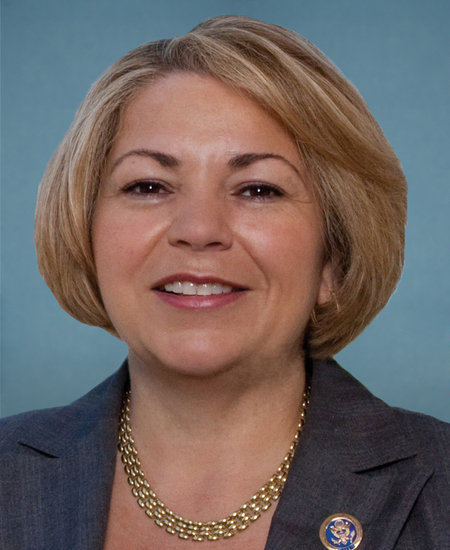
Rep. Linda T. Sánchez
Sponsored bills
Maddy summaryThe Civics Learning Act of 2026 amends the Elementary and Secondary Education Act to expand federal funding and support for civics education in K-12 schools. The bill directs the Department of Education to distribute $70 million in grants to schools, with at least 60 percent reserved for elementary and middle schools and a preference for programs that include hands-on civic engagement, constitutional history, and civil rights education. It also requires grant recipients to submit annual reports detailing how they meet civics education goals and ensures geographic diversity in funding distribution across urban, suburban, and rural areas.
Maddy summaryThe Momnibus Act is a comprehensive legislative bill designed to improve maternal health outcomes across the United States by addressing social determinants of health, expanding access to care, and reducing disparities among pregnant and postpartum individuals. The bill establishes a federal task force to coordinate efforts between agencies and stakeholders to eliminate preventable maternal mortality and severe morbidity, while providing sustained funding to community-based organizations to address nonclinical factors like housing, nutrition, and transportation. Key provisions include extending WIC eligibility to 24 months postpartum, creating grants to grow and diversify the perinatal workforce, implementing respectful maternity care training for all healthcare employees, and establishing compliance programs to track and address bias in maternity care settings. The legislation also includes specific measures for incarcerated mothers, veterans, and vulnerable populations affected by climate change, alongside funding for maternal mental health services and technology-enabled care models to expand access in underserved areas.
Maddy summaryThe YouthBuild for the Future Act aims to strengthen and expand the existing YouthBuild program, which provides education and job training to young people. The bill increases authorized funding for the program and creates a new grant program to foster partnerships between YouthBuild programs and employers, aiming to develop more employment opportunities for participants. It reserves a portion of increased funds for rural areas and programs serving Native American, Alaska Native, and Native Hawaiian communities. Furthermore, the bill expands the types of supportive services YouthBuild programs can offer, including meals and assistance with applying for federal and state benefit programs.
Maddy summaryThis concurrent resolution (HCONRES 40) directs the President to remove U.S. military forces from hostilities with Iran, as required by the War Powers Resolution. It applies directly to U.S. Armed Forces deployed in conflict with Iran, except for forces needed to defend the U.S. or allies from imminent attack. The bill mandates removal unless the President complies with War Powers Resolution reporting requirements for self-defense actions, without needing new congressional authorization. As a procedural resolution, it does not create new law but compels executive action under existing legal framework.
Maddy summaryThis bill, titled the "Millionaires Surtax Act," establishes a new 10% surcharge on high-income individuals. This additional tax applies to the portion of a taxpayer's "modified adjusted gross income" that exceeds $2,000,000 for married couples filing jointly, or $1,000,000 for single filers. The bill defines "modified adjusted gross income" with specific deductions and includes special rules for certain taxpayers, such as non-resident aliens and charitable trusts. If enacted, these changes would take effect for taxable years beginning after December 31, 2026.
Maddy summaryThis resolution formally recognizes April 10 as Dolores Huerta Day to honor the civil rights and labor leader's legacy. It does not create a federal holiday or change laws but expresses the House of Representatives' support for the designation. The text highlights Huerta's contributions to farm workers' rights, women's equality, and Latino political representation through a series of "whereas" clauses detailing her achievements. The resolution serves as a commemorative statement rather than a policy change, directing no new actions or funding.
Maddy summaryHR 8261, the Chronic Care Management Improvement Act of 2026, aims to reduce healthcare costs for Medicare Part B beneficiaries receiving chronic care management services. Effective January 1, 2027, the bill mandates that Medicare will cover 100% of the cost for these specific services. This means individuals will no longer be responsible for any copayments or deductibles for chronic care management. The change directly affects Medicare Part B enrollees who utilize these services, making them more affordable by eliminating out-of-pocket costs.
Maddy summaryThis bill seeks to block a specific rule issued by the Department of Education that affects the William D. Ford Federal Direct Loan Program. If passed, it would prevent the rule from taking effect, meaning the proposed changes to federal student loans would not be implemented. The measure uses a legislative process known as a joint resolution of disapproval to override agency regulations. It directly impacts students, families, and institutions that rely on federal student loans by stopping the Department of Education from enforcing the new policy.
Maddy summaryThis bill cancels a presidential proclamation that would have imposed a temporary import surcharge on goods entering the United States. It directly affects businesses and consumers by declaring the surcharge invalid and prohibiting the government from collecting or spending money on it. The legislation also requires the President to refund any tariffs already collected under the canceled proclamation. This action effectively removes the proposed import tax and restores the previous trade policy status.