

Maddy summaryThis bill redesignates the existing National Parks and Public Land Legacy Restoration Fund as the America's Legacy Restoration Fund to address deferred maintenance on federal lands. It directs revenue from recreation fees and a portion of energy development income into the fund, which must be used primarily for repairing critical infrastructure like roads, trails, and buildings managed by agencies such as the National Park Service and the Forest Service. The legislation establishes strict rules requiring that most funds go toward non-transportation projects, mandates transparency through public dashboards tracking project status, and sets aside a small percentage for matching private donations. Additionally, the bill increases entrance fees for foreign visitors to ensure they contribute to the fund, while prohibiting the use of these specific funds for land acquisition or employee bonuses.
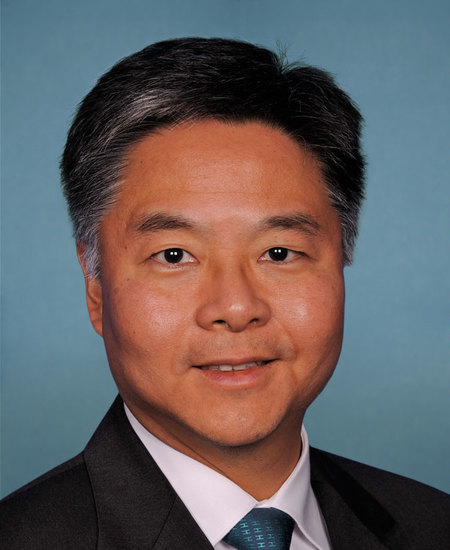
Rep. Ted Lieu
Sponsored bills
Maddy summaryThe Gun Safety Innovation Opportunity Act of 2026 creates a new grant program to fund research and development of advanced safe firearm storage devices by institutions of higher education and firearms manufacturers. These grants, totaling up to $10 million annually from 2027 to 2030, are intended to support technologies that use biometric data or other security measures to prevent unauthorized access to guns and to study how consumers might adopt such devices. To receive funding, applicants must submit detailed plans explaining how their technology will enhance community safety and increase affordability for users. Additionally, the bill requires the Attorney General to submit a report to Congress within a year of enactment, outlining potential ways to support this technology development and its use by law enforcement to prevent suicide.
Maddy summaryThis House resolution reaffirms the United States' commitment to protecting refugees and displaced persons by calling for the restoration of the Refugee Admissions Program and asylum protections. It urges federal officials to lift current bans on refugee entry, resume vetting for approved applicants, and increase humanitarian aid to host countries. The measure highlights the economic contributions of refugees and emphasizes the need for fair, humane policies that align with international obligations and domestic law.
Maddy summaryThis resolution expresses the sense of the House of Representatives that the United States should recognize and encourage acts of kindness to foster community and build social resilience. It highlights the belief that kindness strengthens families, neighborhoods, and the nation by connecting people across differences and promoting a healthier society. The bill does not create new laws or funding but serves as a symbolic statement affirming the value of everyday compassionate actions.
Maddy summaryThe No 9/11 Family Left Behind Act of 2026 provides an additional lump-sum payment to certain eligible families of victims of state-sponsored terrorism. This extra payment equals 5.8573 percent of the original judgment amount awarded to those who have not yet received a prior payment under the existing law. The bill requires the Special Master to notify eligible claimants within 90 days of the act's enactment and to process their claims for this additional amount within 90 days of receiving the necessary information. Funding for these payments will come from any unappropriated funds in the U.S. Treasury.
Maddy summaryThe Keeping Pets and Families Together Act authorizes $5 million annually from 2026 to 2030 to fund cooperative agreements between the USDA and state or local animal shelters. These funds would support microchipping programs for dogs and cats in care at public pounds, private humane societies, and contracted organizations before the animals are adopted or transferred. The legislation requires the Secretary of Agriculture to submit a report by December 31, 2030, evaluating the program's effectiveness and recommending whether to extend it.
Maddy summaryThis resolution commemorates the 30th anniversary of Taiwan's first direct presidential election in 1996 and expresses support for the preservation of its democratic institutions. It acknowledges Taiwan's history of free elections and peaceful transfers of power while reaffirming U.S. policy commitments under the Taiwan Relations Act and previous agreements. The text explicitly states that it does not authorize the use of military force, serving as a symbolic statement rather than a legislative action that changes laws or policy.
Maddy summaryThis bill, titled the Dignity and Due Process for Children Act of 2026, restricts how unaccompanied children under 18 are handled by immigration authorities in the United States. It requires immigration judges to issue an arrest warrant before detaining these children pending removal decisions and prohibits the use of military personnel or Department of Defense vehicles to transport them for deportation, except during declared natural disasters. Additionally, the law forbids government agencies from pressuring children to sign legal documents that affect their status without first ensuring they have confidential access to a lawyer, mandating legal referrals within five business days if a child does not already have one.
Maddy summaryThe Fair Day in Court for Kids Act of 2026 aims to improve the immigration court process for unaccompanied children by guaranteeing them government-funded legal representation. Under this bill, the Department of Health and Human Services would appoint lawyers for these children as soon as they enter federal custody, ensuring they have an attorney for every stage of their case, even if they turn 18 or are reunited with family while proceedings are pending. The law also requires that children receive copies of their immigration files at least seven days before a hearing and allows them to have a lawyer present during interviews and detention facility visits. Additionally, the bill mandates annual reports on how many children received counsel and establishes rules for pro bono legal services to support these efforts.
Maddy summaryThis bill is a resolution that formally recognizes the week of June 14 through June 21, 2026, as National Men's Health Week. It does not create new laws or change federal funding but instead encourages the President to issue a proclamation asking the public and organizations to observe the week with awareness events. The measure highlights statistics on men's health disparities, such as lower life expectancy and higher rates of certain diseases, to emphasize the importance of preventive care and early detection. By promoting these health goals, the resolution aims to encourage men to seek medical checkups and adopt healthier lifestyles without altering any existing policies.