

Maddy summaryThis bill creates a new federal crime for assaulting law enforcement officers causing serious injury or death, with penalties up to 10 years in prison for serious injury and up to life for aggravated cases involving death, kidnapping, or attempted killing. It applies when offenses involve interstate travel, commerce, or target officers engaged in law enforcement duties. Federal prosecution requires Attorney General certification that state authorities cannot or will not handle the case, or that federal action is necessary for public safety. The law covers all law enforcement officers (state, local, and federal) who enforce criminal laws or detain individuals.
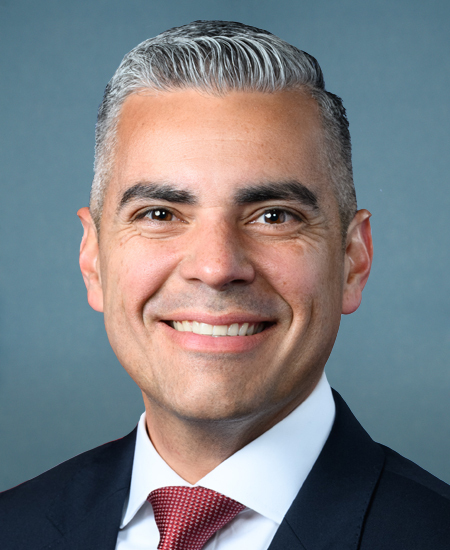
Rep. Juan Ciscomani
Sponsored bills
Maddy summaryThis bill helps new car dealers affected by pandemic-era supply chain disruptions by changing tax rules for inventory sales. It allows dealers using LIFO accounting to treat certain sales of unsold vehicles (liquidations) between March 2020 and December 2021 as "qualified" for tax purposes. Dealers can defer recognizing income from these sales and have until 2026 to replace the sold vehicles before potential tax adjustments apply. The provision specifically targets dealers who couldn't replenish inventory during the supply chain crisis.
This resolution recognizes and appreciates the dedication and devotion demonstrated by the men and women of law enforcement. It also condemns calls to defund, disband, dismantle, or abolish the police.
Maddy summaryThe Educational Choice for Children Act creates tax credits for individuals and corporations that contribute to scholarship granting organizations providing education scholarships. Individuals can claim a credit up to $5,000 or 10% of their income, while corporations can claim up to 5% of taxable income. The scholarships are available to students from households with income up to 300% of the area median income, and can be used for private school tuition, tutoring, and other educational expenses at elementary and secondary schools. The bill includes strict requirements for scholarship organizations to verify income, conduct audits, and prevent misuse of funds, while also prohibiting government control over these organizations and protecting private and religious schools from discrimination in the program. It establishes a $10 billion annual cap on the total tax credits available.
Maddy summaryThe Military Child Educational Freedom Act amends the tax code to allow active duty military families to deduct home school expenses as private school costs for federal income tax purposes. It specifically applies to military members or their spouses on active duty who use home schools recognized by state law as home or private schools. The bill changes the Internal Revenue Code definition of "private school" to include such home schools for education expense deductions. This change takes effect for tax years beginning after the bill's enactment.
Maddy summaryHR 496, the PELL Act, creates "Workforce Pell Grants" to support short-term workforce training programs instead of traditional college degrees. It directly affects students enrolled in qualifying short programs (150-600 hours, 8-15 weeks) that align with in-demand jobs. To qualify, programs must meet strict standards: 70%+ completion rates, 70%+ job placement rates, and demonstrate graduates earn at least 150% above the poverty line within three years. The bill also requires annual public reporting of program outcomes like completion rates, job placement, and graduate earnings to ensure accountability.
Maddy summaryHCONRES 3 is a non-binding congressional resolution expressing support for pro-life facilities, groups, and churches targeted by vandalism and threats following the Supreme Court's Dobbs decision. It condemns specific incidents like graffiti, window-smashing, and arson at pregnancy centers and churches (e.g., in Frederick, MD, and Portland, OR), while recognizing the role of these organizations in supporting pregnant women. The resolution calls on the Biden Administration to use law enforcement to protect these facilities but does not create new laws or policies. As a symbolic measure, it has no legal effect on the incidents described.
Maddy summaryThis bill renames a U.S. Postal Service facility at 620 East Pecan Boulevard in McAllen, Texas, as the "Agent Raul H. Gonzalez Jr. Memorial Post Office." It updates all federal references to the location to reflect this new name. The bill has no policy impact - it is purely a ceremonial designation honoring an individual. No other provisions or affected groups are involved.
Maddy summaryHR 345, the TRUST in Congress Act, requires Members of Congress, their spouses, and dependent children to place certain investments into a "blind trust" within 90 days of taking office or after the bill's enactment. It directly affects current and future lawmakers and their immediate family members by mandating that covered investments - such as stocks, commodities, or derivatives (excluding Treasury bonds and some mutual funds) - be placed in a trust they cannot manage. Members must certify the trust setup to House or Senate officials within 15 days, and trusts cannot be dissolved until 180 days after leaving office. The law excludes investments providing primary income (e.g., from a spouse's job) but requires transparency through public website disclosures of certifications.
Maddy summaryHJRES 8 proposes a constitutional amendment to permanently set the Supreme Court's size at nine justices. The bill would require any future changes to the Court's composition to follow this specific number, locking in the current structure. It does not alter the existing Court size (which has been nine since 1869) but aims to prevent future adjustments through legislative action. The amendment must be ratified by three-fourths of state legislatures within seven years to take effect. This is a procedural proposal focused on constitutional structure, not a direct policy affecting citizens or programs.