

Maddy summaryThe AI Transparency in Elections Act of 2026 requires political advertisements containing content substantially generated by artificial intelligence to include clear and conspicuous disclaimers. These labels must appear on images, audio, and video ads that advocate for or against candidates, solicit contributions, or refer to candidates within 120 days of an election. The bill mandates that visual disclaimers be as large as the main text, while audio disclaimers must be spoken for at least four seconds at the beginning or end of the recording. Violations of these disclosure rules could result in civil money penalties of up to $50,000 per ad, and the Federal Election Commission is tasked with creating specific regulations to enforce the law.
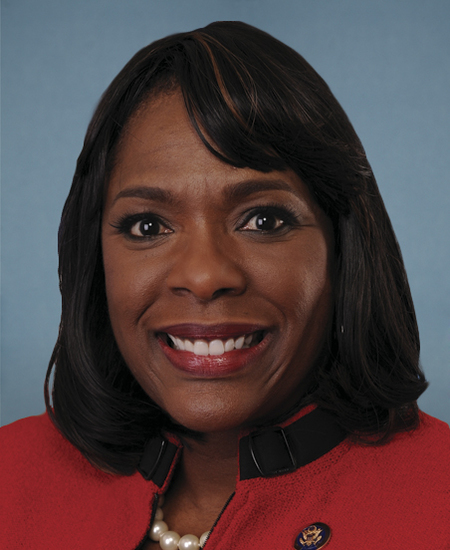
Rep. Terri A. Sewell
Sponsored bills
Maddy summaryThis bill reauthorizes and expands the Accelerating Access to Critical Therapies for ALS Act through 2031, extending funding for research into treatments for amyotrophic lateral sclerosis. It requires drug manufacturers to share interim clinical trial data with the FDA to better assess the progress of investigational drugs and clarifies that phase 3 clinical trial definitions include combined phase 2/3 trials and planned trials not yet enrolling participants. The legislation also mandates the FDA to publish an updated five-year action plan for ALS and other rare neurodegenerative diseases, including resource needs and coordination strategies with broader disease communities. Additionally, the bill requires the Government Accountability Office to submit a report on the program's implementation four years after enactment.
Maddy summaryThe Polling Place Standards Act requires states to establish at least one voting location for every 2,000 registered voters before federal elections, ensuring these sites are spread across diverse geographic areas rather than concentrated in specific regions. This law mandates that each polling place be adequately staffed to handle ballot processing, maintain security, and accommodate accessibility needs while keeping voter wait times at 30 minutes or less. States that allow voters to cast ballots via drop boxes or mail-in methods are exempt from these physical location requirements. To help states meet these new standards, the bill creates a federal grant program to provide funding for implementing the necessary changes.
Maddy summaryThe Inclusive Democracy Act of 2026 mandates that individuals with criminal convictions retain their right to vote in federal elections and requires prisons, jails, and probation offices to notify incarcerated or supervised individuals of this right. The bill establishes specific procedures for voter registration and absentee voting within carceral settings, including expedited transmission of forms and the ability to use either a prison address or a last known address for registration. It also prohibits states from rejecting ballots or registration applications based on late mailing dates or electronic submission methods and ensures that election materials and nonpartisan voter registration services can be distributed inside correctional facilities.
Maddy summaryThe Tuskegee Airmen Memorial Act of 2026 authorizes the organization Tuskegee Airmen, Inc. to build a commemorative monument on federal land in Washington, D.C., honoring the original Tuskegee Airmen who served in World War II. This legislation allows the group to accept private donations and cover all costs for the project without using federal funds, while requiring any leftover money to be deposited into specific government accounts. The bill also mandates that the memorial be constructed in compliance with existing federal standards for commemorative works.
Maddy summaryThe Wildfire Reduction Market Expansion Act of 2026 updates the Clean Air Act to broaden the definition of renewable biomass eligible for carbon credits. It specifically allows materials from forest management, such as slash, storm debris, and wood residuals, to be counted as renewable fuel if they come from sustainably managed lands or public forests designated for fuel reduction. The bill also includes vegetation cleared from defensible space around buildings and from wildfire risk reduction projects in the wildland-urban interface. By clarifying these categories and establishing certification requirements, the legislation aims to increase the supply of biomass available for generating renewable energy credits.
This bill designates the facility of the United States Postal Service located at 86-014 Farrington Highway in Wai'anae, Hawai'i, as the "U.S Representative Colleen Hanabusa Post Office Building".
This bill designates the facility of the United States Postal Service located at 401 North Elm Street in Tuskegee, Alabama, as the "Tuskegee Airmen Memorial Post Office".
Maddy summaryThe Justice for Incarcerated Moms Act aims to improve maternal health outcomes for pregnant and postpartum individuals in the criminal justice system by restricting financial incentives for states that use restraints on pregnant inmates. Under the bill, states receiving federal justice grants would face a 25 percent funding penalty if they fail to implement laws limiting the use of shackles on pregnant individuals, with those withheld funds redirected to compliant states. The legislation also directs the Bureau of Prisons and the Department of Justice to create and fund programs in at least six federal facilities and across various state and local prisons that provide specialized prenatal care, mental health support, and reentry assistance. These programs are designed to address specific health disparities, particularly for racial and ethnic minority groups, by offering culturally competent care, nutrition counseling, and opportunities to maintain contact with newborn children. Additionally, the act requires an independent oversight organization to monitor program implementation and mandates a Government Accountability Office report to analyze maternal and infant health data within the correctional system.
Maddy summaryHR 2001 increases annual funding for a grant program supporting dental workforce development from $13.9 million to $15 million, extending the program through fiscal years 2026-2030 (previously 2019-2023) under the Public Health Service Act. The bill modifies existing funding levels to maintain support for addressing dental workforce shortages, with funds remaining available until expended. This change directly affects the operation of the grant program and its ability to fund dental workforce initiatives.