

Maddy summaryH.J.Res. 118 is a symbolic resolution proposing that September 12, 2025, be designated as "The Day of the Bible" in the U.S. It does not create new laws or affect specific groups. The resolution asks Congress to express support for the designation and encourages schools, civic groups, and communities to hold educational activities about the Bible's historical role. It also requires the President to issue an annual proclamation for this day, recognizing the 1782 approval of the Aitken Bible as a milestone in American history. The bill is purely ceremonial with no legal obligations.
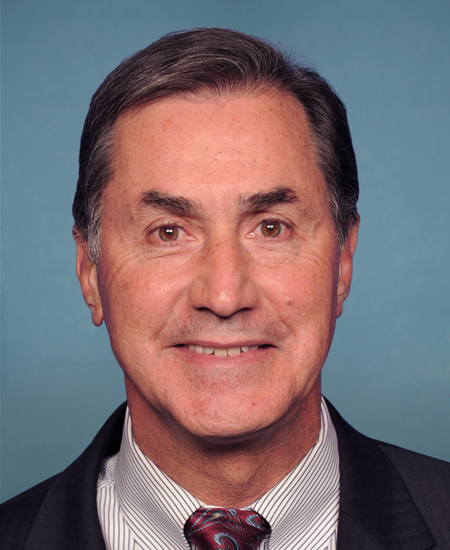
Rep. Gary J. Palmer
Sponsored bills
Maddy summaryHR 4863, the Fairness for Khobar Act of 2025, provides lump sum catch-up payments to victims of the 1983 Beirut barracks bombing and 1996 Khobar Towers bombing who were previously denied compensation due to confusing Department of Justice guidance. The bill requires the Special Master to authorize these payments to individuals who relied on outdated guidance stating they could not apply for lump sum payments if already eligible for regular distributions. Victims can prove their reliance through documentation, sworn statements, or other methods approved by the Special Master. Payments will be made from a reserve fund or the main compensation fund, ensuring those who were wrongly excluded can now receive full compensation they were entitled to under the law.
Maddy summaryThe Cutting LNG Bunkering Red Tape Act clarifies that refueling vessels with LNG as marine fuel in U.S. waters does not count as an export under the Natural Gas Act. This means LNG fuel suppliers and shipping companies operating in U.S. territorial seas or inland waters no longer need an export license for these transactions. The bill specifically states that such refueling is not an export unless the transfer occurs in foreign territorial waters, regardless of vessel flags or registry. This change directly reduces regulatory barriers for domestic LNG bunkering operations.
Maddy summaryHR 4621, the 320th Barrage Balloon Battalion Gold Medal Act, authorizes a single gold medal to honor the 320th Barrage Balloon Battalion - a segregated African-American unit that served during the D-Day invasion in World War II. The medal, struck by the U.S. Mint, will be presented by Congress and displayed at the Smithsonian Institution, with bronze duplicates available for sale to cover costs. The bill recognizes the unit’s role in deploying barrage balloons to protect Allied troops from air attacks on Omaha Beach and their overall contributions to the D-Day success. It does not create new laws or affect any policies, as it is purely a commemorative gesture for historical recognition.
Maddy summaryHR 4609 extends the expiration date of the Defense Production Act of 1950 authority from September 30, 2025, to September 30, 2031. This procedural bill directly affects federal agencies like the Department of Defense, which use the Act to prioritize and allocate resources for national security needs. The key provision simply updates the sunset date for the Act’s authority without altering its existing provisions or creating new requirements. It ensures continuity in the government’s ability to mobilize domestic production for critical materials and infrastructure during emergencies.
Maddy summaryThe Defending American Property Abroad Act of 2025 protects U.S. property interests in Western Hemisphere countries with U.S. free trade agreements. It requires the Secretary of Homeland Security to identify and list ports, harbors, or marine terminals where a foreign government has nationalized, expropriated, or seized U.S.-owned land (since January 2024) through actions like contract repudiation or forced control. Once listed, the President must prohibit vessels using these sites from importing goods, docking passenger vessels, or conducting maintenance in the United States. This directly affects U.S. persons (citizens or businesses) with property in designated locations.
Maddy summaryHRES 594 is a non-binding resolution passed by the U.S. House of Representatives condemning the persecution of Christians in Muslim-majority countries. It cites specific examples like violence against Christians in Nigeria (including attacks on Palm Sunday and Yelewata), restrictions in Egypt (such as limited worship spaces and forced conversions), and blasphemy-related violence in Pakistan. The resolution urges the President to prioritize protecting persecuted Christians in U.S. foreign policy, including through diplomatic engagement and trade negotiations with affected countries. As a symbolic resolution, it does not create new laws or directly affect any individuals, but aims to influence U.S. diplomatic efforts.
Maddy summaryThe SHIELD Act would change unemployment benefit eligibility by barring workers from receiving regular unemployment compensation if they are unemployed due to a strike or labor dispute they are participating in, financially supporting, or have a direct interest in (excluding lockouts). This rule would require states to adjust their unemployment programs to deny benefits in such cases. The changes would take effect two years after the bill becomes law, though states could choose to implement them sooner. The bill also repeals a federal tax provision related to unemployment tax rates, but this is a secondary provision.
Maddy summaryHR 4382 authorizes the U.S. Mint to produce commemorative coins for the 2028 Los Angeles Olympics/Paralympics and 2034 Salt Lake City Winter Olympics/Paralympics. It specifies gold, silver, and half-dollar coin designs with defined mintage limits (e.g., up to 100,000 $5 gold coins for each event), all bearing inscriptions like "2028" or "2034" and standard coin features. A surcharge ($5-$50 per coin) is added to sales, with all funds directed to the respective Olympic committees to support event hosting and legacy programs like youth sports. The bill ensures no net cost to the government by requiring surcharge revenues to cover all design, production, and marketing expenses before funds are disbursed.
Maddy summaryHR 4370, the SAMS Act of 2025, codifies five existing executive orders into law to strengthen U.S. mineral supply chains. It gives legal force to orders focused on securing critical minerals (like lithium and rare earths) for national security and economic resilience, directly affecting federal agencies implementing these strategies. Key provisions require agencies to follow these established policies - addressing reliance on foreign mineral sources, supporting domestic mining, and prioritizing national security in mineral processing - without creating new regulations. The bill does not alter current mineral policies but formally enshrines them as binding federal requirements.