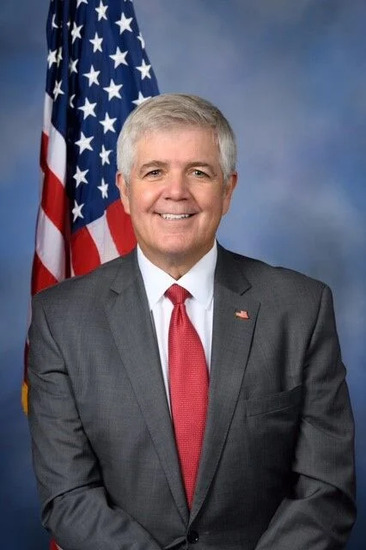
This bill establishes new federal standards requiring oil and gas companies operating on the Outer Continental Shelf to be certified as "fit to operate" before they can obtain or maintain leases. To receive this certification, companies must demonstrate a clean safety and environmental record over the past decade, maintain an investment-grade credit rating, and prove they have sufficient funds to cover future decommissioning costs. The legislation also mandates that operators place a significant portion of estimated decommissioning costs into interest-bearing escrow accounts and limits the time a well can be temporarily abandoned to three years, with a possible one-time extension to five years. Additionally, the bill requires the Department of the Interior to conduct annual compliance checks and submit detailed reports to Congress regarding enforcement actions and escrow account balances.
This bill increases the corporate tax rate on stock buybacks to 25 percent for large oil and gas companies that meet specific revenue and operational criteria. It targets corporations with an average annual gross receipt of at least $1 billion that are primarily engaged in producing, refining, processing, transporting, or distributing oil or natural gas. The higher tax rate applies only to stock repurchases made after the bill is enacted and before gasoline prices fall below $2.937 per gallon for five consecutive weeks. If gasoline prices drop below this threshold, the special tax provision ceases to apply, and companies may claim a partial reduction in their tax liability based on the duration of the high-price period.
This legislation modifies the Federal Power Act to restrict the Federal Energy Regulatory Commission's ability to issue emergency orders for power generation facilities. It requires the Commission to consider alternatives that minimize environmental impacts and conduct public hearings before acting. The bill also prohibits orders that would delay the retirement or permanent closure of a facility unless a unique emergency exists and is formally requested. Furthermore, it mandates that utilities inform customers about the costs and impacts of any emergency orders issued under these rules.
This bill, the End Polluter Welfare for Enhanced Oil Recovery Act of 2026, removes tax incentives for enhanced oil recovery projects that use carbon dioxide as an injectant. It directly affects oil and gas companies and energy producers who build qualified facilities after the law is enacted. The legislation eliminates the tax credit for carbon capture and storage when the captured carbon dioxide is used to extract more oil from existing wells. Additionally, the bill repeals the federal enhanced oil recovery tax credit that previously allowed companies to deduct certain costs related to extracting additional oil from mature wells. These changes apply to taxable years beginning after the bill is enacted.
This bill proposes a new windfall profits tax on crude oil producers and importers, targeting companies that extract or import more than 300,000 barrels of oil per day. The tax rate would be 50% of the amount by which current crude oil prices exceed a baseline set at the 2025 average, with adjustments for inflation in subsequent years. Revenue collected from this tax would be placed in a dedicated fund and then rebated directly to individual taxpayers as a credit against their income taxes. The rebate amount would be calculated quarterly based on the total tax revenue collected and distributed to eligible individuals, with higher amounts for joint filers and income-based phase-outs. The bill applies to oil extracted or imported after December 31, 2025, and includes provisions for territories with mirror tax systems to receive equivalent benefits.
HR 2467, America's Red Rock Wilderness Act, would designate approximately 1.3 million acres of public land across Utah as wilderness areas, protecting them from development and managing them for conservation. The bill specifically designates 77 wilderness areas in the Great Basin and Colorado Plateau regions, including lands within existing national monuments like Grand Staircase-Escalante and Bears Ears. It includes provisions for water rights protection, allows continued livestock grazing under certain conditions, and withdraws the designated lands from mining and mineral leasing. The bill also ensures Tribal rights are protected and requires the Secretary of the Interior to administer these areas according to wilderness management standards.
This bill codifies existing protections for designated roadless areas within the National Forest System by prohibiting new road construction, road reconstruction, and logging in these areas. It directly affects National Forest lands already identified as "inventoried roadless areas" under the current Roadless Rule, which covers roughly 58 million acres. The key mechanism requires the Secretary of Agriculture to enforce these prohibitions, maintaining current protections without expanding restrictions to other lands or altering existing multiple-use management. The bill does not create new protected areas but legally solidifies the existing regulatory framework to preserve ecological and recreational values.
H.J.Res. 88 disapproves an Environmental Protection Agency (EPA) rule that would have allowed California to enforce its "Advanced Clean Cars II" vehicle emission standards. This rule, submitted by the EPA on January 6, 2025, sought to grant California a waiver to override federal preemption for its stricter vehicle pollution controls. The resolution, passed by Congress and signed into law on June 12, 2025, formally nullifies the EPA rule, preventing California from implementing its Advanced Clean Cars II program under this specific waiver. The bill directly affects California's ability to set its own vehicle emission standards for passenger cars and light trucks.
HR 3067, the Arctic Refuge Protection Act, repeals the existing oil and gas program for the Arctic National Wildlife Refuge (ANWR) and designates approximately 1.56 million acres of the refuge's Coastal Plain as wilderness. This directly affects federal management of the ANWR, halting potential oil drilling in the designated area. The bill requires the Secretary of the Interior to administer the newly designated wilderness area under the Wilderness Act, treating it as part of the existing wilderness within ANWR. The change prevents future oil and gas development on this specific portion of the refuge.
This bill amends the tax code to close a loophole that previously allowed certain tar sands oil to be taxed differently than conventional crude oil. It expands the definition of "crude oil" under federal excise tax rules to explicitly include oil derived from tar sands, bitumen, and oil shale. This change directly affects oil producers and refiners handling these specific unconventional oil sources, requiring them to pay the standard crude oil excise tax. The key mechanism is the updated tax code definition, which also grants the Secretary regulatory authority to include other pipeline-transported petroleum products meeting specific environmental risk criteria.