

Maddy summaryThis bill abolishes the Anti-Weaponization Fund, a financial reserve created by the Attorney General during the Trump v. Internal Revenue Service legal case. It also declares an order issued on May 19, 2026, regarding the release of certain claims as invalid and without effect. The legislation directly impacts the Department of Justice by removing this specific fund and reversing the associated administrative directive.
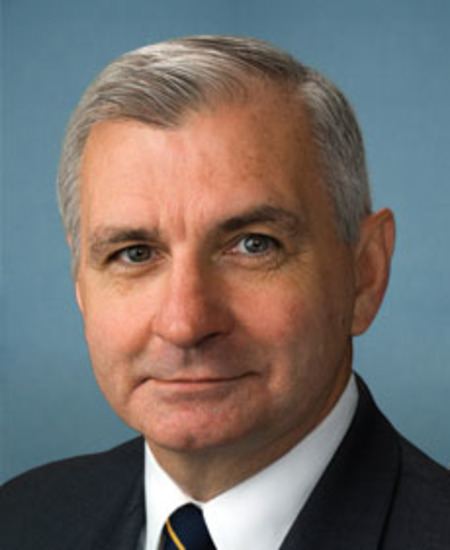
Sen. Jack Reed
Sponsored bills
Maddy summaryThe Make More in America Act of 2026 expands the Export-Import Bank's authority to provide loans, guarantees, and other financial support specifically for U.S. manufacturing projects that are intended for export. This new program targets strategic industries such as renewable energy, semiconductors, shipbuilding, and advanced robotics, with a goal of creating at least 30 percent of the Bank's annual financing for these domestic projects. To ensure accountability, the bill requires recipients to meet prevailing wage standards, commit to workforce training, and adhere to strict timelines, with funds subject to clawback if these conditions are not met. Additionally, the legislation increases the Bank's overall lending authority, establishes a new interagency committee to coordinate federal investment strategies, and tightens rules on who is eligible for Bank support.
First Rhode Island Regiment Congressional Gold Medal Act This bill provides for the award of a single Congressional Gold Medal to the First Rhode Island Regiment, collectively, in recognition of their dedicated service during the Revolutionary War.
Maddy summaryThis bill, known as the Gun Records Restoration and Preservation Act, aims to repeal specific restrictions on how the Bureau of Alcohol, Tobacco, Firearms and Explosives manages gun-related data. By removing these limits, the legislation would allow federal agencies to keep instant background check records longer than the current 24-hour requirement and enable the ATF to conduct annual inventory audits of gun dealers. Additionally, the bill would permit the consolidation of firearms records and allow for more Freedom of Information Act requests regarding gun traces. These changes are intended to help law enforcement track illegal firearms more effectively and support research into gun trafficking patterns.
North Platte Canteen Congressional Gold Medal Act This bill provides for the award of a Congressional Gold Medal to recognize the individuals and communities that provided financial and other support for the North Platte Canteen in North Platte, Nebraska, during World War II.
Maddy summaryThe Responsible Artificial Intelligence Defense Act of 2026 establishes a new framework for the U.S. Department of Defense to develop and deploy autonomous weapon systems and artificial intelligence capabilities. It requires the Secretary of Defense to maintain continuous human oversight, ensuring that operators can intervene to stop systems acting illegally or unexpectedly. The bill mandates rigorous testing, cybersecurity reviews, and legal assessments before these technologies are prototyped or fielded, while also creating a working group to advise on safety standards. Specific prohibitions prevent the use of AI for nuclear launch decisions or warrantless surveillance of individuals within the United States. Additionally, the act defines different risk levels for these systems and requires annual reports to Congress on their administration.
Maddy summaryThe Freedom to Travel for Health Care Act of 2026 prohibits any person or government entity from restricting, sanctioning, or discriminating against individuals who travel to another state to receive reproductive health care that is legal there. It also protects those who assist travelers and reproductive health care providers from facing penalties for offering services to out-of-state patients, effectively overriding any conflicting state laws. The bill establishes a private right of action allowing affected individuals, organizations, and providers to sue in federal or state court for violations, with provisions for damages and attorney's fees. Additionally, it removes state sovereign immunity defenses for officials enforcing laws that interfere with this travel right, ensuring federal courts can hear such cases directly.
Maddy summaryThe Protecting American Consumers Act establishes a minimum funding level for the Bureau of Consumer Financial Protection to ensure it has sufficient resources to operate. Specifically, the bill mandates that the federal government must transfer at least 12 percent of the Federal Reserve System's total operating expenses to the Bureau each fiscal year. This provision directly affects the Bureau's budget and its ability to enforce financial regulations on lenders and other entities that impact consumers. By setting a fixed floor for funding, the legislation aims to prevent the Bureau's budget from being reduced below this threshold in future years.
Maddy summaryThis Senate resolution honors the life and legacy of Donald W. Riegle, Jr., a former U.S. Senator from Michigan who passed away in April 2026. The bill formally acknowledges his nearly three decades of public service, including his roles as a Representative and Senator, and highlights his significant contributions to legislation on banking, housing, and veterans' health. It also expresses the Senate's condolences to his family and directs officials to share the resolution with the House of Representatives and send a copy to Riegle's family. Finally, the Senate will stand in adjournment as a mark of respect for the former senator when the session concludes.
Maddy summaryThe Elementary and Secondary School Counseling Act creates a new funding program to hire more counselors, psychologists, and social workers for schools with high numbers of low-income students. These funds are distributed to states, which then award subgrants to local school districts to help them reach recommended staffing ratios of 250 students per counselor, 500 per psychologist, and 250 per social worker. To qualify for the money, states must match the federal grant with their own funds and submit detailed plans showing how they will prioritize high-need schools. The bill also requires regular reporting on how many mental health staff are hired and the current student-to-staff ratios in participating schools.