

Maddy summaryThe GOLDEN DOME Act of 2025 establishes a comprehensive homeland missile defense system designed to protect U.S. citizens and critical infrastructure from ballistic, hypersonic, cruise, and unmanned system threats. The bill creates a new Golden Dome Direct Report Program Manager with significant authority to accelerate development, testing, and deployment of integrated missile defense capabilities across all domains (land, sea, air, space, and cyberspace). It requires a holistic strategy with all-domain awareness, mandates accelerated testing schedules including live-fire exercises, and allocates specific funding for components like space-based sensors, interceptors, and command and control systems. The legislation also includes provisions to protect the space industrial base and secure critical supply chains for missile defense systems.
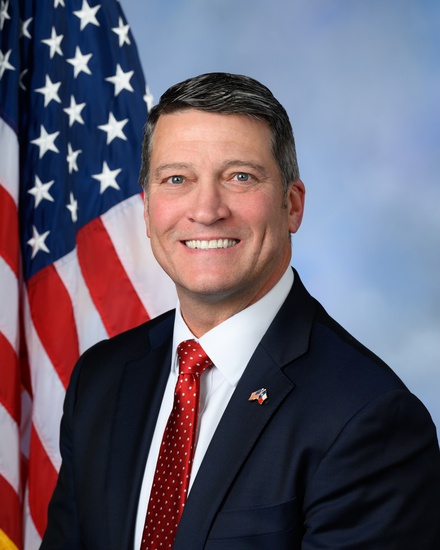
Rep. Ronny Jackson
Sponsored bills
Maddy summaryHRES 520 is a House resolution honoring former First Lady Barbara Pierce Bush on the occasion of her 100th birthday, recognizing her life, achievements, and public service. It specifically highlights her advocacy for literacy - including establishing the Barbara Bush Foundation for Family Literacy and supporting the National Literacy Act - and her roles as Second Lady and First Lady during her husband George H.W. Bush's presidency. This commemorative resolution does not create new laws or policies; it serves only to formally acknowledge her legacy. The resolution was introduced by House members on June 17, 2025.
Maddy summaryThis bill authorizes the U.S. Army to contract for up to 24 early-production Future Long Range Assault Aircraft (FLRAA) before full-scale manufacturing begins. It directly affects the Army, aircraft contractors, and specialized suppliers in Texas, Kansas, and other states by requiring accelerated production to maintain workforce stability and supply chain continuity. Key provisions include prioritizing cost efficiency, incorporating test lessons into early aircraft, and allowing design flexibility for future upgrades through modular systems. The Army must report to Congress within 180 days on the implementation plan, industrial base readiness, and projected cost savings from this early production effort.
Maddy summaryThis bill blocks the U.S. Defense Department from signing new contracts for software source code with companies having specific ties to China. It prohibits contracts with entities that own or fund AI facilities in China, share source code allowing Chinese reverse engineering, or operate data centers in China for such software. The Secretary of Defense may waive the ban for national security reasons, but the rule only applies to contracts entered into within three years of the law's enactment. It directly affects defense contractors and tech firms seeking to provide sensitive software source code to the Pentagon.
Maddy summaryThis bill mandates annual funding for USDA programs to prevent, detect, and respond to foreign animal diseases affecting livestock. It requires $30 million annually for 2023-2025, increases to $233 million yearly for 2026-2029, and then reduces to $75 million annually after 2030, with specific allocations for surveillance, laboratory networks, and emergency response. The funds directly support state and federal animal health programs, including the National Animal Health Laboratory Network and the National Animal Disease Preparedness Program. These provisions aim to strengthen protections for U.S. agriculture by ensuring consistent resources for disease monitoring and rapid containment.
Maddy summaryThis bill would make non-citizens deportable if they incite or participate in riots during civil unrest involving assaults on law enforcement or military personnel, or destruction of public property, and who were unlawfully present, had DACA, or were lawful permanent residents at the time of the offense. It permanently bars such individuals from reentering the U.S. or accessing any relief from deportation, including asylum, cancellation of removal, or future DACA benefits. During declared emergencies (such as national disasters or state emergencies), the law mandates expedited removal and mandatory detention for those covered, with no discretion for enforcement.
Maddy summaryHRES 481 is a symbolic resolution condemning recent antisemitic attacks in the U.S., specifically referencing the June 1, 2025, Boulder, Colorado, assault on a Jewish community gathering and other incidents like the May 2025 Washington, D.C., embassy shooting. It formally recognizes a pattern of violence targeting Jewish individuals and institutions, including attacks during religious events. The resolution calls on law enforcement to thoroughly investigate and prosecute such incidents and urges elected officials to publicly oppose antisemitism and politically motivated violence. As a non-binding resolution, it does not create new laws or allocate funding but serves to affirm congressional stance against antisemitism.
Maddy summaryThis concurrent resolution (HCONRES 36) commemorates the 100th birthday of former First Lady Barbara Pierce Bush by honoring her life, achievements, and public service, particularly her advocacy for literacy through founding the Barbara Bush Foundation for Family Literacy and supporting the National Literacy Act. It does not create new laws or policies but serves as a symbolic recognition of her contributions to public service during her time as First Lady and Second Lady of the United States. The resolution is non-binding and focuses solely on acknowledging her legacy.
Maddy summaryHRES 483 is a House resolution recognizing the 250th anniversary of the U.S. Army's founding on June 14, 1775. It expresses appreciation for the Army's service over 250 years, honors soldiers' valor and core values, and calls for public observance through ceremonies and activities. The resolution has no policy impact or funding provisions - it is purely commemorative. It was introduced by 30 bipartisan House members and referred to the Armed Services Committee.
Maddy summaryHR 649, the Whole Milk for Healthy Kids Act of 2025, amends the National School Lunch Act to allow schools participating in the program to offer students both organic and non-organic whole milk, in addition to reduced-fat, low-fat, and fat-free options. Key provisions include clarifying that milk fat in whole milk should not count toward saturated fat limits for meal compliance, prohibiting schools from purchasing milk from Chinese state-owned enterprises, and ensuring schools cannot be barred from offering the full range of milk types listed. The bill directly affects public and private schools serving the National School Lunch Program by expanding their milk options for students. It focuses on concrete policy changes to dietary offerings and sourcing restrictions within the school nutrition program.