

Maddy summaryHR 3413, the Physician and Patient Safety Act, requires the Health and Human Services Secretary to create regulations ensuring physicians with hospital privileges receive a fair hearing and appeal process before any termination, restriction, or reduction of their professional activity or privileges at a hospital. The regulations must prevent hospitals from denying these hearings through third-party contracts, prohibit requiring physicians to waive their hearing rights as an employment condition, and keep hearings confidential unless there is an ongoing patient safety threat or data bank reporting is legally required. This directly affects physicians who hold hospital medical staff privileges and hospitals that grant or manage those privileges. The regulations must be finalized within 18 months of the bill's enactment. The bill focuses on procedural due process for physicians, not on altering clinical standards or patient care outcomes.
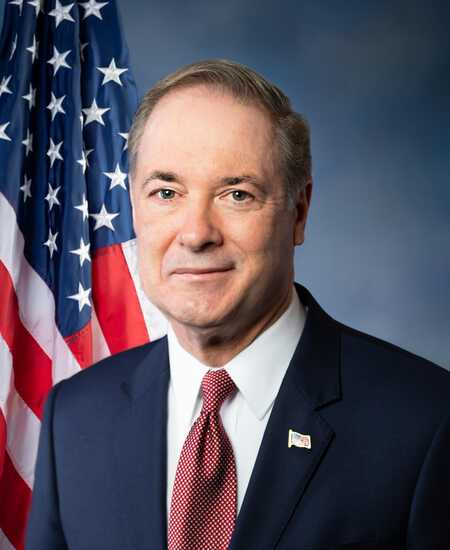
Rep. John Joyce
Sponsored bills
Maddy summaryHR 881, the DHS Restrictions on Confucius Institutes and Chinese Entities of Concern Act, restricts Department of Homeland Security (DHS) funding for colleges and universities that maintain relationships with China-funded Confucius Institutes or specific Chinese entities deemed "of concern." It prohibits DHS funding for institutions with ties to Confucius Institutes, the Thousand Talents Program, or Chinese universities involved in military-civil fusion, defense work, Uyghur persecution, election interference, or other activities listed in the bill. Institutions must terminate such relationships within one year of enactment to regain eligibility for DHS funds. The bill requires the DHS Secretary to report to Congress on any institutions violating this funding restriction. (3 sentences)
Maddy summaryHR 3260 extends the funding period for mental health education grants under Section 756(f) of the Public Health Service Act from fiscal years 2023-2027 to 2026-2030. This procedural change directly affects existing grant recipients and administrators of federal mental health education programs. The bill modifies the grant authorization timeline but does not alter the program's scope or eligibility. It focuses solely on extending the current grant funding period without adding new requirements or benefits.
Maddy summaryHR 3178, the Save Healthcare Workers Act, creates a new federal crime for assaulting hospital staff while they are performing their duties, with penalties including fines and up to 10 years in prison (up to 20 years for aggravated cases involving weapons or injuries). The bill directly affects hospital employees - including nurses, doctors, and support staff - across all covered facilities (such as emergency rooms, long-term care centers, and children’s hospitals) by criminalizing violence that disrupts patient care. It also establishes a $25 million annual grant program (2025-2034) to help hospitals implement safety measures like staff de-escalation training, security technology, and coordination with local law enforcement. These provisions aim to address workplace violence in healthcare settings, which the bill cites as a growing problem affecting service delivery and staff retention.
Maddy summaryHR 3006 would limit Medicare coinsurance for certain surgical procedures performed in ambulatory surgical centers (ASCs). Specifically, it prevents patients from paying coinsurance exceeding the annual inpatient hospital deductible for those procedures. If the coinsurance amount would surpass the deductible, the Medicare program must reduce the patient's share to match the deductible and reimburse the ASC for the difference. This change applies to services provided on or after January 1, 2026, directly affecting Medicare beneficiaries using ASCs for qualifying surgeries.
Maddy summaryThis bill, HR 2936 (the ABC-ED Act), aims to reduce emergency department crowding by requiring real-time tracking of hospital bed capacity and related metrics like patient wait times. It allows federal grants to modernize public health data systems that monitor emergency department boarding rates, bed availability, and ambulance offload times, with results displayed on a public dashboard (while protecting privacy). The bill also adds two new Medicare Innovation Center pilot programs: one focused on improving care for older adults (through staffing, infrastructure, and senior care coordination) and another for psychiatric crisis care (including dedicated units and faster facility transfers). Finally, it mandates a one-year study by the Government Accountability Office to evaluate best practices for these data systems and their impact on emergency department efficiency.
Safeguard American Voter Eligibility Act or the SAVE Act This bill requires individuals to provide documentary proof of U.S. citizenship when registering to vote in federal elections. Specifically, the bill prohibits states from accepting and processing an application to register to vote in a federal election unless the applicant presents documentary proof of U.S. citizenship. The bill specifies what documents are considered acceptable proof of U.S. citizenship, such as identification that complies with the REAL ID Act of 2005 that indicates U.S. citizenship. Further, the bill (1) prohibits states from registering an individual to vote in a federal election unless, at the time the individual applies to register to vote, the individual provides documentary proof of U.S. citizenship; and (2) requires states to establish an alternative process under which an applicant may submit other evidence to demonstrate U.S. citizenship. Each state must take affirmative steps on an ongoing basis to ensure that only U.S. citizens are registered to vote, which shall include establishing a program to identify individuals who are not U.S. citizens using information supplied by certain sources. Additionally, states must remove noncitizens from their official lists of eligible voters. The bill allows for a private right of action against an election official who registers an applicant to vote in a federal election who fails to present documentary proof of U.S. citizenship. The bill establishes criminal penalties for certain offenses, including registering an applicant to vote in a federal election who fails to present documentary proof of U.S. citizenship.
Maddy summaryHR 2767, the BRAIN Act, aims to advance brain tumor research and improve patient care by requiring the NIH to create a public database of tumor samples collected with federal funding. It authorizes $50 million annually for a Glioblastoma Therapeutics Network to accelerate treatment development and $10 million for cellular immunotherapy research (including CAR-T therapies) targeting brain tumors. The bill also mandates a national awareness campaign to increase understanding of cancer clinical trials and biomarker testing, plus $5 million yearly for pilot programs studying survivor care coordination and follow-up services. Additionally, it directs the FDA to issue guidance ensuring brain tumor patients can access clinical trials. These provisions directly affect patients, researchers, and healthcare providers focused on brain tumors and rare cancers.
Maddy summaryHR 2509, the COMPLETE Care Act, creates Medicare payment incentives for primary care providers who integrate specific behavioral health services into their practice. It directly affects Medicare providers offering services identified by HCPCS codes 99484, 99492, 99493, 99494, G2214, and G0323 (covering models like Collaborative Care and Primary Care Behavioral Health) during 2027-2029. The bill increases Medicare payments for these services to 125-175% of standard rates (phasing down from 175% in 2027 to 125% in 2029) and waives budget neutrality rules to fund these higher payments. Additionally, it requires the HHS Secretary to provide technical assistance to primary care practices adopting these models by 2026, with dedicated funding for 2025-2029.
Maddy summaryHR 1908, the End Congressional Stock Trading Act, prohibits Members of Congress, their spouses, and dependent children from owning or trading stocks, bonds, commodities, or complex investments like hedge funds. Current members must sell existing holdings within 180 days (or 5 years for private funds), while new members have 90 days (5 years for private funds). Exceptions include broadly held diversified mutual funds, government retirement accounts, Alaska Native Claims Settlement stocks, and U.S. Treasury securities. Violations could result in civil penalties up to $100,000 per offense.