This bill designates the facility of the United States Postal Service located at 10 East Main Street in Mahaffey, Pennsylvania, as the "Robert Allen Bishop, Sr. Post Office Building".
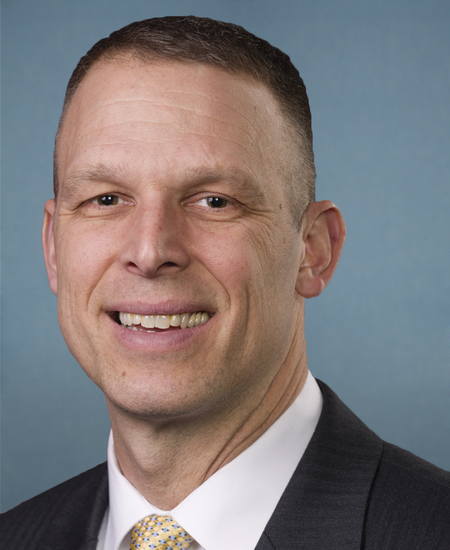
Rep. Scott Perry
Sponsored bills
Maddy summaryThe LASSO Act requires 10% of annual revenue generated from public lands managed by the Interior Department and Agriculture Department (including national forests and Outer Continental Shelf areas) to be deposited into the Social Security Trust Fund. This directly affects the Social Security Trust Fund by increasing its funding, while ensuring no fee hikes for public land activities or reductions in funds for states, tribes, or local governments. The bill mandates this transfer annually without altering existing revenue-sharing agreements or pricing structures. It aims to bolster Social Security finances through a specific, measurable mechanism tied to federal land management.
Maddy summaryThis bill modifies federal budget rules for unspent agency funds. It requires federal agencies to allocate 49% of unused funds to the next fiscal year, 49% toward paying the national debt, and 2% for retention bonuses (capped at 10% of an employee's base pay). Agencies must also limit future budget requests to the previous year's amount adjusted for inflation. The bill directly affects all executive branch agencies (excluding the Red Cross), altering how they manage leftover budget authority. It does not create new savings programs for individuals but changes government fiscal management procedures.
Maddy summaryThis bill prevents state or local governments from banning or restricting energy connections (like installation, modification, or access) based on the type or source of energy, such as electricity, natural gas, or renewable fuels. It directly affects consumers choosing energy providers and energy companies seeking to offer services. The key provision prohibits local laws, regulations, or policies that limit energy services sold in interstate commerce, covering all energy types listed in the bill’s definitions. It does not create new programs but limits regulatory authority at the state or local level. The law aims to ensure open access to diverse energy sources without source-based restrictions.
Safeguard American Voter Eligibility Act or the SAVE America Act This bill requires individuals to provide documentary proof of U.S. citizenship when registering to vote, and requires photo identification to vote, in federal elections. Specifically, the bill prohibits states from accepting and processing an application to register to vote in a federal election unless the applicant presents documentary proof of U.S. citizenship. The bill specifies what documents are considered acceptable proof of U.S. citizenship, such as identification that complies with the REAL ID Act of 2005 that indicates U.S. citizenship. Further, the bill (1) prohibits states from registering an individual to vote in a federal election unless, at the time the individual applies to register to vote, the individual provides documentary proof of U.S. citizenship; and (2) requires states to establish an alternative process to demonstrate U.S. citizenship. Each state must take affirmative steps on an ongoing basis to ensure that only U.S. citizens are registered to vote, which shall include establishing a program to identify individuals who are not U.S. citizens using information supplied by certain sources. Additionally, states must remove noncitizens from their official lists of eligible voters. The bill (1) provides for a private right of action for certain violations, and (2) establishes criminal penalties for certain offenses. Individuals voting in federal elections must present an eligible photo identification document. An individual who votes by absentee ballot must submit a copy of their identification document with both the request for, and the submission of, the absentee ballot.

Maddy summaryHR 7235, the "Protecting Motherhood Act," requires all federal agencies to stop using the term "birthing person" in official documents and instead use specific terms like "female," "mother," "pregnant woman," or "woman." It directly affects federal agencies that produce regulations, forms, or communications, mandating the use of these defined terms when referring to individuals based on biological sex. The bill provides detailed definitions for terms like "female" (based on biological sex at conception) and "pregnant woman" (an adult human female carrying a child). The law takes effect 30 days after enactment. This is a procedural change focused solely on terminology in government documents, with no direct impact on healthcare access or services.
Maddy summaryHR 7213, the *Safeguarding Benefits for Americans Act of 2026*, requires U.S. citizenship or nationality for eligibility for most federal assistance programs (like SNAP, housing aid, or Medicaid). It mandates applicants to submit a written declaration under penalty of perjury and provide documentary proof (e.g., birth certificate, SSN) verified through Social Security Administration and DHS databases. The bill affects individuals applying for or receiving federal benefits, with exceptions for children in households where at least one member meets the requirement (e.g., children in SNAP or elderly housing programs). It takes effect 1 year after enactment, requiring all current recipients to meet the new rules within 2 years.
Maddy summaryThis bill, titled the Divesting from Communist China’s Military Act of 2026, requires the U.S. Treasury Department to add certain Chinese military companies to a government list that restricts investments. The Secretary of the Treasury must list entities identified by the Department of Defense as Chinese military companies within 90 days. Once an entity is listed, U.S. persons are generally prohibited from buying or selling its publicly traded securities, consistent with existing executive orders. The bill includes a one-year period during which U.S. persons may sell off their existing investments in these newly listed companies, solely for divestment purposes.
Maddy summaryThis bill, titled "Pet and Livestock Protection Act," is misleading; it actually focuses on gray wolf management. It requires the Secretary of the Interior to reissue a 2020 rule removing gray wolves from the endangered species list within 60 days of enactment. The bill also prohibits courts from reviewing this reissuance. This directly affects gray wolf populations and management policies in states where wolves are present, shifting regulatory control away from federal endangered species protections.
Maddy summaryThe DRIVER Act requires car manufacturers and fleet owners to give vehicle owners free, real-time access to their vehicle's data (like location, driving habits, and sensor information) through standard ports or wireless connections. Owners can control how this data is used or shared with third parties (except for foreign adversaries), delete stored data, and cannot be charged for access or decryption. Manufacturers and fleet owners must provide clear opt-out options before selling owner data and are banned from selling data to specific countries like China, Russia, or Iran. The Federal Trade Commission enforces these rules under existing laws, and states cannot create conflicting laws.