

Maddy summaryThis bill authorizes Congress to award a Congressional Gold Medal to individuals who fought for or with the United States in the Pacific theater during World War II and subsequently became prisoners of war. The legislation specifically recognizes the service and sacrifice of those who defended locations such as Bataan and Corregidor, including Filipino soldiers and civilians who served alongside U.S. forces. To implement this award, the Speaker of the House and the President pro tempore of the Senate will arrange for the creation of a gold medal by the Secretary of the Treasury, which will be presented to the Smithsonian Institution for display. The act also allows for the production of duplicate bronze medals to cover the costs of the original gold medals, with any proceeds from these sales deposited into the United States Mint Public Enterprise Fund.
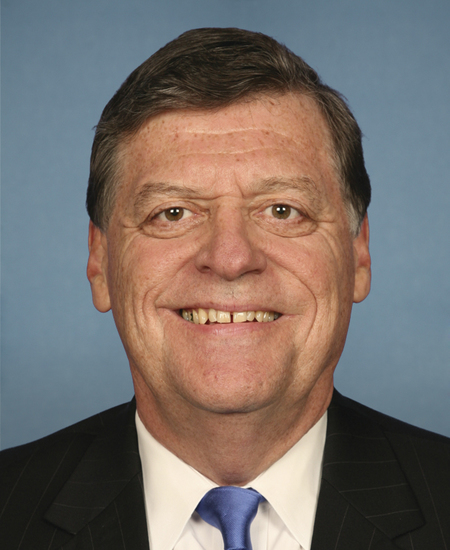
Rep. Tom Cole
Sponsored bills
Maddy summaryThis bill, the Budgeting for a Better America Act, fundamentally changes how the federal government plans its spending by shifting the congressional budget process from an annual cycle to a biennial one, covering two consecutive fiscal years. It establishes a new National Commission on Fiscal Responsibility and Reform composed of 18 members from both political parties to propose specific policies that would reduce the federal deficit to 3% of the gross domestic product within a decade. The legislation also mandates that any joint resolution implementing the commission's recommendations be given expedited floor consideration in both the House and Senate without the possibility of amendment. Additionally, the bill requires the President to submit supplemental budget estimates annually, mandates a hearing on the nation's fiscal state, and ensures new members of Congress receive budgetary training before taking their seats.
Maddy summaryThis bill redesignates the existing National Parks and Public Land Legacy Restoration Fund as the America's Legacy Restoration Fund to address deferred maintenance on federal lands. It directs revenue from recreation fees and a portion of energy development income into the fund, which must be used primarily for repairing critical infrastructure like roads, trails, and buildings managed by agencies such as the National Park Service and the Forest Service. The legislation establishes strict rules requiring that most funds go toward non-transportation projects, mandates transparency through public dashboards tracking project status, and sets aside a small percentage for matching private donations. Additionally, the bill increases entrance fees for foreign visitors to ensure they contribute to the fund, while prohibiting the use of these specific funds for land acquisition or employee bonuses.
Repealing Big Brother Overreach Act This bill repeals the Corporate Transparency Act. The act requires existing companies and newly created companies to report beneficial ownership information to the Department of the Treasury’s Financial Crimes Enforcement Network for purposes of addressing the financing of terrorism and money laundering.
Maddy summaryThis bill establishes a bipartisan Commission on Long-Term Social Security Solvency to study and propose solutions for ensuring the financial stability of Social Security for at least 75 years. The 13-member commission includes appointments from the President, congressional leaders, and committee chairs, with at least half of the congressional appointees required to be non-political experts. After holding public hearings and gathering data, the commission must submit a report with specific legislative recommendations, which Congress is then required to expedite and vote on without amendments. The commission is authorized up to $2 million in funding and will dissolve shortly after submitting its final report.
Maddy summaryThis bill establishes a framework for the Department of the Interior to work with Indian Tribes and Tribal organizations to restore and manage buffalo populations on Indian lands. It authorizes the Secretary of the Interior to provide contracts, grants, and technical assistance to support tribal buffalo restoration programs, commercial buffalo activities, and mobile meat processing facilities. The legislation also requires ongoing consultation between the Department and tribes on buffalo management initiatives and ensures that culturally sensitive tribal information remains confidential. Additionally, the bill allows for the transfer of surplus buffalo from federal lands to Indian lands and explicitly preserves existing treaty rights of Indian Tribes, with all provisions set to expire seven years after enactment.
Further Additional Continuing Appropriations Act, 2026 This bill provides continuing FY2026 appropriations to the Department of Homeland Security (DHS) through May 22, 2026. It is known as a continuing resolution (CR) and ends the partial DHS shutdown that began on February 14, 2026, due to a lapse in appropriations for DHS. The CR generally funds most DHS agencies and programs at the FY2025 levels through the earlier of May 22, 2026, or the enactment of the FY2026 DHS appropriations act. The bill also authorizes back pay, in accordance with current law, for federal employees who were affected by the partial DHS shutdown. Finally, the bill ratifies and approves certain obligations that were incurred during the partial DHS shutdown, including obligations incurred to maintain the essential level of activity to protect life and property and bring about an orderly termination of government functions.
Maddy summaryThis bill modernizes housing assistance programs for Native American tribes and Native Hawaiians by streamlining environmental reviews, extending funding authorization through 2032, and expanding loan guarantee options. Key provisions include consolidating environmental review requirements to reduce paperwork for tribes, allowing 99-year leasehold interests on trust lands for housing, and creating new rental assistance specifically for homeless or at-risk Native American veterans. The legislation also clarifies rent rules, waives certain housing counseling certifications for tribal entities, exempts tribal housing projects from some federal civil rights and Buy America requirements, and establishes a direct loan guarantee process for tribal housing projects.
Equal Representation Act This bill requires that the statement sent by the President to Congress after the decennial census indicating the number of persons in each state exclude noncitizens. (This statement is the basis for reapportionment of U.S. Representatives.) The bill also requires any questionnaire used in the decennial census to include a checkbox or other similar option for respondents to indicate whether the respondent and each household member is (1) a U.S. citizen, (2) a U.S. national but not a citizen, (3) a non-U.S. national ( alien under federal law) lawfully residing in the United States, or (4) a non-U.S. national unlawfully residing in the United States. The Department of Commerce must make public the number of persons in each state, disaggregated by each of these four categories.
Maddy summaryHR 8380 amends the Congressional Budget and Impoundment Control Act of 1974 to establish new procedures for how the Senate and House of Representatives consider annual appropriation (spending) bills. In the Senate, the bill applies existing rules for budget resolutions to these spending bills and limits debate on them to a maximum of 20 hours. For the House of Representatives, it prohibits adjourning for more than three calendar days during the month of July until all annual appropriation bills for the upcoming fiscal year have been approved by the House. These changes directly affect how members of Congress manage and approve federal spending legislation.