

Maddy summaryThe Patient Choice and Access Act of 2026 would allow health insurance plans starting in 2027 to operate without requiring a network of doctors and hospitals. This change directly affects individuals enrolled in qualified health plans by permitting them to see any provider that accepts the plan's payment rates, rather than being restricted to a specific list of in-network providers. To ensure consumers understand their coverage, the bill mandates that these plans clearly explain potential out-of-pocket costs and offer tools to help members find participating providers. Additionally, the legislation updates federal rules to prevent the government from penalizing plans that choose not to maintain a provider network.
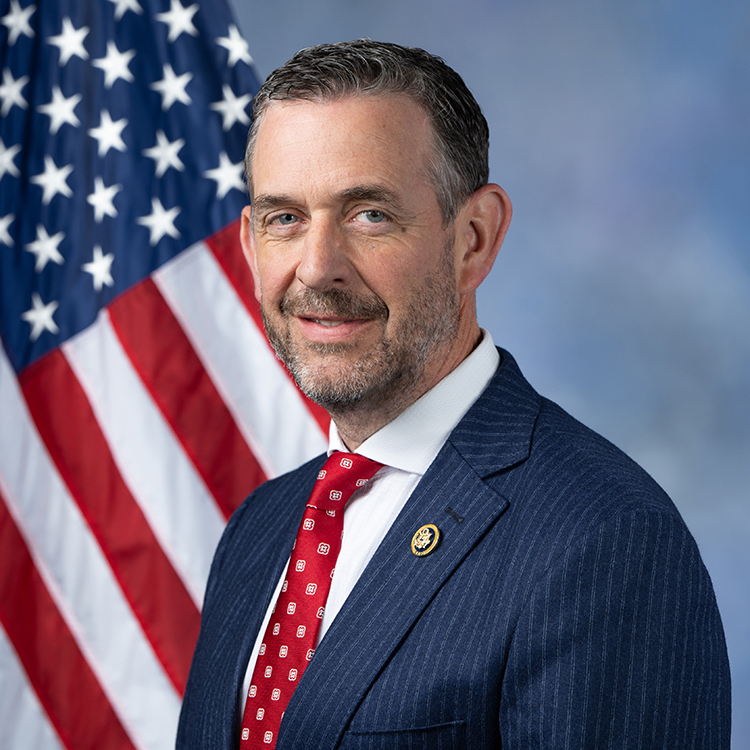
Rep. Michael A. Rulli
Sponsored bills
Maddy summaryHR 1041, the Veterans 2nd Amendment Protection Act, prevents the Department of Veterans Affairs (VA) from automatically sending veterans' personal information to the national background check system (NICS) solely because a court has appointed a fiduciary (like a guardian) to manage their benefits. This directly affects veterans who have a fiduciary appointed due to mental health or cognitive challenges but are not deemed a danger to themselves or others. The bill requires a court order finding the veteran poses a danger before any such information can be shared with the NICS. It changes VA procedures to block unnecessary barriers to firearm ownership for veterans who qualify for fiduciary support without a judicial determination of danger.
Maddy summaryThe Celiac Safety Act of 2026 officially classifies gluten-containing grains as a major food allergen under federal law, directly impacting the food industry and individuals with celiac disease or gluten intolerance. This change requires manufacturers to label products containing wheat, rye, barley, or their crossbred hybrids with the same prominence as other major allergens like milk. The new labeling requirements will not take effect until 18 months after the law is enacted, giving businesses time to adjust their packaging and production processes.
Maddy summaryH.Res. 1320 is a non-binding resolution that calls on all Americans to honor military personnel who died while serving in the pursuit of freedom and peace on Memorial Day 2026. The bill does not create new laws or change any policies; instead, it serves as a formal expression of gratitude and remembrance from the House of Representatives. Because it is a commemorative resolution rather than a procedural or funding measure, it has no direct legal effect on individuals or government operations.
Maddy summaryThe BUILD America 250 Act authorizes billions of dollars in funding for highways, bridges, transit, and rail programs through fiscal year 2031 to support infrastructure construction and safety improvements across the United States. Key provisions include establishing new competitive grant programs for rural and urban areas, increasing funding for bridge repairs, and creating a pilot program that allows certain states to receive transportation funds as a single lump sum. The bill also streamlines environmental reviews and project approvals to speed up construction while adding specific requirements for safety, accessibility, and disadvantaged business enterprise participation. Additionally, the legislation introduces new fees on electric and hybrid vehicle registrations to generate revenue for the Highway Trust Fund and sets stricter standards for roadside safety hardware.
Maddy summaryThe American Reserve Modernization Act of 2026 directs the U.S. Treasury to create two new accounts: a Strategic Bitcoin Reserve for Bitcoin acquired through government forfeiture and a Digital Asset Stockpile for other digital assets. The bill mandates that all Bitcoin held in the reserve be kept for at least 20 years, with strict rules against selling or disposing of these assets during that time. It also establishes a transparency system requiring quarterly public reports and third-party audits to verify the government's holdings and management of these digital assets.
Maddy summaryThis bill simplifies filing requirements for employer-sponsored retirement plans. It extends the deadline for submitting Form 5500 (the annual report for retirement plans) from 210 days or 6 months after the plan year end to 15 days after the end of the 9th calendar month following the plan year. It also allows electronic signatures for these filings and requires agencies to update regulations to reflect these changes. The bill directly affects employers and plan administrators who manage retirement plans under federal law, reducing administrative burdens and modernizing the filing process.
Maddy summaryThis bill would add pharmacist services to Medicare Part B coverage for beneficiaries, specifically covering pharmacist-led testing and treatment for illnesses like flu, COVID-19, or strep throat during public health emergencies. It defines covered services as those performed under state law, often requiring collaboration with a physician, and sets payment at 80% of the lesser of the actual charge or 85% of physician payment rates. Pharmacists would be prohibited from balance billing for these services, ensuring Medicare beneficiaries pay only their standard copayment. The changes would take effect January 1, 2026.
Maddy summaryThis bill authorizes the U.S. Mint to produce commemorative $5 gold and $1 silver coins marking the 25th anniversary of the September 11, 2001, terrorist attacks. The coins must feature designs honoring victims and first responders (including the inscription "Never Forget") and will be sold only during 2027-2028. All surcharges ($35 per gold coin, $10 per silver coin) collected from sales will fund the National September 11 Memorial and Museum at the World Trade Center, with no net cost to the federal government. The coins are legal tender but primarily intended for collectors, not circulation.
Maddy summaryThe Smithsonian American Women’s History Museum Act authorizes the creation of a new Smithsonian museum dedicated to women’s history, to be located within the National Mall Reserve in Washington, D.C. If the site is managed by another federal agency, the bill requires that agency to transfer the land after notifying Congress and relevant committees. The museum must ensure exhibits and programs accurately represent diverse women’s experiences by consulting a broad range of experts and community voices. The Smithsonian will submit biennial reports to Congress detailing how the museum meets these representation standards.