

Maddy summaryThis bill amends the Federal Employees' Compensation Act to include physician assistants and nurse practitioners as eligible providers for injured federal workers. It defines "other eligible provider" as a nurse practitioner or physician assistant within their state-authorized scope of practice. The law updates key sections to replace "physician" with "physician or other eligible provider" for treatment, certification, and claim processes. The Secretary must finalize implementing regulations within six months of enactment.
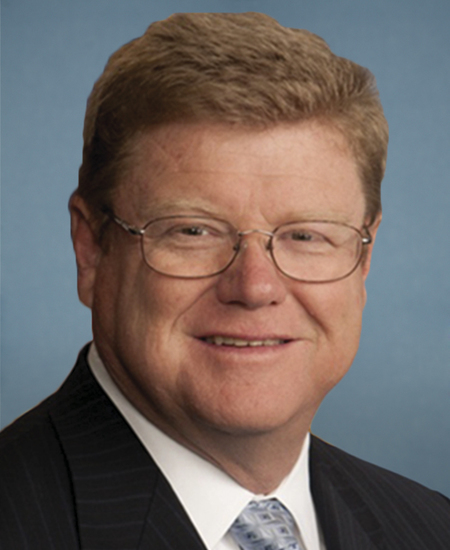
Rep. Mark E. Amodei
Sponsored bills
Maddy summaryThe Department of Homeland Security Appropriations Act, 2025 (HR 8752) allocates approximately $100.7 billion in funding for the Department of Homeland Security for fiscal year 2025. The bill specifies detailed funding amounts for each DHS component, including $16.6 billion for U.S. Customs and Border Protection, $10.5 billion for U.S. Immigration and Customs Enforcement, and $10.8 billion for the Transportation Security Administration. The legislation includes numerous restrictions on fund usage, such as prohibiting border crossing fees, requiring specific reporting on border security infrastructure, and mandating $600 million for physical barriers and $300 million for border security technologies.
Maddy summaryHR 8834, the Safeguarding Our Supply Chains Act, creates a Supply Chain Crime Coordination Center within Homeland Security to collect and analyze data on supply chain fraud and theft hotspots, including high-risk transportation routes and retail areas. It also establishes a multi-agency Task Force (including FBI, ICE, state/local law enforcement, and private sector partners) to coordinate efforts targeting organized crime groups stealing cargo, disrupting supply chains, and committing fraud. The Task Force will share intelligence, track theft trends, and work directly with affected businesses to address threats. The bill authorizes $100 million over five years for implementation and requires annual reports to Congress on the Task Force’s effectiveness in reducing these crimes. This law directly affects federal, state, and local law enforcement agencies, transportation and retail businesses, and supply chain operators.
Maddy summaryThis bill prevents the U.S. Postal Service from closing, consolidating, or downgrading processing centers in states where: (1) the center met specific on-time delivery targets (93% for 2-day mail, 90.3% for 3-5 day mail) in the prior year, or (2) the action would leave no center within 125 miles. It requires the Postal Service to first get approval from the Postal Regulatory Commission (PRC), which must review geographical impacts and confirm service standards won’t worsen. Affected communities and customers also gain the right to appeal such decisions to the PRC within 180 days. The law directly affects USPS facilities and the mail delivery reliability for residents in impacted states.
Maddy summaryHR 5403, the CBDC Anti-Surveillance State Act, prohibits the Federal Reserve from issuing or facilitating central bank digital currency (CBDC) directly or indirectly to individuals through financial institutions. It specifically bans Federal Reserve banks from offering digital products to individuals, maintaining individual accounts, or using CBDC for monetary policy implementation. The bill also clarifies that its restrictions do not apply to existing physical cash or private, permissionless digital payment systems. This bill directly affects the Federal Reserve's ability to develop or deploy a government-run digital dollar. The law aims to prevent the Federal Reserve from creating a digital currency that could enable transaction tracking or government oversight of personal financial activity.
Maddy summaryThis bill requires the U.S. Department of Defense and State Department to immediately deliver all previously approved military equipment and services to Israel within 15 days, reversing any pauses on arms transfers. It prohibits using federal funds to withhold, halt, or cancel defense article deliveries to Israel and mandates that unobligated security assistance funds for Israel must be spent by the end of 30 days. The bill also requires monthly reports to Congress detailing all security assistance provided to Israel since October 7, 2023, including specific items delivered and funding sources. The law directly affects U.S. agencies responsible for military aid and Israel as the recipient of the security assistance.
Maddy summaryThis bill amends the Law Enforcement Officers Safety Act (LEOSA) to expand where current and retired law enforcement officers can carry concealed firearms. It specifically allows qualified officers to carry in Federal facilities like post offices and courthouses (previously restricted), clarifies they may carry on public property and transportation, and updates firearms training requirements to accept certification from any state-certified instructor. The key change requires officers to meet recent firearms training standards (using flexible state-based criteria), rather than relying solely on their former agency's standards. This directly affects retired officers seeking to carry in more public spaces and federal buildings without needing prior agency certification.
Maddy summaryThis bill amends federal law to simplify interstate firearm transfers. It replaces "rifle or shotgun" with "firearm" in transfer rules, allowing all firearms to be treated uniformly. The key change permits licensed dealers to sell firearms to other licensed dealers anywhere in the U.S., and lets licensed sellers transfer firearms to unlicensed buyers at temporary locations (like gun shows) in any state. It also updates residency definitions for military members and federal employees stationed across state lines, clarifying which state they're considered residents of for firearm purposes. The bill directly affects licensed firearm dealers, military personnel, and federal employees who travel between states.
Maddy summaryThe Mining Regulatory Clarity Act of 2024 clarifies rights for individuals and companies holding mining claims on public land. It defines "operations" broadly to include exploration, development, extraction, reclamation, and related infrastructure like roads or pipelines, even without finding minerals. Claimants must pay standard location and maintenance fees (or meet assessment work requirements) to maintain their rights to use and occupy land for these activities. This change ensures compliance with the Federal Land Policy and Management Act by explicitly linking claimholder obligations to land use rights.
Maddy summaryThis joint resolution seeks congressional disapproval of a Department of Labor rule designed to improve protections for temporary agricultural workers. It invokes a specific federal process under Title 5 to block the rule from taking effect, preventing the proposed changes from being implemented. The rule, published April 29, 2024, would have affected temporary farmworkers’ rights and working conditions. If passed, the resolution would nullify the rule, meaning the Department of Labor’s proposed protections would not be enforced.