

Maddy summaryThe Employee Rights Act (HR 4154) makes several significant changes to labor law. It requires secret ballot elections for union representation, prohibits employees without lawful immigration status from voting in union elections, and establishes new privacy protections for employee information used in organizing campaigns. The bill also changes the criteria for determining employee status under labor laws, creates "independent negotiating" for workers who have left union representation, and restricts what can be included in collective bargaining agreements regarding diversity initiatives. These changes would affect workers, employers, and labor organizations across the United States.
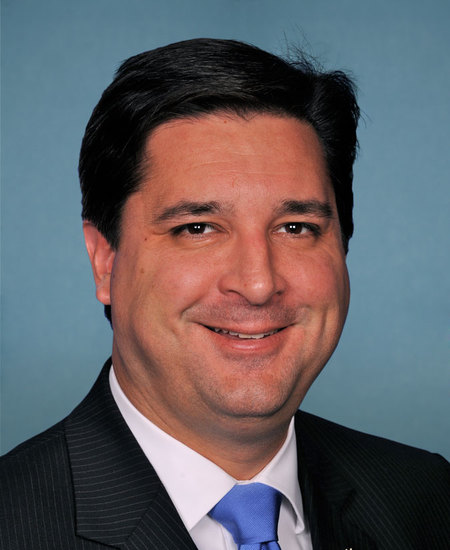
Rep. David Rouzer
Sponsored bills
Maddy summaryThis bill makes technical corrections to the Camp Lejeune Justice Act of 2022 to streamline claims for individuals harmed by water contamination at Camp Lejeune. It clarifies the evidence required (30+ days at the base plus a link between contaminants and health harm), specifies that cases must be handled in North Carolina courts (with limited transfer options), and sets attorney fee caps (20% before suit, 25% after). These changes directly affect veterans and civilians who lived at Camp Lejeune and filed claims under the 2022 law. The bill does not create new eligibility but aims to improve the legal process for existing cases.
Maddy summaryHR 1713, the Agricultural Risk Review Act of 2025, requires the Secretary of Agriculture to join the Committee on Foreign Investment in the U.S. (CFIUS) when reviewing transactions involving U.S. agricultural land, biotechnology, or agriculture-related infrastructure (like transportation or processing). It specifically targets acquisitions of agricultural land by foreign entities from China, North Korea, Russia, or Iran, mandating that the Secretary of Agriculture first assesses these transactions before CFIUS decides whether to proceed with a full review. The law includes a sunset provision, ending these requirements for a specific country once it is removed from the federal list of foreign adversaries.
Maddy summaryThis symbolic House resolution (HRES 521) expresses support for Israel’s military actions against Iran’s nuclear facilities, citing Iran’s nuclear enrichment progress (including 60% enriched uranium stockpiles nearing weapons-grade levels) and Iran’s attacks on Israeli civilians. It specifically endorses Israel’s "proportional" strikes on Iranian nuclear sites and military targets following Iran’s rejection of diplomatic efforts, while condemning Iran’s attacks that killed 24 Israelis and wounded 590. The resolution calls on Iran to halt nuclear enrichment and dismantle its program, reaffirms U.S. support for Israel’s security, and urges global condemnation of Iran’s nuclear activities. As a non-binding resolution, it does not enact policy but formally aligns the House with Israel’s actions against Iran’s nuclear program.
Maddy summaryHR 4015, the Safe and Open Streets Act, amends federal law to make it a crime to intentionally block public roads in a way that disrupts commerce. It targets individuals who obstruct, delay, or affect the movement of goods or services on public roads, with penalties including fines or up to five years in prison. The bill directly affects anyone who blocks roads during protests, demonstrations, or other actions that interfere with commercial traffic. This law updates existing federal commerce disruption statutes (18 U.S.C. §1951) to specifically address roadblocks, removing outdated language about "threats or violence" from related provisions.
Maddy summaryThis bill amends Section 401 of the Clean Water Act to clarify and streamline water quality certifications for energy infrastructure projects. It requires states and the EPA to publish certification requirements within 30 days of enactment, set strict 90-day deadlines for requesting missing information, and base decisions solely on specific Clean Water Act sections (301, 302, 303, 306, 307). The changes replace vague terms like "water quality requirements" with precise references to these sections and mandate written explanations for certification decisions. It directly affects states, interstate agencies, and the EPA as they process certification requests for projects like pipelines or power plants.
Maddy summaryHR 3927, the Nationwide Permitting Improvement Act, extends the term of nationwide permits for environmental projects from five to ten years and creates a new category for "linear infrastructure projects" like pipelines and power lines. It allows these projects to receive nationwide permits if they discharge dredged or fill material into less than 3 acres of navigable waters, classifying such impacts as "minimal." The bill removes requirements for certain environmental reviews, including consultations under the Endangered Species Act and full National Environmental Policy Act assessments, replacing them with streamlined environmental assessments. This directly affects infrastructure developers and the Army Corps of Engineers, which administers the permitting process under the Clean Water Act.
Maddy summaryHR 3824, the Reducing Regulatory Burdens Act of 2025, removes a requirement for permits under the Clean Water Act for discharges of authorized pesticides into navigable waters. It amends the Federal Insecticide, Fungicide, and Rodenticide Act (FIFRA) and the Clean Water Act to state that EPA or states cannot mandate a permit for pesticide discharges resulting from legally authorized applications. The bill specifically exempts discharges from violations of pesticide law, stormwater, industrial manufacturing effluent, treatment works, and vessel operations. This directly affects pesticide users (like farmers) and regulatory agencies by eliminating a permitting step for routine pesticide applications already approved under FIFRA.
Maddy summaryThis bill mandates annual funding for USDA programs to prevent, detect, and respond to foreign animal diseases affecting livestock. It requires $30 million annually for 2023-2025, increases to $233 million yearly for 2026-2029, and then reduces to $75 million annually after 2030, with specific allocations for surveillance, laboratory networks, and emergency response. The funds directly support state and federal animal health programs, including the National Animal Health Laboratory Network and the National Animal Disease Preparedness Program. These provisions aim to strengthen protections for U.S. agriculture by ensuring consistent resources for disease monitoring and rapid containment.
Maddy summaryThe Patriots Over Politics Act (HR 3619) allows veterans discharged between August 2021 and January 2023 solely for refusing a COVID-19 vaccine to transfer their earned educational benefits to eligible dependents. Veterans must initiate the transfer within 90 days of the bill’s enactment. Dependents can use the transferred benefits only after the veteran completed at least six years of military service - a requirement already met by these veterans prior to separation. This provision directly affects veterans separated for vaccine refusal during the specified period, providing a pathway to pass on unused education benefits.