

Maddy summaryHRES 262 establishes a House Select Committee focused solely on investigating Mexican drug cartels and their international networks, including U.S. and Mexican government efforts to address them. The committee has no legislative authority but may hold public hearings, conduct investigations, and issue policy recommendations by December 2025, with final reports due by December 2026. This procedural resolution affects only House committee structure and processes, not direct policy changes for the public or government agencies.
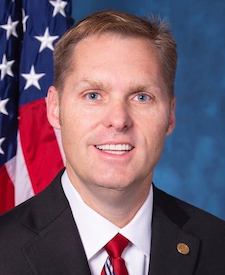
Rep. Michael Guest
Sponsored bills
Maddy summaryThe SHORT Act (HR 2395) redefines federal firearm definitions to exclude antique and collector firearms from being classified as firearms, and removes distinctions between short-barreled rifles and shotguns in federal regulations. It prevents state laws from imposing taxes or registration requirements on short-barreled rifles and shotguns, requiring state rules to align with federal compliance instead. The bill also mandates the federal government to destroy specific records related to these firearms within one year of enactment.
Maddy summaryThe Freedom from Unfair Gun Taxes Act of 2025 would prohibit states and local governments from imposing taxes on the sale of firearms, ammunition, or firearm parts during interstate or foreign commerce. This bill directly affects state tax policies and manufacturers or dealers selling these items across state lines. It explicitly states that the bill does not change the existing federal tax on firearms and ammunition that funds wildlife conservation programs. The key provision bans state-level taxes for these sales in interstate transactions while preserving current federal funding mechanisms.
Maddy summaryHR 2410 creates a 20% federal tax credit for developers converting older non-residential buildings (at least 20 years old) into affordable housing. The credit applies to qualified conversion costs, requiring that 20% of units be rent-restricted for residents earning 80% or less of the area median income for 30 years. It establishes a $12 billion national credit limit, with $3 billion reserved for conversions in economically distressed areas, and mandates state-level allocation plans prioritizing projects near transit and employment. The bill directly affects developers seeking tax incentives for downtown revitalization, not tenants or local governments.
Maddy summaryThe Cellphone Jamming Reform Act of 2025 allows state and federal correctional facilities to operate jamming systems that block cell signals from entering or leaving the facility, specifically targeting contraband devices used by inmates. It directly affects prisons and jails by enabling them to disrupt unauthorized wireless communications without FCC approval, provided the jamming is limited to housing areas within the facility. Key requirements include state facilities covering all costs themselves, consulting with local law enforcement before implementation, and notifying the Bureau of Prisons. The law aims to address security risks from smuggled phones while restricting jamming to only necessary areas and requiring transparency.
Maddy summaryThis bill delays two Medicare billing deadlines for ground ambulance services from 2025 to 2028. It amends the Social Security Act to extend the timeline for implementing specific billing rules under Section 1834(l). The change directly affects Medicare ambulance providers by postponing compliance deadlines for billing requirements. No new services or funding are created - only a technical extension of existing timelines.
Maddy summaryThis bill protects pregnancy centers that provide non-abortion services from federal discrimination. It prohibits government entities and recipients of federal funds from forcing these centers to offer, refer for, or promote abortions, or from restricting their life-affirming services like pregnancy testing, counseling, or baby supplies. The law creates a legal path for affected centers to sue if they face retaliation for declining abortion-related activities. It amends federal health law to explicitly shield such organizations from being penalized for their stance.
Maddy summaryHR 2098, the "Deliver for Democracy Act," requires the U.S. Postal Service (USPS) to meet specific on-time delivery targets for periodicals (including newspapers) to receive annual rate increases. The bill mandates that the Postal Regulatory Commission must confirm USPS achieved either a 95% on-time delivery rate for periodicals or a 2-percentage-point improvement over the prior year before authorizing new rates. It also requires the Postmaster General to submit annual public reports tracking on-time delivery performance for newspaper mail in-county and out-of-county, using stakeholder feedback and alternative data methods if needed. Additionally, the bill directs the GAO to study alternative pricing options for periodicals and submit a report within two years.
Maddy summaryHR 2168, the BO’s Act, requires the Secretary of Health and Human Services to study home cardiorespiratory monitors used for infants. The study must assess the monitors' effectiveness in tracking heart rate and oxygen levels, evaluate new care models for safe infant sleep environments, and examine health insurance coverage criteria. A report on these findings must be submitted to Congress within one year of the bill’s enactment. This bill does not change current policy but aims to inform future decisions about monitor coverage and infant safety practices, directly affecting parents, healthcare providers, and insurers.
Maddy summaryThe FOCA Act of 2025 prohibits federal agencies from requiring or banning contractors from using union agreements in construction project bids or contracts. It directly affects federal agencies, contractors, and subcontractors working on federally funded or assisted construction projects (like buildings or infrastructure). The law requires bid documents to not favor or penalize contractors based on whether they have union agreements, aiming to promote open competition and prevent discrimination. This changes how agencies structure bids but does not affect union agreements themselves. The bill applies to all new contracts and subcontracts after enactment, with limited exemptions only for public health/safety emergencies or national security.