

Broadband Justice Act of 2021 This bill includes broadband high-speed internet service as a utility subsidized by federally assisted housing programs through utility allowances. The bill also establishes grants and loans for housing providers, public housing agencies, and other public entities to provide access to broadband high-speed internet service to residents of federally assisted housing through the installation of such service and other infrastructure improvements.
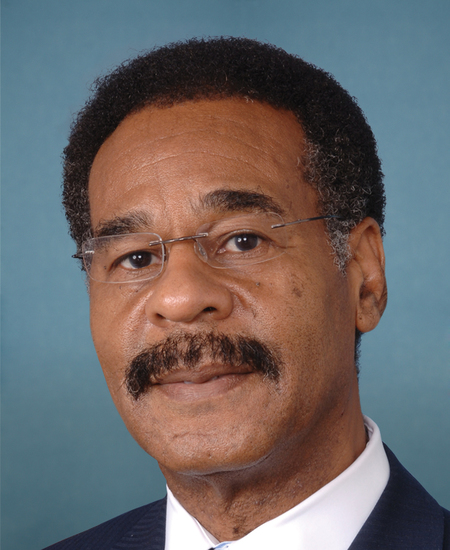
Rep. Emanuel Cleaver
Sponsored bills
Women and Lung Cancer Research and Preventive Services Act of 2021 This bill requires the Department of Health and Human Services to conduct an interagency review of the status of women and lung cancer. The review must report on the status of existing research and current knowledge gaps; identify new opportunities for collaborative research to determine the causes of lung cancer and advance prevention, screening, diagnosis, and treatment; and provide recommendations for a national cancer screening strategy and public education campaign.
Youth Mental Health and Suicide Prevention Act of 2021 This bill authorizes the award of matching grants to enhance services in secondary schools for students with mental and behavioral health issues that can lead to failure in school, such as depression and substance abuse. The Substance Abuse and Mental Health Services Administration may award these grants on a competitive basis to state or local educational agencies that serve at least one secondary school.
No Tax Breaks for Outsourcing Act This bill modifies the tax treatment of the foreign source income of domestic corporations. The bill includes provisions that modify calculations of the gross income of U.S. shareholders to include net CFC tested income in the current taxable year, apply limitations on the foreign tax credit on a country-by-country basis, limit the tax deduction for the interest expense of a U.S. corporation that is a member of a financial reporting group (i.e., a group that prepares consolidated financial statements according to generally accepted accounting principles or international financial reporting standards), modify the rules for the taxation of inverted corporations (i.e., U.S. corporations that acquire foreign companies to reincorporate in a foreign jurisdiction with income tax rates lower than the United States), and treat certain foreign corporations managed and controlled primarily in the United States as domestic corporations for tax purposes.
Protecting the Right to Organize Act of 20 21 This bill expands various labor protections related to employees' rights to organize and collectively bargain in the workplace. Among other things, it (1) revises the definitions of employee , supervisor , and employer to broaden the scope of individuals covered by the fair labor standards; (2) permits labor organizations to encourage participation of union members in strikes initiated by employees represented by a different labor organization (i.e., secondary strikes); and (3) prohibits employers from bringing claims against unions that conduct such secondary strikes. The bill also allows collective bargaining agreements to require all employees represented by the bargaining unit to contribute fees to the labor organization for the cost of such representation, notwithstanding a state law to the contrary; and expands unfair labor practices to include prohibitions against replacement of, or discrimination against, workers who participate in strikes. The bill makes it an unfair labor practice to require or coerce employees to attend employer meetings designed to discourage union membership and prohibits employers from entering into agreements with employees under which employees waive the right to pursue or a join collective or class-action litigation. The bill further prohibits employers from taking adverse actions against an employee, including employees with management responsibilities, in response to that employee participating in protected activities related to the enforcement of the prohibitions against unfair labor practices (i.e., whistleblower protections). Such protected activities include providing information about a potential violation to an enforcement agency, participating in an enforcement proceeding, initiating a proceeding concerning an alleged violation or assisting in such a proceeding, or refusing to participate in an activity the employee reasonably believes is a violation of labor laws. Finally, the bill addresses the procedures for union representation elections, provides employees with the ability to vote in such elections remotely by telephone or the internet, modifies the protections against unfair labor practices that result in serious economic harm, and establishes penalties and permits injunctive relief against entities that fail to comply with National Labor Relations Board orders.
For the People Act of 2021 This bill addresses voter access, election integrity and security, campaign finance, and ethics for the three branches of government. Specifically, the bill expands voter registration (e.g., automatic and same-day registration) and voting access (e.g., vote-by-mail and early voting). It also limits removing voters from voter rolls. The bill requires states to establish independent redistricting commissions to carry out congressional redistricting. Additionally, the bill sets forth provisions related to election security, including sharing intelligence information with state election officials, supporting states in securing their election systems, developing a national strategy to protect U.S. democratic institutions, establishing in the legislative branch the National Commission to Protect United States Democratic Institutions, and other provisions to improve the cybersecurity of election systems. Further, the bill addresses campaign finance, including by expanding the prohibition on campaign spending by foreign nationals, requiring additional disclosure of campaign-related fundraising and spending, requiring additional disclaimers regarding certain political advertising, and establishing an alternative campaign funding system for certain federal offices. The bill addresses ethics in all three branches of government, including by requiring a code of conduct for Supreme Court Justices, prohibiting Members of the House from serving on the board of a for-profit entity, and establishing additional conflict-of-interest and ethics provisions for federal employees and the White House. The bill requires the President, the Vice President, and certain candidates for those offices to disclose 10 years of tax returns.
Strategy and Investment in Rural Housing Preservation Act of 2021 This bill provides assistance to rural, multifamily rental-housing projects and tenants. Specifically, the Department of Agriculture (USDA) must implement a program for the preservation and revitalization of such housing projects that are financed with USDA loans. As part of this program, USDA may restructure existing housing loans by reducing or eliminating interest and deferring loan payments. When offering to restructure such a loan, USDA must also offer to renew a property owner's contract for rental assistance payments for a term of 20 years, provided that the property owner agrees to maintain the property as decent, safe, and sanitary housing for the full term of the contract. USDA must annually provide written notice explaining the options to restructure such loans to certain property owners. Additionally, USDA may provide technical assistance grants to qualified nonprofit organizations and public housing agencies to help borrowers acquire multifamily rental-housing properties in areas where there is a risk of loss of affordable housing. Further, USDA may provide rural housing vouchers for low-income households (including those not receiving rental assistance) residing in certain properties financed with or insured by USDA loans. The bill also extends existing housing protections for victims of domestic violence, dating violence, sexual assault, and stalking to victims who receive rural housing voucher assistance. These protections include protections against denial or termination of assistance or eviction.
Air Carrier Access Amendments Act of 2021 This bill expands provisions prohibiting discrimination against disabled individuals by an air carrier. Specifically, it enumerates certain actions that an air carrier must take or may not take with respect to a disabled individual. It also requires the Department of Transportation (DOT) to ensure that disabled individuals traveling in air transportation are able to file complaints with DOT in response to disability-related discrimination and receive assistance from DOT through a hotline or comparable electronic means. The bill authorizes an aggrieved individual and the Department of Justice to bring a civil action for discrimination. The Architectural and Transportation Barriers Compliance Board shall prescribe regulations setting forth minimum standards for aircraft with new or existing type certificates to ensure the accessibility of individuals with disabilities, including those who use wheelchairs. The standards shall address, among other things, boarding and deplaning equipment, seating accommodations, lavatories, visually accessible announcements, and proper stowage of assistive devices in the cargo hold to prevent damage.
This resolution supports the designation of a National FFA Week. It also (1) recognizes the important role of the National FFA Organization (Future Farmers of America) in developing the next generation of leaders who will change the world, and (2) celebrates 50 years of National FFA alumni and supporters.
Abortion is Health Care Everywhere Act of 2021 This bill authorizes the use of certain foreign assistance funds to provide comprehensive reproductive health care services in developing countries, including abortion services, training, and equipment.