Maddy summaryHRES 1196 is a House Resolution that formally designates April as "Cancer Prevention and Early Detection Month." The resolution expresses the House of Representatives' support for the goals and ideals of this month, affirming a national commitment to educating the public on disease prevention and commending advancements in multi-cancer early detection efforts.
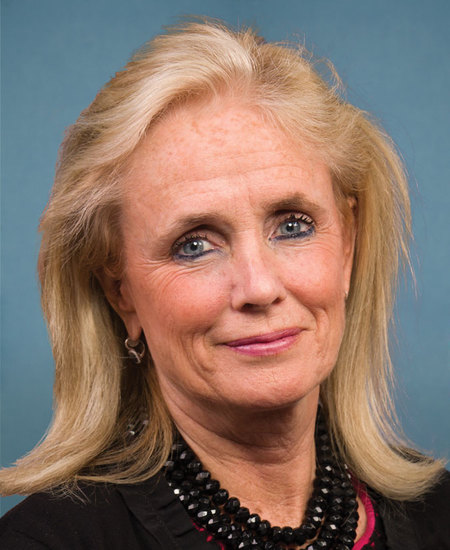
Rep. Debbie Dingell
Sponsored bills
Maddy summaryThis House Resolution recognizes the vital roles and contributions of care workers in the United States, including those in childcare and home care, and expresses support for designating April 2026 as "Care Worker Recognition Month." It aims to acknowledge the importance of these professionals who support children, older adults, and people with disabilities, and their impact on families and the economy.
Maddy summaryThis resolution expresses the House of Representatives' strong support for designating April 19 through April 25, 2026, as "National Crime Victims' Rights Week." It recognizes the impact of crime on victims and survivors, appreciates organizations that assist them, and encourages continued efforts to support victims' rights and services.
Maddy summaryThis bill, the "Stop Deadly Denials Act of 2026," aims to significantly restrict prior authorization requirements for Medicare beneficiaries. It prohibits Medicare Advantage plans from imposing prior authorization for most medical services and items starting January 1, 2027, with non-compliant plans facing potential sanctions. For traditional Medicare, the bill blocks a specific prior authorization pilot program and limits future models from implementing prior authorization if they use artificial intelligence for denials without individual physician review or do not use Medicare administrative contractors for processing. Additionally, it requires public notice and comment for all future Medicare innovation models.
Maddy summaryThe Momnibus Act is a comprehensive legislative bill designed to improve maternal health outcomes across the United States by addressing social determinants of health, expanding access to care, and reducing disparities among pregnant and postpartum individuals. The bill establishes a federal task force to coordinate efforts between agencies and stakeholders to eliminate preventable maternal mortality and severe morbidity, while providing sustained funding to community-based organizations to address nonclinical factors like housing, nutrition, and transportation. Key provisions include extending WIC eligibility to 24 months postpartum, creating grants to grow and diversify the perinatal workforce, implementing respectful maternity care training for all healthcare employees, and establishing compliance programs to track and address bias in maternity care settings. The legislation also includes specific measures for incarcerated mothers, veterans, and vulnerable populations affected by climate change, alongside funding for maternal mental health services and technology-enabled care models to expand access in underserved areas.

Maddy summaryThis bill, the Breast Cancer Research Stamp Reauthorization Act of 2026, extends the period during which a special postage stamp can be sold to raise funds for breast cancer research. It amends existing law to change the program's expiration date. Specifically, the bill allows the U.S. Postal Service to continue selling the Breast Cancer Research Stamp until 2037, extending its current authorization which was set to expire in 2027. This change aims to continue providing a dedicated funding source for breast cancer research through stamp sales, affecting stamp purchasers and breast cancer research institutions.
Maddy summaryThis bill, the Communications, Video, and Technology Accessibility Act of 2026, aims to significantly enhance accessibility for individuals with disabilities across various communication and video services and related equipment. It expands requirements for closed captioning and audio description to include online video programming and consumer-generated media, and mandates that sign language interpretation be consistently visible on screen when provided. The bill also requires video playback devices to have easily accessible accessibility features and mandates that video conferencing services and customer support offer features like voice recognition, visual interpretation, and direct video calling for sign language users. Additionally, it strengthens telecommunications relay services for DeafBlind individuals and sign language users, increases funding for equipment distribution for the DeafBlind, and directs the FCC to assess and regulate the accessibility of emerging technologies.
Maddy summaryThe KIDNEY Remote Monitoring Act (H.R. 8319) aims to ensure Medicare payment for remote physiologic monitoring services provided to individuals with end-stage renal disease (ESRD) who receive home dialysis. The bill amends the Social Security Act to direct that these monitoring services, when furnished by a physician, will be paid for under Medicare Part B. This change would take effect for services provided on or after January 1, 2028, aligning their payment with the standard fee schedule for physician services.
Maddy summaryThis concurrent resolution (HCONRES 40) directs the President to remove U.S. military forces from hostilities with Iran, as required by the War Powers Resolution. It applies directly to U.S. Armed Forces deployed in conflict with Iran, except for forces needed to defend the U.S. or allies from imminent attack. The bill mandates removal unless the President complies with War Powers Resolution reporting requirements for self-defense actions, without needing new congressional authorization. As a procedural resolution, it does not create new law but compels executive action under existing legal framework.
Maddy summaryThis resolution expresses support for recognizing April as National Arab American Heritage Month to celebrate the heritage and culture of Arab Americans in the United States. The bill directly affects Arab American communities and encourages the public to observe the month with programs and activities that highlight their contributions to American society. It acknowledges Arab Americans' historical and ongoing contributions across various fields including science, arts, public service, and civil rights, while noting that 47 states and numerous local jurisdictions have already recognized the month. The resolution urges the people of the United States to observe National Arab American Heritage Month with appropriate programs and activities that recognize and celebrate the unique contributions of Arab Americans.