

Maddy summaryThis bill establishes a new independent council within the executive branch called the United States Interagency Council on Housing Affordability and Preservation to coordinate federal efforts on affordable housing. The council will be composed of heads from twenty-one different federal agencies, including HUD, the Department of Justice, and the Department of Labor, who will meet at least four times a year to develop a national strategic plan and review housing programs. Its main duties involve creating a unified strategy to increase affordable housing supply, providing technical assistance to states and local governments, and reporting annually to the President and Congress on housing needs and federal actions. The legislation also encourages states to form their own interagency councils and authorizes $4.8 million per year through 2031 to fund the council's operations.
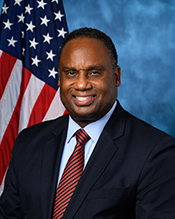
Rep. Jonathan L. Jackson
Sponsored bills
Maddy summaryThis concurrent resolution does not create new laws or change existing regulations but serves to formally recognize the ongoing need for better physical access in federally funded facilities, especially for people with disabilities. It highlights statistics on disability prevalence and employment gaps while reaffirming support for the Architectural Barriers Act of 1968 and the Americans with Disabilities Act of 1990. The measure pledges to use universal and inclusive design as a guiding principle for future infrastructure projects and encourages full compliance with current accessibility laws.
Maddy summaryThis resolution asks the President and the Secretary of Health and Human Services to provide the House of Representatives with specific documents regarding a freeze on federal payments to five states. The requested materials include communications about how the payment freeze was decided, records of the tweet that announced it, and details on funding drawdowns, disciplinary actions, and data sharing plans related to those states. The bill specifically targets documents concerning Temporary Assistance for Needy Families, Child Care, and Social Services Block Grant programs in California, Colorado, Illinois, Minnesota, and New York. If the agencies possess the records, they must submit them to Congress within 14 days of the resolution's adoption.
Maddy summaryThis bill requires Medicare Advantage plans to implement electronic pre-approval systems for medical services by 2028 and meet transparency reporting standards starting in 2027. Plans must publicly report data on approval/denial rates, appeal outcomes, response times, and technology use for pre-approval requests, including details on how denials relate to clinical criteria. It establishes a 24-hour response timeframe for certain requests and mandates annual reviews of pre-approval requirements based on data and input from seniors and providers. The law directly affects Medicare Advantage plans, seniors enrolled in these plans, and healthcare providers who submit pre-approval requests. These changes aim to make the pre-approval process faster, more transparent, and more accountable for seniors seeking covered medical services.
Maddy summaryThe High Court Gift Ban Act prohibits federal judicial officers from accepting gifts from sources likely to appear before them, unless the gift is under $50, the total annual value from that source remains $100 or less, or it falls under specific exceptions like gifts from relatives or public events. The law defines a "gift" broadly to include items, services, and reimbursements, while allowing exceptions for personal hospitality within IRS limits and certain professional benefits available to the general public. Enforcement mechanisms include referrals to the Attorney General for violations, which can result in civil or criminal penalties similar to those for other federal ethics breaches. The bill requires the Supreme Court and the Judicial Conference to create implementing regulations within 180 days of enactment to ensure compliance.
Maddy summaryThis resolution expresses support for designating July 10th as Journeyman Lineworkers Recognition Day to honor the workers who maintain the nation's electrical grid. The bill specifically recognizes the dangerous conditions these employees face, such as working at heights near live power lines and responding to disasters like hurricanes and wildfires. It also commemorates Henry Miller, the first president of the International Brotherhood of Electrical Workers, who died on July 10, 1896, while performing his duties. Ultimately, the measure encourages the public to observe this day with reflection on the contributions of lineworkers.
Maddy summaryThe Extreme Temperatures Injustice in Prisons Act of 2026 requires the Bureau of Prisons to upgrade heating, ventilation, and air conditioning systems in all correctional facilities and install temperature monitoring devices in every occupied space. The bill mandates the creation of written standards to prevent heat and cold stress, provides free cooling and heating supplies to inmates during dangerous weather, and establishes specific protective rules for medically vulnerable populations. Additionally, the legislation requires regular reports to Congress on system costs and temperature-related illnesses, while authorizing funding through fiscal year 2031 to support these safety improvements.
Maddy summaryThis resolution commemorates the fourth anniversary of the July 4, 2022, Independence Day Parade shooting in Highland Park, Illinois, which resulted in seven deaths and over 40 injuries. It formally honors the seven victims by name and acknowledges the bravery of the numerous law enforcement officers, first responders, and medical personnel who assisted during the attack and in the aftermath. The document also recognizes the ongoing efforts of volunteer counselors supporting the community and expresses continued support for Highland Park as it marks this tragic milestone.
Maddy summaryThis bill establishes a federal firearm owner licensing system for handguns and semiautomatic rifles, requiring individuals to obtain a license from the Attorney General before possessing these weapons. To qualify, applicants must pass a background check, provide fingerprints, and undergo a mental health evaluation if they have a history of facility placement, with the goal of preventing access by criminals and youths. The legislation also mandates that licensed dealers verify a buyer's valid license at the point of sale and maintain detailed records of all transfers for federal tracking. Additionally, the bill imposes new reporting requirements for lost or stolen firearms, strengthens child access prevention laws, and creates a mechanism for states to certify their own licensing and record-keeping systems to avoid federal mandates.
Maddy summaryThe Community Housing Act of 2026 aims to increase the supply and affordability of housing by directing significant new federal funding to programs like the Housing Trust Fund and the Capital Magnet Fund. It establishes a new Office of Community Land Use and Zoning within HUD to help states and localities reform restrictive zoning laws that limit housing development. The bill also expands financial support for rural areas, creates a new fund to promote shared equity and community land trusts, and removes a legal cap on the number of public housing units agencies can manage. Additionally, it provides grants to protect tenants from eviction and authorizes low-cost financing options for affordable housing projects.