

Maddy summaryThe PAST Act of 2023 amends the Horse Protection Act to ban specific devices used to cause pain (soring) in horses at shows, particularly affecting Tennessee Walking Horses, Racking Horses, and Spotted Saddle Horses. It defines prohibited "action devices" (like boots or chains causing friction) and requires licensed, conflict-free inspectors at events to enforce rules. The bill increases penalties for violations to up to $5,000 fines or 3 years in jail, and mandates longer disqualifications for repeat offenses (180 days → 1 year → 3 years). Horse show organizers, exhibitors, and participants must comply with these new inspection and penalty requirements.
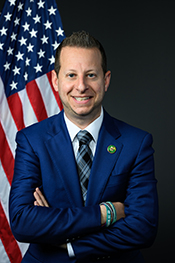
Rep. Jared Moskowitz
Sponsored bills
Maddy summaryThe Beagle Brigade Act of 2023 establishes a National Detector Dog Training Center to train dogs and handlers for detecting foreign pests and diseases threatening U.S. agriculture and natural resources. The Center will collaborate with agencies like U.S. Customs and Border Protection and state agriculture departments to safeguard farms and ecosystems. It requires annual funding for operations and mandates a congressional report within one year detailing pest threats, Center effectiveness, and recommendations for improving detection capabilities. The law directly affects agricultural protection efforts by enhancing canine-based prevention of invasive species.
Maddy summaryThe Invest to Protect Act of 2023 establishes a federal grant program for local law enforcement agencies with fewer than 200 officers (including counties, municipalities, and tribal governments) to fund training and support services. Grants cover de-escalation training, mental health resources, evidence-based safety training (such as handling domestic violence or mental health crises), and recruitment/retention incentives like signing bonuses, retention bonuses (up to 20% of salary), and stipends for graduate education in mental health or social work. The bill requires a streamlined grant application process (under two hours), public disclosure of bonus amounts, and annual audits to prevent misuse of funds.
Maddy summaryThis bill designates a U.S. Postal Service facility at 1900 West Oakland Park Boulevard in Oakland Park, Florida, as the "Alcee Lamar Hastings Post Office Building." It updates all federal references in laws, documents, and records to use the new name for the building. The change applies solely to the facility's official designation and does not alter postal services, funding, or operations.
Maddy summaryHR 3155, the "Protecting the Second Amendment through Responsible Gun Ownership Act," prohibits the sale of defined "semiautomatic assault weapons" to individuals under 25 years old. The bill amends federal law to ban sales of these weapons (including specific rifles, pistols, and shotguns with features like detachable magazines, folding stocks, or specific model types) to anyone under 25, and makes it unlawful for under-25s to purchase them. It directly affects gun sellers, buyers under 25, and the sale of firearms meeting the bill's detailed definition. The key mechanism is a new federal prohibition on transactions involving these weapons with individuals under 25, expanding existing restrictions on juvenile firearm sales. This is a substantive policy change targeting specific firearm types, not a procedural measure.
Maddy summaryHR 1750 sets a new minimum standard for pasteurized orange juice, requiring finished products to contain at least 10.0% orange juice soluble solids (excluding any added sweeteners) by weight. This rule directly affects manufacturers producing and selling pasteurized orange juice in the U.S. market. The bill revises existing federal regulations to enforce this minimum juice content level, ensuring a more consistent product definition. It does not change the Secretary of Health and Human Services' existing authority to further adjust these standards.
This resolution declares gun violence to be a public health crisis. It also urges the Centers for Disease Control and Prevention to expand research and data collection on preventing gun violence and the Surgeon General to report on firearm injuries and violence prevention.
Maddy summaryThe Words Matter Act of 2023 replaces the outdated term "mental retardation" with "intellectual disability" across numerous federal laws and regulations. It amends over 20 provisions in the U.S. Code, Social Security Act, and other statutes - including healthcare, disability programs, and legal definitions - to update terminology used in areas like nursing home care, criminal justice, and federal grants. The bill explicitly states this is a purely linguistic change, not a policy shift, and does not alter eligibility, benefits, or program requirements for individuals with intellectual disabilities. It affects all federal programs and legal references that previously used the terms "mental retardation," "mentally retarded," or "developmentally disabled."
Maddy summaryHR 3106, the Preventing Deepfakes of Intimate Images Act, creates a legal right for individuals whose realistic digital manipulations of intimate images (such as uncovered genitals, bodily fluids, or sexually explicit conduct) are disclosed without consent. It allows victims to sue for civil damages, including up to $150,000 in liquidated damages, actual harm, or punitive penalties, and seek court orders to stop further disclosure. The bill specifically protects identifiable individuals (not just public figures) and covers images created or altered using digital manipulation, excluding cases involving law enforcement, public interest, or good-faith disclosures. Criminal penalties up to 10 years may apply for malicious disclosure with intent to harass or cause harm. This directly affects anyone whose intimate images are deepfaked without permission, providing new legal recourse against perpetrators.
Maddy summaryHR 3059, the Resilient Airports Act, updates federal definitions to improve funding for airport resilience after disasters. It specifically defines "critical airport infrastructure" as runways, taxiways, and aprons needed for commercial operations or general aviation airports designated as emergency staging areas (like Federal Incident Support Bases). The bill also expands "natural disaster" to explicitly include events like hurricanes, wildfires, and floods. These changes ensure airports can quickly resume operations under visual flight rules after disasters by clarifying which infrastructure qualifies for improvement funding. The bill directly affects airports, particularly smaller general aviation facilities used for emergency response coordination.