

Maddy summaryThis bill, HR 5973, requires federal immigration enforcement personnel to follow strict limits on force use, including proportional application, mandatory de-escalation efforts, and prohibitions on equipment like flash bangs or rubber bullets except for specific public safety threats. It mandates body-worn and vehicle cameras for all operations, with footage retained for one year (three years for force incidents or complaints), and grants affected individuals the right to inspect recordings. The law also requires annual training on force policies, First Amendment compliance, and racial bias avoidance, while demanding detailed quarterly reports to Congress on force usage, assaults on agents, and equipment approvals. These provisions directly affect all federal immigration agents conducting enforcement actions, aiming to increase transparency and accountability during operations.
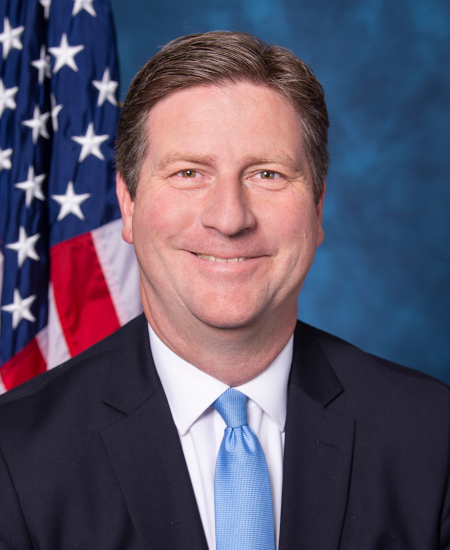
Rep. Greg Stanton
Sponsored bills
Maddy summaryThis bill authorizes the U.S. Department of Justice and Department of State to provide Ukraine with law enforcement technical assistance, training, and advisory support focused on recovering forcibly transferred Ukrainian children and addressing related abductions. Key provisions include training in biometric identification, open-source intelligence, and secure communications; medical and psychological rehabilitation services for affected children; and coordination with NGOs and Ukrainian authorities to investigate and prosecute cases. The assistance directly supports Ukraine’s government, child protection services, and the children themselves who were abducted or forcibly transferred by Russia. Reports to Congress detail funding, assistance types, and efforts to align international sanctions.
Maddy summaryThis bill establishes a 5-year federal grant program to improve accessible microtransit services for people with disabilities or mobility impairments, particularly wheelchair users. It provides up to $3 million per grant to eligible state/local governments, tribes, or transit agencies to fund wheelchair-accessible vehicles, driver training, technology, and services in areas lacking accessible transportation. Priority is given to projects addressing accessibility gaps, creating economic benefits (like job access), and ensuring low-income users can access services without smartphones or credit cards. The program requires interior camera systems on vehicles for safety and applies standard labor rules to funded projects, with $20 million authorized for the pilot.
Maddy summaryThis bill creates a temporary exception to the parole fee for non-citizens (aliens) entering the U.S. for sacred Tribal or religious ceremonies, cultural exchanges, or celebrations. During a two-year period starting from enactment, eligible aliens must undergo a background check, submit a written request to the Secretary of Homeland Security, be enrolled in a tribal cultural program operated by a federally recognized tribe with trust land near the Southwest border, and pay a $200 fee instead of the standard fee. The exception applies only when the Secretary determines the entry would provide a significant public benefit. It directly affects non-citizens seeking to participate in these cultural events and federally recognized tribes operating such programs.
Maddy summaryHRES 846 is a symbolic resolution designating October 2025 as National Domestic Violence Awareness Month. It expresses the House's support for raising awareness about domestic violence and its impacts, and calls for continued congressional attention to ending domestic violence through existing programs. The resolution does not create new laws, allocate funding, or directly affect any specific groups - it is purely a statement of support. It references statistics on domestic violence prevalence but focuses on awareness rather than policy changes.
Maddy summaryThe American Energy Independence and Affordability Act extends multiple clean energy tax credits that were set to expire between 2025 and 2026. It specifically extends residential clean energy credits through 2034, clean electricity investment credits for wind and solar through 2032, and clean vehicle credits for electric vehicles through 2032. The bill also reinstates special rates for sustainable aviation fuel and modifies requirements for energy-efficient home improvements. These provisions directly affect homeowners installing solar panels, businesses investing in clean energy infrastructure, and manufacturers producing clean energy equipment.
Maddy summaryHRES 795 is a non-binding resolution condemning Hamas for the October 7, 2023, attacks that killed over 1,200 people, took 251 hostages (including Americans), and involved sexual violence. It demands Hamas immediately surrender and release all remaining hostages - specifically noting 48 people still held, including two U.S. citizens. The resolution also affirms Israel’s right to self-defense, calls for humanitarian aid to reach Palestinians, and condemns global antisemitism following the attacks. As a symbolic congressional statement, it does not create new laws or alter policies.
Maddy summaryHR 5715, the October 7 Gold Medal Act, authorizes Congress to award a gold medal to American hostages and victims of the October 7, 2023 Hamas attack in Israel. The medal, designed by the Treasury Secretary, will be presented to recognize their suffering and sacrifice, with the medal displayed at the Weitzman National Museum of American Jewish History in Philadelphia. The bill also permits the sale of bronze duplicates to cover costs, but does not create new legal obligations or policy changes. This is a ceremonial recognition, not a substantive legislative measure.
Maddy summaryHR 5714, the October 7 Remembrance Education Act, directs the U.S. Holocaust Memorial Museum to create a curriculum for secondary schools within 180 days of enactment. The curriculum will cover Hamas’ October 7, 2023 attacks on Israel, the history of antisemitism, the spread of anti-Israel rhetoric on campuses and social media following the attacks, and how denial or distortion of antisemitism occurs. It specifically requires schools to address the attacks' brutality, historical context of antisemitism, and contemporary manifestations of hate speech. The Museum must submit a report on the curriculum to Congress within 180 days of completion or by 3 years after the bill’s enactment. This bill affects secondary schools using the curriculum and focuses on educational content about the attacks and related antisemitism.
Maddy summaryThis bill adds Medicare coverage for multi-cancer early detection screening tests (blood or biological tests analyzing cell-free DNA) starting January 1, 2028. It directly affects Medicare beneficiaries aged 68 and older (starting in 2028, with the age limit increasing by 1 year annually), requiring tests to be FDA-cleared and deemed reasonable/necessary by the Secretary for early cancer detection across multiple organ sites. Payment will initially match current stool DNA test rates before 2031, then shift to a lower rate or new payment system after 2031, with limits preventing more than one test per year. The bill explicitly states it does not alter coverage for existing cancer screenings like breast, colorectal, or prostate cancer tests.