

Maddy summaryHB 1258 establishes a new defined contribution retirement plan for Oklahoma teachers hired on or after November 1, 2024. It requires teachers to contribute a minimum of 4.5% of their salary, with employers matching 6% of that amount (with optional higher voluntary contributions). Participants will not earn service credits in the existing defined benefit plan, and contributions will be managed through tax-qualified plans like 457(b) or 401(a). The bill shifts retirement savings responsibility to individual accounts, with employer matching rates set by law and subject to legislative adjustments for funding needs.
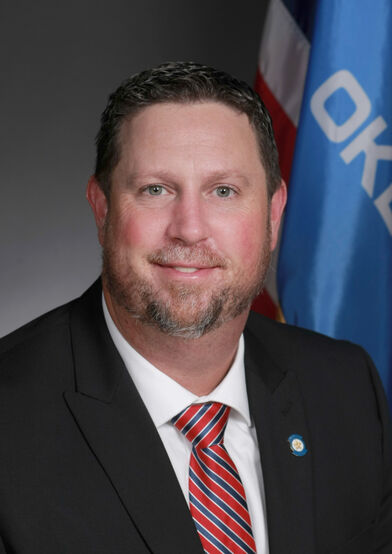
Sen. David Bullard
Sponsored bills
Maddy summaryHB 1100 amends Oklahoma's Children's Code to clarify definitions of child abuse, abandonment, and neglect, while adding specific court procedures for child safety. It requires courts to immediately release a child from custody if facts indicate they are in imminent danger of harm, and establishes a new felony charge for failing to comply with such court orders. The bill directly affects courts handling child welfare cases, parents or caregivers who disregard court directives, and children facing immediate safety threats. Key provisions include defining "imminent danger" for court decisions and specifying that non-compliance with release orders becomes a criminal offense. The changes aim to streamline child safety responses without altering existing abuse definitions or child welfare standards.
Maddy summarySB 859 changes how members of the Oklahoma State Bureau of Investigation (OSBI) Commission are appointed and serves. It establishes a 7-member commission with specific appointment sources: one chief of police (via Oklahoma Association of Chiefs of Police), one sheriff (via Oklahoma Sheriffs’ Association), one district attorney (via District Attorneys Council), and appointments by the Attorney General, Governor, Senate President Pro Tempore, and House Speaker. The bill sets fixed 7-year terms with staggered starting terms and requires police/sheriff members to be current officers who completed approved training. It also clarifies that appointments after redistricting must follow new district boundaries. This bill directly affects the composition and selection process of the OSBI Commission.
Maddy summaryHB 1094 requires Oklahoma public schools to teach about the "atrocities of communism" to students in grades six through twelve starting in the 2026-2027 school year. The bill mandates that the State Department of Education develop curriculum resources and teaching guidelines covering causes, human costs, societal impacts, and comparisons to U.S. constitutional principles. It also requires the department to create professional development for educators on this topic. The law defines "communism" as an ideology historically linked to authoritarian regimes and mass atrocities, and takes effect July 1, 2026.
Maddy summarySB 848, the Oklahoma Independent Education Act, prohibits Oklahoma public school districts and charter schools from using federal or state funds to promote or recognize sexual orientation or gender identity through activities like programs, events, or communications. It requires the State Department of Education to develop a plan to phase out federal education funding for K-12 schools and replace it with state funds, including a timeline and funding projections. The plan must be submitted to the governor and legislature for potential adoption. The bill directly affects all public K-12 schools in Oklahoma and their funding sources.
Maddy summarySB 895 creates the Oklahoma Highway Patrol Board, a 9-member governing body for the Oklahoma Highway Patrol. The board consists of members appointed by the Governor (2), Senate President (2), House Speaker (2), Oklahoma State Troopers Association (1), Oklahoma State Bureau of Investigation Director (1), and Council on Law Enforcement Education and Training (1). Board members serve at the pleasure of their appointing authority, may be removed without cause, and are reimbursed for travel expenses. The bill transfers certain governance duties from the Commissioner of Public Safety to this new board and requires the board to establish leadership and meet regularly to carry out its responsibilities.
Maddy summaryThis proposed constitutional amendment would restrict Oklahoma's use of eminent domain (government power to take private land) for wind energy projects and related transmission lines under two conditions: if the project receives 3% or more in federal funding or uses federal tax incentives. It specifically prohibits taking land for wind turbines themselves or for transmission lines serving wind/solar projects meeting these federal support thresholds. The amendment does not affect voluntary land sales between property owners and developers, nor does it apply to energy projects without federal funding or tax incentives. It aims to protect private property rights regarding certain federally supported energy infrastructure.
Maddy summaryHB 1453 prohibits specific foreign governments and entities (designated under U.S. regulations or as "Entities of Particular Concern") from owning agricultural land or real property in Oklahoma. It requires these prohibited foreign parties to sell any existing property within one year or face legal action by the Attorney General, which could lead to judicial sale. The law defines "agricultural land" as land used for farming, ranching, or timber production (excluding mineral rights and small plots under $1,000 annual income), and exempts resident aliens and certain other entities. Violations may result in fines and court-ordered property sales, with the Attorney General enforcing these requirements.
Maddy summarySB 66 creates the Oklahoma Southeastern Regional Airport Improvement Revolving Fund to finance airport upgrades at small regional airports. It specifically targets airports located east of U.S. Highway 69, south of U.S. Highway 70, and within Oklahoma municipalities with populations between 10,000 and 20,000 people. The fund requires $10 million in matching contributions from local, county, tribal, federal sources, or donations before state funds can be used for repairs, improvements, or air traffic control towers. The bill appropriates $10 million from the state's General Revenue Fund, with unspent funds transferring to the General Revenue Fund by July 1, 2027, if no eligible projects are approved.
Maddy summarySB 27 exempts certain healthcare providers from electronic prescription requirements for Schedule II-V controlled substances. It specifically adds an exemption for practitioners working exclusively in federally designated medically underserved areas (MUAs) as defined by the Health Resources and Services Administration. Other exemptions include veterinarians, hospital/nursing facility staff, hospice providers, and practitioners with documented technical issues or short-supply prescriptions (72 hours or less). Practitioners with disciplinary history related to controlled substance prescriptions are barred from claiming these exemptions.