

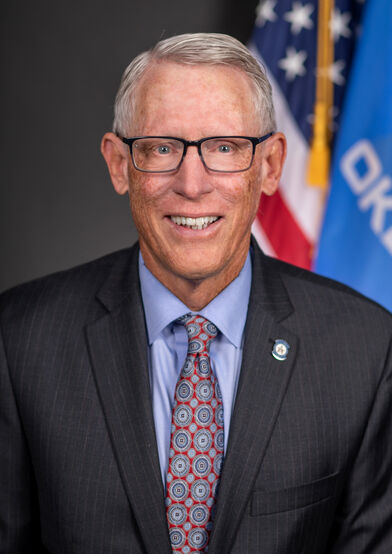
Photo of Dave Rader
R Oklahoma Senate · District 39

Sen. Dave Rader

Compare
Total votes
6,835
all sessions
Attendance
98%
108 missed
Higher than 83% of chamber peers
With party
96%
of cast votes
Near the chamber average
Bipartisan score
3%
crosses aisle rarely
Near the chamber average
Sponsored
628
bills & resolutions
Higher than 87% of chamber peers
Committees
6
assignments
628 bills and resolutions

Sponsored bills

Total
628
Primary
628
Co-sponsor
0
This page
628
matching current filters
Primary SB 364
Passed · Oklahoma Senate · Lead sponsor
Schools; prohibiting use of corporal punishment on any student identified with a disability.

Maddy summarySB 364 prohibits Oklahoma public schools from using physical discipline (such as spanking or paddling) on students identified with significant cognitive disabilities, unless their individualized education plan (IEP) explicitly allows it under federal disability law. Schools must obtain written parental consent to override this ban, though the bill removes previous language authorizing automatic waivers. The law applies to all students with such disabilities in public schools and takes effect July 1, 2025. It amends Oklahoma Statutes § 13-116 to clarify that corporal punishment is banned unless documented in an IEP compliant with the Individuals with Disabilities Education Act (IDEA).

Passed May 12, 2025 0 co-sponsors
Primary SB 831
Passed · Oklahoma Senate · Lead sponsor
Election boards; increasing amount of per diem for members for certain meetings. Effective date.

Maddy summarySB 831 is a bill designed to adjust the compensation for members of election boards. It increases the per diem, or daily allowance, that these members receive when attending specific meetings. This change directly affects individuals serving on election boards by modifying their reimbursement rates. The bill also specifies an effective date for these new per diem amounts to come into force.

Passed May 12, 2025 0 co-sponsors
Primary HB 1200
Passed · Oklahoma House · Lead sponsor
Revenue; taxation rates; income; exemptions; deductions; effective date.

Maddy summaryHB 1200 establishes a revenue stabilization mechanism for Oklahoma's state budget. It requires the State Board of Equalization to certify five-year average revenue from oil, natural gas, and corporate income taxes. If annual revenue exceeds these averages, specific percentages (25% to the Constitutional Reserve Fund, 75% to the Revenue Stabilization Fund) must be deposited - unless revenue growth exceeds $400 million (adjusted for inflation), which could trigger future tax rate reductions. The bill does not change tax rates directly but links fund deposits to revenue performance, affecting how state funds are managed rather than individual taxpayers. This procedural bill focuses on budget stability rules, not new tax policies.

Passed May 8, 2025 0 co-sponsors
Primary HB 1427
Passed · Oklahoma House · Lead sponsor
Revenue and taxation; clean burning motor vehicle fuels; insurance premium tax credits.

Maddy summaryHouse Bill 1427 modifies Oklahoma's tax credits for investments in clean-burning motor vehicle fuel property. For tax years up to 2028, it continues to allow a one-time credit against state income tax for qualified investments. A key change is the introduction of an alternative option, allowing credits for investments made on or after the bill's effective date to be claimed against state insurance premium taxes. This applies to equipment for modifying vehicles to run on fuels like compressed natural gas or hydrogen, new alternative fuel vehicles, and public fueling infrastructure, including electric vehicle charging stations. The credit amounts vary based on the type of property and vehicle weight.

Passed May 8, 2025 0 co-sponsors
Primary HB 1200
Passed · Oklahoma House · Lead sponsor
Revenue; taxation rates; income; exemptions; deductions; effective date.

Maddy summaryHB 1200 modifies Oklahoma's revenue certification and allocation processes for specific taxes. It requires the State Board of Equalization to certify five-year average revenues from oil, natural gas, and corporate income taxes, directing excess amounts above these averages into the Revenue Stabilization Fund and, for corporate income, partially into the Constitutional Reserve Fund. The bill also establishes a mechanism where sustained state tax revenue growth exceeding $400 million (adjusted for inflation) could trigger future reductions in marginal income tax rates. This affects state revenue management and could eventually impact individual taxpayers through changes in income tax rates.

Passed May 8, 2025 0 co-sponsors
Primary HB 2170
Vetoed · Oklahoma House · Lead sponsor
Revenue and taxation; fees; transferring duty to collect and enforce registered agent fee to the Secretary of State; state revenue administration; modifying various provisions; Medical Marijuana Tax Fund; effective date.

Maddy summaryHB 2170 transferred the responsibility for collecting and enforcing registered agent fees from the Oklahoma Tax Commission to the Secretary of State. It also modified tax penalty waiver procedures (requiring court approval for waivers over $25,000), limited the lookback period for tax assessments to three years, and updated medical marijuana tax fund provisions. The bill directly affected businesses using registered agents and state agencies handling tax collections. It was vetoed by the Governor on May 7, 2025, and did not become law.

Vetoed May 7, 2025 0 co-sponsors
Primary SB 582
Signed into law · Oklahoma Senate · Lead sponsor
State fiscal affairs; modifying fiscal years requiring estimated revenue collections. Effective date.

Maddy summarySB 582 requires Oklahoma state agencies collecting revenue into the General or Special Revenue Funds to provide the Office of Management and Enterprise Services with detailed, itemized forecasts of expected collections for the current year and the next two fiscal years. It also mandates the Oklahoma Tax Commission to submit comprehensive economic reports - analyzing recent performance and forecasting national/state trends - to the Director of Management and Enterprise Services at least two weeks before State Board of Equalization meetings, including assessments of past forecast accuracy. These reports and revenue estimates must be shared simultaneously with key legislative committees. The bill takes effect November 1, 2025, and became law without the Governor's signature on May 7, 2025.

Signed into law May 7, 2025 0 co-sponsors
Primary SB 283
Signed into law · Oklahoma Senate · Lead sponsor
Oklahoma State System of Higher Education; expanding annual transaction limit of the master lease program. Effective date.

Maddy summarySB 283 expands the annual transaction limit for Oklahoma's master lease program, which allows public higher education institutions to lease equipment and facilities without upfront costs. The bill specifically adds certain refunded lease projects to the annual limit calculation, enabling institutions to count these previously settled transactions toward their yearly cap. This change affects Oklahoma's public universities and colleges that use the master lease program for facility and equipment financing. The amendment updates Section 3206.6a of Title 70 of the Oklahoma Statutes and sets an effective date for implementation.

Signed into law May 7, 2025 0 co-sponsors
Primary HB 1017
Signed into law · Oklahoma House · Lead sponsor
Higher education; Oklahoma College Athletic Conference Act; Oklahoma NCAA Division II Athletic Conference Exploration Commission; emergency.

Maddy summaryHB 1017 establishes the Oklahoma NCAA Division II Athletic Conference Exploration Commission to study creating a new state-based athletic conference for Oklahoma’s NCAA Division II colleges. The commission, composed of university presidents from 10 Oklahoma institutions, will analyze feasibility factors including member schools, finances, student-athlete benefits, and NCAA compliance. It must produce a detailed report within 12 months, covering potential members, transition plans, funding models, and community benefits. The bill directly affects Oklahoma’s public and private universities participating in NCAA Division II athletics by exploring a new conference to enhance local rivalries, reduce travel costs, and keep students in-state. The legislation became law on May 7, 2025, without a governor’s signature.

Signed into law May 7, 2025 0 co-sponsors
Primary HB 1017
Passed · Oklahoma House · Lead sponsor
Higher education; Oklahoma College Athletic Conference Act; Oklahoma NCAA Division II Athletic Conference Exploration Commission; emergency.

Maddy summaryHB 1017 establishes the Oklahoma NCAA Division II Athletic Conference Exploration Commission to study creating a new in-state athletic conference for Oklahoma's NCAA Division II colleges. The commission, composed of presidents from 10 Oklahoma public and private universities, must analyze feasibility factors including potential member institutions, academic/athletic capabilities, and funding sources. It will produce a final report with recommendations to the legislature, but the bill does not create the conference itself. The commission may contract independent consultants and consult the NCAA during its study.

Passed May 7, 2025 0 co-sponsors
Showing 101 to 110 of 628 bills
Previous 1 10 11 12 63 Next