

Maddy summaryHB 2647, the Shai Cooper Act, updates Oklahoma's adoption law to allow courts to waive home study requirements for certain family adoptions. It specifically applies to immediate relatives (brothers, sisters, grandparents, aunts, or uncles) seeking to adopt a child, provided the court finds the waiver is in the child's best interest and the petitioner has no felony or child-related abuse convictions. The bill requires courts to verify the petitioner has been married to the child's parent (if applicable) for at least one year or meets specific conditions for single relatives. This change streamlines adoptions within close family circles while maintaining safety checks, but does not affect foster or non-relative adoptions, which still require full home studies. The law took effect November 1, 2025.
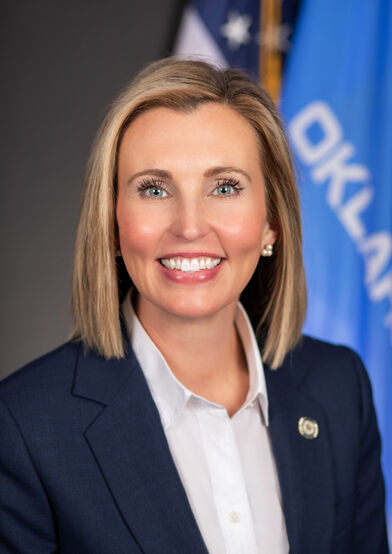
Sen. Kristen Thompson
Sponsored bills
Maddy summarySB 1019 requires Oklahoma health insurers to cover continuous anesthesia services without arbitrary time limits during medical procedures. It defines "anesthesia time" as the period from patient preparation through service discontinuation and mandates that insurers cannot restrict coverage or payment based on time duration. The law directly affects insurers and anesthesia providers by eliminating policies that previously limited coverage for procedures requiring extended anesthesia care. Effective November 1, 2025, this bill codifies these requirements into Oklahoma Statutes (Title 36, Section 7500).
Maddy summaryHB 2647, also known as the Shai Cooper Act, modifies adoption laws by expanding the circumstances under which a court can waive a preplacement home study. This bill allows the waiver option for adoptions where the child is an "immediate relative" of the petitioners or their spouse, defining immediate relatives as brothers, sisters, grandparents, aunts, or uncles. It directly affects these immediate family members seeking to adopt a child within their family. For a waiver to be granted, the court must find it's in the child's best interest, and the petitioning immediate relative or their spouse must not have a record of certain felony convictions, child abuse, neglect, or domestic violence.
Maddy summarySenate Bill 630 amends Oklahoma's existing laws regarding rape by expanding the scope of the offense. It adds a new circumstance to the definition of rape, specifically addressing situations involving students and employees of higher education institutions. Under this bill, sexual intercourse is considered rape if the victim is a secondary school student concurrently enrolled at an institution of higher education, and the perpetrator is an employee of that institution. The bill also defines what constitutes an "employee of an institution of higher education" for this section. This change is set to become effective on November 1, 2025.
Maddy summarySenate Bill 1019 requires health insurance providers to cover certain anesthesia services without imposing time limits or restricting payment for "anesthesia time." The bill defines "anesthesia time" as the period an anesthesia practitioner prepares and furnishes services to a patient, and "payments for anesthesia service" based on prevailing medical coding standards. This directly affects health insurers and individuals undergoing medical or surgical procedures requiring anesthesia. Specifically, insurers cannot enforce policies that limit the duration of covered anesthesia or exclude its payment. The law became effective on November 1, 2025.
Maddy summarySenate Bill 987 establishes the Oklahoma Department of Commerce Board, which will oversee the Oklahoma Department of Commerce and influence the state's economic development strategies. This bill outlines the qualifications, terms, and procedures for the new Board members, and shifts the power to appoint the Department's Chief Executive Officer from the Governor to this newly created Board. The Board will also be responsible for approving the state's five-year economic development plan and will operate under the Oklahoma Open Meeting and Open Records Acts.
Maddy summaryHB 1935 amends Oklahoma's statute of limitations for prosecuting certain criminal cases. It shortens the time limit for prosecuting embezzlement of public funds (including school district funds) and specific financial crimes from 7 to 5 years after discovery. For sexual crimes against children, prosecutions can now continue until the victim's 45th birthday, while cases involving DNA evidence preserved at the time of the crime may proceed even after standard time limits expire. The bill also prohibits relying solely on recovered memories from therapy in such cases and sets a 3-year limit for wildlife crimes and fraud.
Maddy summaryHouse Bill 1935 updates Oklahoma's criminal procedure by modifying the time limits for prosecuting various offenses. It adjusts how long the state has to file charges for crimes such as bribery, embezzlement of public funds, and falsification of public records. The bill also revises the prosecution periods for certain sexual crimes against children and vulnerable adults, sometimes allowing for indefinite prosecution under specific conditions like DNA evidence or a confession. Additionally, it establishes new timeframes for crimes like human trafficking and felonies involving deadly weapons, with an effective date of November 1, 2025.
Maddy summaryHB 2115 transfers the administration of several public assistance programs related to energy conservation and home weatherization to the Department of Human Services. The bill amends existing statutes to shift responsibilities for the Energy Conservation Assistance Fund, the Energy Conservation Loan Fund, and the Weatherization Revolving Fund. Under this change, the Department of Human Services will oversee grant disbursement, eligibility determination for homeowners, contractor monitoring, and loan repayments for these programs. These programs primarily assist low-income elderly and handicapped individuals with home weatherization improvements. This act is scheduled to take effect on July 1, 2026.
Maddy summaryHB 1483 extends whistleblower protections to school support employees (like counselors, cafeteria workers, and administrative staff) in Oklahoma, alongside teachers. It prohibits school districts from disciplining these employees for reporting violations of law, the Oklahoma Constitution, or rules - whether to supervisors, school boards, law enforcement, or the State Department of Education. The bill requires school districts to prominently post this law and clarifies it doesn’t override student privacy rights under FERPA. The law takes effect July 1, 2025, after being approved by the governor on May 6, 2025.