

Maddy summarySB 1733 requires Oklahoma school employees (including teachers, coaches, and administrators) to report suspected student sexual abuse, assault, or misconduct to law enforcement within 24 hours. It prohibits school investigations or disciplinary actions before reporting and mandates annual attestation forms confirming staff understanding of these duties. The law applies to all public and charter school staff, with confidentiality protections for reporters. It takes effect July 1, 2026, and declares an emergency for immediate implementation.
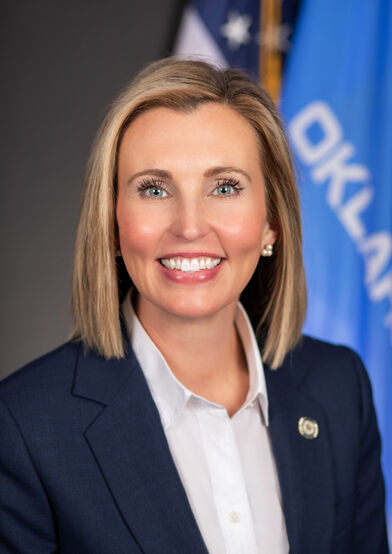
Sen. Kristen Thompson
Sponsored bills
Maddy summarySB 1530 requires the Oklahoma Department of Commerce to verify that businesses claiming research and development rebates actually conducted eligible research within Oklahoma. It affects companies seeking rebates equal to 5% of their qualified research expenses, with a $20 million annual cap on total payments. The bill mandates that businesses submit applications and documentation for verification before receiving rebates, and if funds are insufficient, payments are prorated or carried over to future years. This amendment updates existing rules for the Oklahoma Research and Development Rebate Fund, effective July 1, 2026.
Maddy summaryHB 3619 creates a State Geographic Information Council composed of 19 state agency representatives and three gubernatorially appointed members to standardize geographic data across Oklahoma. The Council must develop statewide standards for geographic information systems (GIS), create a comprehensive GIS implementation plan, and establish a workgroup to map county boundaries. It also establishes an Office of Geographic Information within the Oklahoma Conservation Commission to manage these efforts, with a State Geographic Information Coordinator appointed by the Commission. The bill directly affects state agencies that use geographic data for land, water, and infrastructure management, ensuring consistent data sharing and reducing duplication of efforts.
Maddy summaryHB 4201 sets a new requirement for licensed child care facilities in Oklahoma: two-, three-, four-, and five-star centers must have one full-time master teacher for every 60 children enrolled. This directly affects higher-rated child care facilities seeking to maintain or achieve those star ratings. The bill codifies this teacher-to-child ratio in state law (Title 10, Section 404.4) and includes an emergency clause to make it effective immediately upon approval. The policy change aims to standardize staffing levels for quality child care across these facilities.
Maddy summarySB 1942 amends Oklahoma's dental insurance regulations to clarify what services insurers must cover and how claim denials must be handled. It defines "covered services" as all dental procedures the insurance plan must pay for, regardless of plan limitations like deductibles or frequency rules. The bill requires insurers to provide dentists with specific details - such as the reviewing dentist's license number and contact information - when denying claims based on "lack of medical necessity." This ensures transparency and allows dentists to directly question denials through designated channels. The changes apply to dental insurance plans and health benefit plans covering dental services in Oklahoma.
Maddy summarySB 1919 increases Oklahoma's annual cap on tourism development incentives from $30 million to $60 million. It affects tourism companies building attractions by allowing sales tax credits of up to 10% for projects under $1 million or 25% for larger projects, subject to revenue-neutrality rules (ensuring projects don't cost the state money). Entertainment District developers can also choose to receive incentive payments based on tenant sales tax collections, with a 10% annual payment limit. All incentives require verification of project costs and must not exceed the state's revenue-neutral threshold.
Maddy summaryHB 3620 creates Oklahoma's 2030 Census Complete Count Committee to ensure an accurate population count for the 2030 U.S. Census. The 16-member committee - including legislative leaders, state/local government representatives, nonprofit leaders, and minority group advocates - will develop outreach strategies to boost participation, especially in hard-to-count communities. Key duties include creating a multilingual campaign, partnering with schools and community organizations, improving housing data, and making annual recommendations to state leaders. The committee must submit a final report by June 2030 and hold at least one meeting per year starting July 2027. This procedural bill directly affects all Oklahoma residents by influencing how federal funding and representation are determined based on census data.
Maddy summaryHB 3621 creates the Oklahoma State Data Center, managed by the Legislative Service Bureau, to serve as the state's primary hub for population data and official liaison to the U.S. Census Bureau. The Center will collect and analyze population statistics, produce annual demographic reports for the Governor and Legislature, and assist with redistricting, school boundary reviews, and federal census programs like the Local Update of Census Addresses. It will coordinate with state agencies, local governments, and tribal entities to ensure accurate demographic data for planning and funding decisions. The bill takes effect November 1, 2026.
Maddy summarySB 1769 allows short-term rental owners in Oklahoma to require renters to submit a photo ID after booking a stay. If the ID provided doesn't match the booking details, owners can cancel the agreement without penalty. Short-term rental platforms (like Airbnb or Vrbo) must enable this ID verification feature and support cancellations for mismatched information. The bill affects owners, renters, and platforms, and takes effect November 1, 2026.
Maddy summaryHJR 1069 proposes two constitutional amendments to Oklahoma's Article XVII regarding county boundaries. Section 4 updates rules for creating new counties or altering boundaries, requiring 60% voter approval, setting minimum size (400 sq mi), population (15,000), and taxable wealth ($2.5 million) thresholds, and prohibiting boundary changes that reduce existing county size below new county standards. Section 8 revises legal descriptions of county boundaries using modern Geographic Information System (GIS) data from the Bureau of Land Management (2023), replacing outdated survey references. This bill directly affects Oklahoma counties and voters in areas where boundary changes or new counties are proposed, as it modifies how such changes are legally defined and approved.