

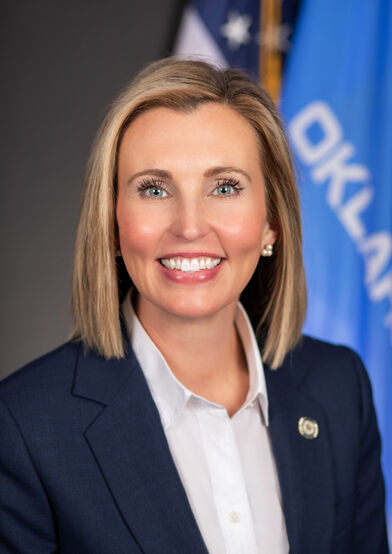
Photo of Kristen Thompson
R Oklahoma Senate · District 22 On the 2026 ballot

Sen. Kristen Thompson

Compare
Total votes
4,307
all sessions
Attendance
96%
138 missed
Near the chamber average
With party
98%
of cast votes
Higher than 81% of chamber peers
Bipartisan score
1%
crosses aisle rarely
Lower than 96% of chamber peers
Sponsored
169
bills & resolutions
Near the chamber average
Committees
7
assignments
169 bills and resolutions

Sponsored bills

Total
169
Primary
169
Co-sponsor
0
This page
169
matching current filters
Primary HB 2051
Passed · Oklahoma House · Lead sponsor
Practice of medicine; creating the Supervised Physicians Act; limiting scope of supervised practice; directing specified Boards to promulgate certain rules; requiring collaborative practice arrangements; creating certain exemptions; effective date.

Maddy summaryHouse Bill 2051, known as the "Supervised Physicians Act," creates a new temporary licensure pathway for medical school graduates in Oklahoma to practice medicine under direct supervision. It allows graduates from Oklahoma medical schools who have passed specific licensing exams to obtain a two-year, non-renewable temporary license. These "supervised physicians" must enter into a collaborative practice arrangement with a fully licensed supervising physician. The bill directs the State Board of Medical Licensure and Supervision and the State Board of Osteopathic Examiners to establish rules for this temporary licensure process, supervision requirements, and associated fees.

Passed Apr 23, 2025 0 co-sponsors
Primary HB 2894
Passed · Oklahoma House · Lead sponsor
Revenue and taxation; Oklahoma Tourism Development Act; inducement cap; sunset; effective date.

Maddy summaryHB 2894 amends the Oklahoma Tourism Development Act, modifying the tax incentives available for tourism projects. It adjusts sales tax credit amounts based on project investment tiers, offering up to 10% for projects between $500,000 and $1 million, and up to 25% for projects over $1 million. The bill specifically allows approved companies developing "Entertainment Districts" to pass through sales tax credits to their tenant businesses or, for larger projects, to receive incentive payments based on tenant sales tax collections. It also sets an annual cap of $30 million for cumulative inducements under the Act and concerns extending the Act's sunset date.

Passed Apr 16, 2025 0 co-sponsors
Primary SB 1090
Passed · Oklahoma Senate · Lead sponsor
Public finance; authorizing State Treasurer to implement the Invest In Oklahoma program; authorizing State Treasurer to invest funds into the Invest In Oklahoma program under certain conditions. Effective date.

Maddy summarySB 1090 creates the "Invest In Oklahoma" program, allowing specific state retirement funds and public entities (like the Teachers’ Retirement System and Land Office) to invest up to 5% of their assets in Oklahoma-based private equity, venture capital, and growth funds. The State Treasurer must select qualifying funds using criteria like investment performance, local capitalization, and return rates, while the new Cash Management and Investment Oversight Commission will monitor compliance and reporting. This program aims to direct state investment capital toward Oklahoma businesses and job growth. The bill amends state statutes to establish the program’s rules, fund selection process, and oversight structure, effective upon enactment.

Passed Apr 14, 2025 0 co-sponsors
Primary HB 2805
Passed · Oklahoma House · Lead sponsor
Dental benefit plans; creating the Medical Loss Ratios for Dental (DLR) Health Care Services Plans Act; definitions; formula; reporting to Insurance Department; data verification; rebate calculation; rates; effective date.

Maddy summaryHB 2805 establishes minimum medical loss ratio (MLR) requirements for dental benefit plans in Oklahoma, requiring insurers to spend at least 85% of premium revenue on actual dental care (not overhead) for large group plans and 80% for individual/small group plans. If insurers fail to meet these ratios, they must issue annual rebates to enrollees calculated as the shortfall multiplied by total premium revenue (excluding certain fees). The bill also mandates annual MLR reporting to the Oklahoma Insurance Department by calendar year, with public data disclosure, and requires insurers to file dental rate changes by July 1 for January 1 effective dates. It does not apply to Medicaid plans and takes effect January 1, 2028, for rebate implementation.

Passed Apr 1, 2025 0 co-sponsors
Primary HB 2805
Passed · Oklahoma House · Lead sponsor
Dental benefit plans; creating the Medical Loss Ratios for Dental (DLR) Health Care Services Plans Act; definitions; formula; reporting to Insurance Department; data verification; rebate calculation; rates; effective date.

Maddy summaryHB 2805 establishes minimum medical loss ratio (MLR) standards for dental benefit plans in Oklahoma, requiring insurers to spend at least 80% of premium revenue on actual dental care (or 85% for large groups) rather than administrative costs. Dental insurers must annually report their MLR to the Oklahoma Insurance Department using federal-style forms, with rebates paid to enrollees if the ratio falls below the thresholds. The bill mandates transparent public reporting of MLR data and sets rules for calculating rebates based on the shortfall between actual spending and required minimums. It applies to all private dental plans but excludes Medicaid coverage.

Passed Apr 1, 2025 0 co-sponsors
Primary HB 2140
Passed · Oklahoma House · Lead sponsor
Revenue and taxation; Ad Valorem Tax Code; definitions; classifications of property; valuation procedures; effective date.

Maddy summaryHB 2140 changes how Oklahoma county assessors value unfinished commercial buildings. It applies to properties missing interior finishes (like floors, walls, or ceilings) that owners or contractors plan to sell or lease for tenants to complete. The bill requires assessors to value these properties based only on the cost of construction materials used before interior work, not the potential finished value. This change takes effect for the 2026 assessment year and beyond.

Passed Apr 1, 2025 0 co-sponsors
Primary SB 693
In committee · Oklahoma Senate · Lead sponsor
Social media; requiring certain warning on social media platforms. Effective date.

Maddy summarySB 693 requires social media platforms to display a clear warning about potential mental health risks for minors when users under 18 access the platform. This warning must be provided in a specific, conspicuous manner as defined by the bill, and failure to do so would be deemed an unlawful business practice under Oklahoma's Consumer Protection Act. Violations would result in civil penalties, which would be deposited into a new "Social Media Mitigation for Minor Mental Health Fund" managed by the Department of Mental Health and Substance Abuse Services. The fund aims to support mental health services for minors in Oklahoma, directly affecting social media companies operating within the state.

In committee Mar 11, 2025 0 co-sponsors
Primary SB 839
In committee · Oklahoma Senate · Lead sponsor
Social media; categorizing social media platforms as addictive. Effective date.

Maddy summarySB 839 defines "social media platform" in Oklahoma law and declares such platforms "addictive and dangerous to mental health, especially that of minors." The bill does not create new regulations, restrictions, or enforcement mechanisms - only establishes this declarative statement for legal reference. It directly affects how social media platforms are categorized in Oklahoma statutes but imposes no concrete policy changes or requirements on platforms, users, or the state. The bill takes effect November 1, 2025, as a standalone definition with no operational provisions.

In committee Mar 11, 2025 0 co-sponsors
Primary SB 839
In committee · Oklahoma Senate · Lead sponsor
Social media; categorizing social media platforms as addictive. Effective date.

Maddy summarySB 839 (Oklahoma Senate Bill 839) classifies all social media platforms as "addictive and dangerous to mental health, especially that of minors" under Oklahoma law. The bill defines "social media platform" as any website or internet service enabling user-generated content and interaction, but does not impose new regulations, restrictions, or enforcement mechanisms. It is a declarative classification with no concrete policy changes or requirements for platforms, users, or state agencies. The bill, currently pending in committee, would take effect November 1, 2025, but only establishes this labeling without altering existing laws or creating new obligations.

In committee Mar 11, 2025 0 co-sponsors
Primary SB 693
In committee · Oklahoma Senate · Lead sponsor
Social media; requiring certain warning on social media platforms. Effective date.

Maddy summarySB 693 amends Oklahoma's Consumer Protection Act to classify certain social media platform practices as unlawful business violations. It creates the "Social Media Mitigation for Minor Mental Health Fund" in the State Treasury, funded by civil penalties imposed on social media platforms found in violation. The bill directly affects social media platforms operating in Oklahoma that fail to comply with the new consumer protection standards. These penalties will support mental health services for minors, as specified in the fund's purpose. The legislation does not mandate specific content warnings but establishes penalties for violations of the updated consumer law.

In committee Mar 11, 2025 0 co-sponsors
Showing 91 to 100 of 169 bills
Previous 1 … 9 10 11 … 17 Next