

Maddy summaryThis bill amends Oklahoma's payroll and claims processing procedures for state agencies, not tort liability as the title suggests. It authorizes the Director of the Office of Management and Enterprise Services to establish electronic systems and forms for processing claims and payrolls, allowing agencies to file claims against multiple fund accounts and requiring detailed payroll records showing earnings, withholdings, and net pay per employee. The changes apply directly to all state agencies and their employees, streamlining how claims are submitted, audited, and paid. It does not alter liability limits for tort claims, as the title incorrectly implies, but focuses solely on administrative payroll and claims management systems. The bill was enacted on May 27, 2025, after approval by the Governor.
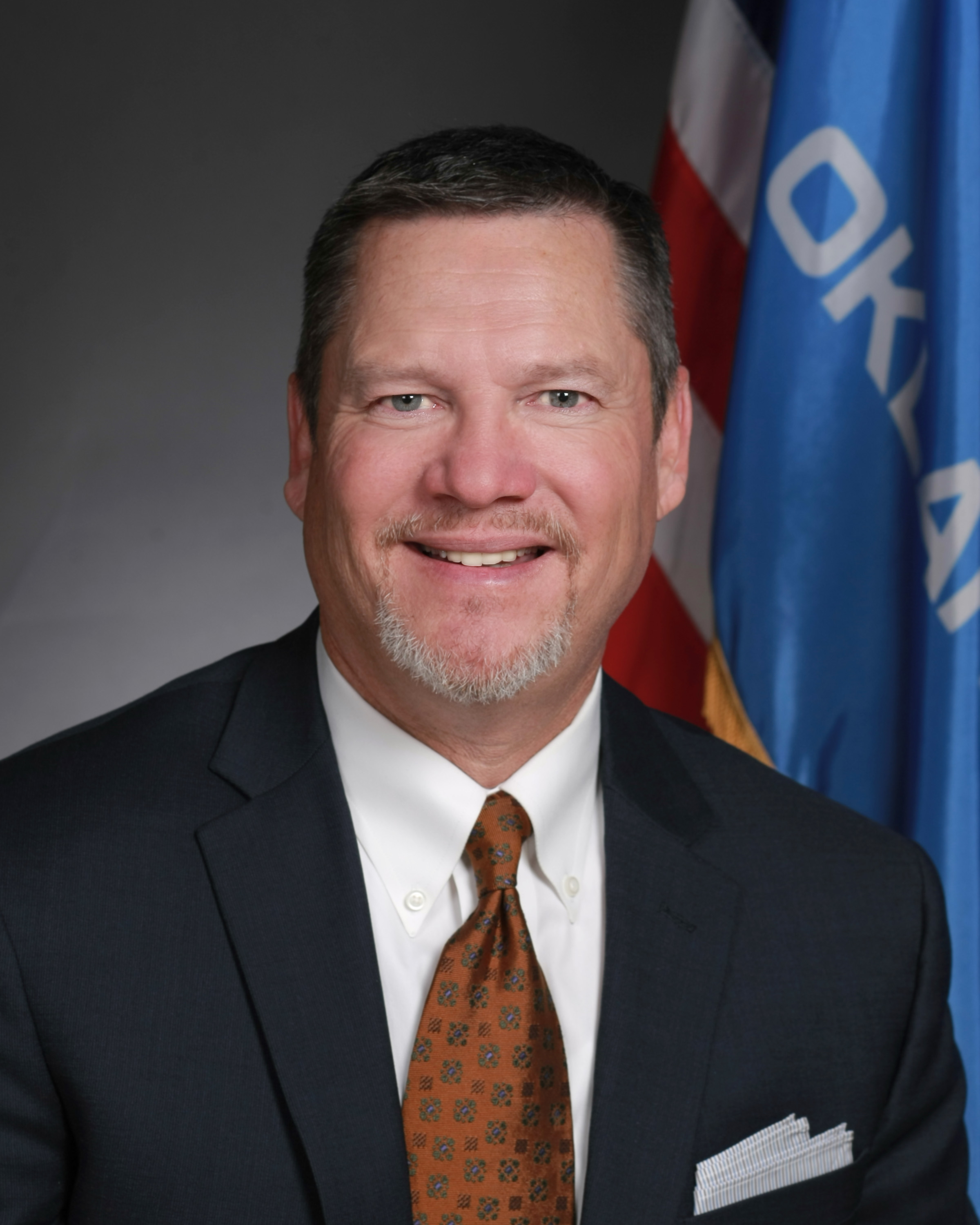
Sen. Chuck Hall
Sponsored bills
Maddy summarySB 1171 amends Oklahoma's state payroll and claims procedures to modernize administrative processes for state agencies. It authorizes the Director of the Office of Management and Enterprise Services to establish electronic systems for processing payroll and claims, allowing agencies to file claims against multiple fund accounts simultaneously. The bill requires detailed payroll records showing total earnings, specific withholdings (like taxes), and net pay for each employee, with withholdings reserved for lump-sum payments to appropriate entities. This directly affects all state agencies and employees by updating how payroll is processed and documented. (Note: The bill's title referencing "repealing the Perform Act" appears inconsistent with the actual content, which focuses on administrative payroll updates rather than incentives or repeal.)
Maddy summarySB 688 grants a 5-year property tax exemption for qualifying manufacturing facilities in Oklahoma, directly affecting manufacturers that meet specific investment, wage, and sales criteria. The bill exempts new or expanded facilities (including research labs) from ad valorem taxes if they invest at least $500,000 (adjusted annually for inflation) in qualifying assets, pay new jobs at or above Oklahoma Quality Jobs Program wage standards, and meet sales requirements (e.g., 50% revenue from out-of-state buyers for tech facilities). Facilities must annually file affidavits with the Oklahoma Tax Commission to verify eligibility. This law, enacted May 28, 2025, modifies existing tax exemptions to streamline eligibility for manufacturers expanding operations.
Maddy summarySB 1128 appropriates $100,000 from unallocated state funds to the Oklahoma State Board of Education for fiscal year 2026. It directly affects the State Board of Education by providing funding for duties required by law. The bill declares an emergency to make it effective immediately upon approval, though it specifies funds come from "monies not otherwise appropriated." The bill failed to pass on May 22, 2025, with 42 votes in favor and 48 against.
Maddy summarySB 147 requires Oklahoma's Secretary of the State Election Board to mandate all counties to conduct post-election audits for specific elections, directly affecting county election officials. The bill establishes that audits - defined as limited manual or electronic ballot reviews - must be conducted following elections listed in state law, with the Secretary setting audit methods, timing, and procedures. County election boards must report findings publicly, and the law takes effect November 1, 2025.
Maddy summaryThis bill modifies the definition of "basic industry" for Oklahoma's Quality Jobs Program, specifically addressing the relationship between employers and leased or contracted employees. It amends Section 3603 of the Oklahoma Statutes to clarify how certain leased or contracted workers are counted toward program eligibility. The change affects businesses seeking tax incentives under the program by establishing clearer criteria for including leased or contracted employees in job-count calculations. The bill was enacted without the Governor's signature on May 12, 2025. (Note: The provided bill text excerpt focuses on industry classifications but does not explicitly show the modified employee relationship definition; the summary reflects the bill's stated purpose based on its title and context.)
Maddy summarySB 1108 transfers the collection and management of Oklahoma aircraft registration fees from current systems to Service Oklahoma, affecting all aircraft owners in the state. It establishes a detailed fee schedule based on aircraft type and weight (e.g., $30 for single-engine planes under 1,750 pounds) with annual 10% fee reductions until reaching 50% of the original rate. All collected fees are distributed as 3% to the General Revenue Fund and 97% to the Oklahoma Department of Aerospace and Aeronautics Revolving Fund. The law takes effect July 1, 2025, standardizing aircraft registration processes under Service Oklahoma.
Maddy summarySB 301 modifies Oklahoma's tax credit system for donations to biomedical and cancer research institutes. It reduces annual credit limits to $1.5 million for biomedical research donations and $500,000 for cancer research donations starting in 2026, down from $2 million previously. Donors to qualifying institutes (which must receive $20 million annually in NIH funding for biomedical or $4 million for cancer research) will face new caps: $25,000 for business donors to biomedical institutes, and $1,000-$2,000 for individual filers depending on filing status. The bill adjusts how credit percentages are calculated using the second preceding year's claims and ensures credits cannot exceed tax liability.
Maddy summarySB 814 expands access to emergency absentee ballots for military service members deployed during active duty. It allows these voters to request ballots after the standard deadline by submitting a written request with valid ID to their county election office. Ballots must be returned in person or by mail by 7:00 p.m. on election day, following the same processing rules as other emergency absentee ballots. Signed into law on May 5, 2025, this amendment to Oklahoma’s election code (26 O.S. § 14-115.6) specifically adds uniformed-service members to the existing eligibility category that previously covered first responders during emergencies.
Maddy summarySB 1173 amends Oklahoma law to clarify procedures for state payroll and claims processing. It specifies that the Director of the Office of Management and Enterprise Services must establish forms and electronic systems for agencies to submit payroll claims, allowing agencies to charge multiple fund accounts per claim after audit. The bill requires payroll records to detail total earnings, withholdings, and net pay per employee, and permits withholdings to be reserved for lump-sum payments to appropriate entities. This procedural bill directly affects all state agencies handling payroll and claims, with an emergency declaration making it effective immediately upon passage.