

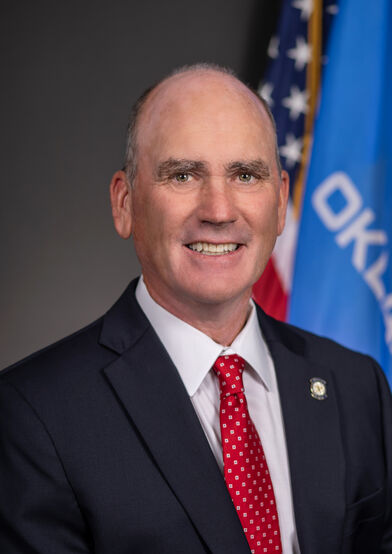
Photo of Jerry Alvord
R Oklahoma Senate · District 14 On the 2026 ballot

Sen. Jerry Alvord

Compare
Total votes
3,870
all sessions
Attendance
98%
78 missed
Higher than 85% of chamber peers
With party
97%
of cast votes
Near the chamber average
Bipartisan score
2%
crosses aisle rarely
Near the chamber average
Sponsored
143
bills & resolutions
Near the chamber average
Committees
3
assignments
143 bills and resolutions

Sponsored bills

Total
143
Primary
143
Co-sponsor
0
This page
143
matching current filters
Primary HB 3144
Passed · Oklahoma House · Lead sponsor
Medical marijuana; directing the Oklahoma Medical Marijuana Authority to limit the number of licenses it issues; repealer; effective date.

Maddy summaryHB 3144 limits the number of new medical marijuana commercial grower licenses in Oklahoma to 2,550 total, effective November 1, 2026. It directly affects new applicants seeking licenses to grow medical marijuana commercially, while existing license holders remain unaffected. The bill repeals a previous provision that allowed unlimited licensing and requires the Oklahoma Medical Marijuana Authority to cap approvals at 2,550 licenses. It maintains existing requirements like residency rules for applicants and monthly reporting on marijuana yields and sales.

Passed Apr 29, 2026 0 co-sponsors
Primary HB 3260
Signed into law · Oklahoma House · Lead sponsor
Professions and occupations; funeral licensing; continuing education; effective date.

Maddy summaryHB 3260 requires Oklahoma funeral service licensees to complete approved continuing education courses to renew or reactivate their licenses. Beginning November 1, 2026, each licensee must submit proof of 12 months of approved continuing education hours, set by the Oklahoma Funeral Board, which will maintain a list of approved courses from the Board, Oklahoma Funeral Directors Association, or Academy of Professional Funeral Service Practice. This applies to active licensees but excludes those on inactive status, nonresident licensees not practicing in Oklahoma, or board-exempt categories. The bill updates existing licensing rules to ensure ongoing professional training for funeral service professionals in the state.

Signed into law Apr 29, 2026 0 co-sponsors
Primary HB 4321
Signed into law · Oklahoma House · Lead sponsor
Elevator Safety Act; inspection; rules; standards; effective date.

Maddy summaryHB 4321 amends Oklahoma's Elevator Safety Act to strengthen enforcement and public safety processes. It requires the Department of Labor to create an enforcement program including random inspections, written notices for violations, and public awareness efforts, while prohibiting retroactive application of new safety rules to existing buildings unless documented hazards exist. The bill also establishes a process for anyone to submit written complaints about elevator safety concerns, with the Department required to investigate if reasonable grounds are found. The law takes effect November 1, 2026, directly affecting elevator owners, operators, and the Department of Labor.

Signed into law Apr 29, 2026 0 co-sponsors
Primary SB 2074
Vetoed · Oklahoma Senate · Lead sponsor
Pharmacy benefit managers; prohibiting PBM from refusing to accept documentation; requiring information to be included in appeal. Effective date.

Maddy summarySB 2074 requires pharmacy benefit managers (PBMs) to accept all documentation from pharmacies when challenging reimbursement amounts and include specific details in appeal requests. If an appeal is approved, PBMs must adjust payments within 14 days and provide claim-level details. The bill applies to all PBMs working with Oklahoma pharmacies and covers disputes over reimbursement rates for prescription drugs. It aims to streamline the appeals process and prevent delays in payments to pharmacies.

Vetoed Apr 22, 2026 0 co-sponsors
Primary HB 3127
Signed into law · Oklahoma House · Lead sponsor
Medical marijuana; policy for applicants and employees; exceptions; effective date.

Maddy summaryHB 3127 protects Oklahoma medical marijuana patients and caregivers from discrimination in employment, public assistance, and firearm ownership. It prohibits employers from refusing to hire, firing, or penalizing individuals solely for being a licensed medical marijuana user, and bars denial of Medicaid, SNAP, or firearm rights based on that status. However, the bill mandates a "zero-tolerance" policy for safety-sensitive jobs (like operating vehicles, handling hazardous materials, or direct patient care), allowing employers to enforce drug testing and discipline for marijuana use at work. Employers may still maintain written drug testing policies under state standards, but cannot deny employment based solely on medical marijuana license status or a positive test if the user is licensed and not impaired at work.

Signed into law Apr 20, 2026 0 co-sponsors
Primary HB 3545
Passed · Oklahoma House · Lead sponsor
Technology; artificial intelligence; state agencies; prohibited uses; permitted uses; Office of Management and Enterprise Services; effective date.

Maddy summaryHB 3545 restricts how Oklahoma state agencies can use artificial intelligence, directly affecting all state departments, commissions, and offices. It prohibits AI from manipulating behavior, enabling discriminatory classification, conducting general public surveillance via facial recognition (except for locating missing persons), or creating malicious deepfakes. The bill requires human review and approval for high-risk AI decisions (like benefits or legal rights), mandates disclosure when AI generates content, and requires agencies to inform users they're interacting with AI. Agencies must remove prohibited systems by September 2027, report compliance to the Office of Management and Enterprise Services (OMES), and submit annual reports detailing AI use starting December 2026.

Passed Apr 1, 2026 0 co-sponsors
Primary HB 4132
Passed · Oklahoma House · Lead sponsor
Technology; liability protections; counties; municipalities; cybersecurity frameworks; State Auditor and Inspector; effective date.

Maddy summaryHB 4132 creates liability protection for Oklahoma counties and municipalities if they adopt specific cybersecurity frameworks (NIST, CIS, or ISO standards) and meet compliance requirements. To qualify, local governments must annually certify compliance, maintain detailed security documentation, and undergo independent cybersecurity reviews every three years. This bill directly affects county and municipal operations by reducing legal risk from data breaches when these steps are followed. It does not change existing cybersecurity practices but provides a legal shield for entities that implement recognized standards. The law takes effect November 1, 2026.

Passed Apr 1, 2026 0 co-sponsors
Primary HB 4159
Passed · Oklahoma House · Lead sponsor
Education; dyslexia screenings; increasing when screenings are given for certain students; requiring the Department of Education to notify parents of the option to request dyslexia screening; effective date.

Maddy summaryHB 4159, titled the "Education Reform Act of 2026," is a procedural bill that establishes the name of an upcoming education reform law and sets its effective date. It does not describe specific policy changes, funding mechanisms, or affected groups. The bill only designates the act's name and specifies it will take effect on November 1, 2026. No substantive provisions or direct impacts on students, schools, or educators are outlined in the provided text. This is a naming and scheduling measure, not a policy reform.

Passed Apr 1, 2026 0 co-sponsors
Primary HB 3627
Passed · Oklahoma House · Lead sponsor
Public meetings; videoconference exceptions; State Committee of Blind Vendors; audible or visible; meeting notice; emergency.

Maddy summaryHB 3627 regulates how public bodies in Oklahoma can hold meetings via videoconference. It requires most public bodies to maintain a physical quorum at meetings (except for specific exceptions like the State Committee of Blind Vendors, which can meet entirely remotely), mandates detailed meeting notices listing video sites and member locations, and requires all videoconference sites to be publicly accessible. The bill also specifies that public input must be allowed equally at video sites, electronic materials shared during meetings must be publicly available, and all votes must be recorded by roll call. It includes special provisions allowing the Oklahoma Tax Commission, Statewide Independent Living Council, and State Committee of Blind Vendors to conduct executive sessions via videoconference under defined conditions.

Passed Apr 1, 2026 0 co-sponsors
Primary HB 3551
In committee · Oklahoma House · Lead sponsor
Higher education; resident tuition; illegal immigrants; SAVE Program verification; effective date

Maddy summaryHB 3551 changes Oklahoma's rules for in-state college tuition eligibility. It requires students without legal U.S. immigration status to provide proof of an active application with U.S. Citizenship and Immigration Services (via the federal SAVE Program) to qualify for resident tuition, rather than using a simple affidavit. This directly affects undocumented students or those with pending immigration status seeking in-state tuition at Oklahoma public colleges. The bill also clarifies that students who already qualified for resident tuition before the 2006-2007 academic year remain exempt from these new verification rules. The law takes effect July 1, 2026.

In committee Feb 18, 2026 0 co-sponsors
Showing 11 to 20 of 143 bills