

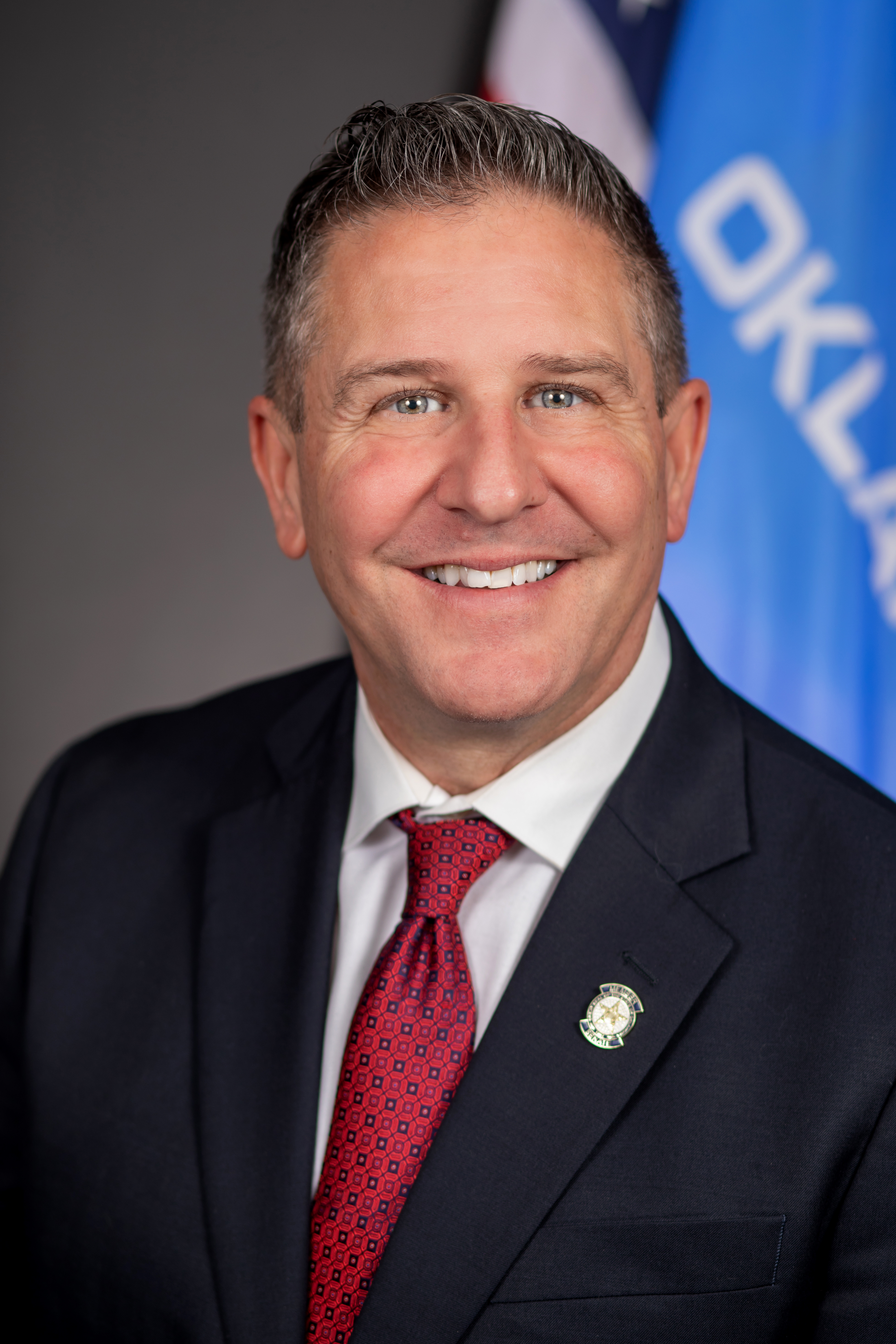
Photo of Todd Gollihare
R Oklahoma Senate · District 12 On the 2026 ballot

Sen. Todd Gollihare

Compare
Total votes
4,365
all sessions
Attendance
96%
113 missed
Near the chamber average
With party
99%
of cast votes
Higher than 87% of chamber peers
Bipartisan score
2%
crosses aisle rarely
Near the chamber average
Sponsored
256
bills & resolutions
Higher than 83% of chamber peers
Committees
6
assignments
256 bills and resolutions

Sponsored bills

Total
256
Primary
256
Co-sponsor
0
This page
256
matching current filters
Primary SB 378
Vetoed · Oklahoma Senate · Lead sponsor
Bail bondsman; allowing Insurance Commissioner to approve certain bondsman to write bonds over certain deposit amount. Effective date.

Maddy summarySB 378 amends Oklahoma law governing bail bondsmen, directly affecting licensed bondsmen and their handling of collateral. It requires bondsmen to provide detailed written receipts for all collateral received, deposit cash or instruments in a separate non-interest-bearing trust account within two business days, and submit monthly electronic reports to the Insurance Commissioner detailing bonds written, collateral, and liabilities. The bill also establishes a new monthly reviewal fee of 0.0015% (fifteen ten-thousandths of one percent) on new bail bond liability. These changes aim to improve transparency and accountability in how bondsmen manage client assets and financial records.

Vetoed May 6, 2026 0 co-sponsors
Primary HB 3321
Signed into law · Oklahoma House · Lead sponsor
Criminal procedure; financial obligations in criminal cases; Cost Administration Implementation Committee; data collection; submit to Attorney General; effective date; emergency.

Maddy summaryHB 3321 creates new enforcement tools for unpaid court fines, fees, and costs (not restitution). It allows courts to issue "cost arrest warrants" or "cost cite and release warrants" if people miss payment plans or required hearings, and mandates that courts inform defendants about payment options and cost hearings at sentencing. The bill requires courts to hold "cost hearings" to determine if defendants can pay, considering income, expenses, dependents, and government assistance (like disability benefits, TANF, or HUD housing). People receiving certain federal/state aid or earning below 150% of the poverty level are automatically eligible for debt relief. The bill repeals outdated sections about court cost compliance.

Signed into law May 5, 2026 0 co-sponsors
Primary SB 1496
Vetoed · Oklahoma Senate · Lead sponsor
Oklahoma State Bureau of Investigation; modifying provisions related to certain evidentiary property, disclosures, and other duties. Effective date.

Maddy summarySB 1496 modifies Oklahoma State Bureau of Investigation (OSBI) procedures to clarify confidentiality rules and update record management. It allows the OSBI Director to digitally store and dispose of certain records, share statistical data (without personal information) with law enforcement and the public, and accept specific funds for operational use. The bill also clarifies when confidential investigation records may be disclosed to law enforcement, accreditation bodies, or for victim updates, while maintaining strict confidentiality for most investigative materials. These changes primarily affect the OSBI and law enforcement agencies interacting with its records.

Vetoed May 5, 2026 0 co-sponsors
Primary SB 1645
Signed into law · Oklahoma Senate · Lead sponsor
Medicaid; establishing certain requirements and procedures for audits of providers; directing establishment of certain appeals. Effective date.

Maddy summarySB 1645 establishes new rules for auditing long-term care providers (like nursing homes and Medicaid home-care agencies) under Oklahoma's Medicaid program. It requires the Oklahoma Health Care Authority to give providers 1 week's notice before audits, limits audits to 50 claims or 0.25% of annual claims, and prohibits holding providers liable for simple clerical errors (like typos) as fraud. Providers must be allowed 60 days to correct claims after an audit, and recoupments (recovery of overpaid funds) can only apply to corrected claims, not original billing errors. The bill also creates a two-step appeals process, allowing providers to challenge audit results through the Authority and then to an administrative law judge.

Signed into law May 5, 2026 0 co-sponsors
Primary HB 3269
Signed into law · Oklahoma House · Lead sponsor
Criminal procedure; authorizing telephonic or electronic communication of proposed arrest warrants to magistrates; effective date.

Maddy summaryHB 3269 allows law enforcement officers to submit proposed arrest warrants to magistrates via telephone or electronic communication (like email) instead of in person. It requires officers to verbally recite probable cause and the warrant details during a phone call, obtain the magistrate’s oral permission to print their name on the warrant, and have the entire conversation audio recorded, transcribed, and filed. If using email, the affidavit must include a notarized acknowledgment or a telephonic oath, with the magistrate noting the date and time of the oath. This bill directly affects police officers preparing warrants and magistrates reviewing them, streamlining the process while maintaining recording and documentation requirements. The changes take effect November 1, 2026.

Signed into law May 4, 2026 0 co-sponsors
Primary HB 3497
Signed into law · Oklahoma House · Lead sponsor
Criminal procedure; appeals taken by the state or municipality; clarification; effective date.

Maddy summaryHB 3497 expands when the state or local governments can appeal pretrial rulings in criminal cases. It specifically adds two new grounds for appeals: 1) decisions suppressing evidence in felony cases where appellate review serves justice, and 2) rulings suppressing evidence in cases involving specific drug or trafficking laws (Sections 13.1 of Title 21 and 571 of Title 57). The bill prioritizes these appeals and requires courts to pause proceedings while appeals are pending. This directly affects prosecutors and municipalities seeking to challenge evidence suppression before trial. The changes take effect November 1, 2026.

Signed into law May 4, 2026 0 co-sponsors
Primary HB 1250
Vetoed · Oklahoma House · Lead sponsor
Local law enforcement; creating the Public Safety Technology Revolving Fund; purpose; expenditures; effective date.

Maddy summaryHB 1250 is a procedural bill that names itself the "General Government Act of 2025" and sets its effective date as November 1, 2025. It does not change any existing laws or affect specific groups; it solely establishes the bill's official title and implementation timeline. The bill has no substantive policy provisions or mechanisms beyond its naming and effective date. This is a standard procedural measure, not a policy change.

Vetoed May 4, 2026 0 co-sponsors
Primary HB 4339
Signed into law · Oklahoma House · Lead sponsor
Probate procedure; notice publication; combined notice; effective date.

Maddy summaryHB 4339 simplifies Oklahoma probate procedures by requiring courts to issue a single "combined notice" instead of separate notices for creditors, hearings, and estate matters. This notice, filed within 5 days of court approval, must include key details like the decedent's information, will status, estate value, hearing date, and creditor claim deadlines (30 days after notice). It directly affects probate petitioners, creditors, heirs, and courts by streamlining publication (two weeks in a local newspaper or posted publicly) and mailing requirements. The bill takes effect November 1, 2026, and modifies Oklahoma Statutes Title 58, Section 246.

Signed into law Apr 29, 2026 0 co-sponsors
Primary HB 1851
Failed · Oklahoma House · Lead sponsor
Contracts; Oklahoma Fair Renewal Act; automatic renewal contracts; notice; cancellation; effective date.

Maddy summaryHB 1851, the Oklahoma Fair Renewal Act, requires businesses selling subscriptions or recurring services to provide clear, upfront disclosures before a consumer agrees to an automatic renewal contract. This includes explaining renewal terms, cancellation policies, and recurring charges in plain language, with notices displayed prominently (e.g., larger font or contrasting color). Businesses must also offer a simple cancellation method - like a direct online link or in-person option - and send a renewal notice 15-45 days in advance, detailing how to cancel. The law applies to most subscription services but excludes regulated utilities or franchise services.

Failed Apr 29, 2026 0 co-sponsors
Primary HB 2650
Signed into law · Oklahoma House · Lead sponsor
Probate procedure; petitions for summary administration; increasing value of estate for summary administration.

Maddy summaryHB 2650 amends Oklahoma's civil procedure rules to address abusive discovery practices, primarily affecting parties in civil lawsuits and high-ranking officers of large, complex organizations (government or private). The bill establishes clear standards for courts to issue protective orders preventing depositions of such officers: the party seeking protection must prove the officer has scheduling demands and lacks unique personal knowledge of the case, while the opposing side must show other discovery methods were exhausted and the officer possesses unique knowledge. Courts may also award reasonable expenses, including attorney fees, to the prevailing party in discovery disputes. The law takes effect November 1, 2025.

Signed into law Apr 29, 2026 0 co-sponsors
Showing 21 to 30 of 256 bills
Previous 1 2 3 4 26 Next