

Maddy summaryThis bill designates the intersection of U.S. Highway 77 and State Highway 11 in Kay County as the "Ike Glass Memorial Intersection." It requires the Oklahoma Department of Transportation to install permanent markers bearing this name at the location. The designation takes effect November 1, 2025. (Procedural bill; no policy changes or affected groups beyond the physical location.)
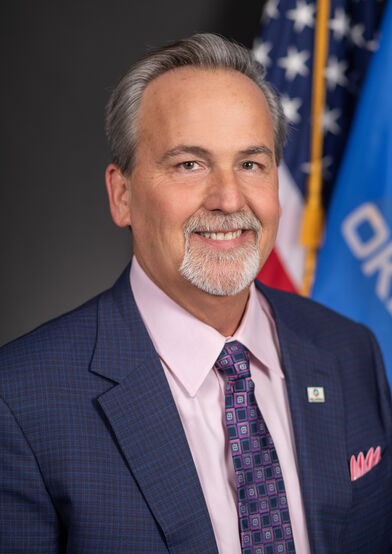
Sen. Bill Coleman
Sponsored bills
Maddy summarySB 359 requires Service Oklahoma to check National Highway Traffic Safety Administration data during vehicle registration or renewal to identify safety-related recalls needing repairs. It mandates that Service Oklahoma send written notices to vehicle owners about these open recalls, including descriptions and information about free repairs at manufacturer-approved dealers. The bill excludes recalls related to owner manuals or buyback offers, and explicitly states that manufacturers and dealers remain liable for repairs. Service Oklahoma staff providing these notices are protected from liability, except in cases of gross negligence. This affects all Oklahoma vehicle owners whose registrations are processed through Service Oklahoma.
Maddy summarySB 359 requires Service Oklahoma to check National Highway Traffic Safety Administration data before issuing vehicle registrations or renewal notices. If a vehicle has an open safety recall (defined as federal-mandated repairs requiring manufacturer notification), Service Oklahoma must send owners a written notice listing each recall and stating repairs can be done at no cost by manufacturer-approved dealers. This bill directly affects Oklahoma vehicle owners by proactively notifying them of safety recalls during registration processes. It also protects Service Oklahoma staff from liability for notices, except in cases of gross negligence, and takes effect November 1, 2025.
Maddy summarySB 728 requires Oklahoma courts to order Global Positioning System (GPS) monitoring for individuals convicted of violating a protective order issued under the Protection from Domestic Abuse Act. This applies specifically to defendants who have been served with a protective order and later violate it, as determined by a court. The bill amends existing law to mandate this monitoring as a condition of sentencing or probation, alongside existing requirements for domestic abuse counseling. It does not change penalties for violations but adds GPS tracking as a new enforcement tool for court-ordered compliance.
Maddy summarySB 1034 amends Oklahoma's alcohol laws to expand an exemption allowing retailers to offer prizes or promotions with alcohol sales, specifically permitting merchandise packaged with alcohol (as long as bundled prices don't exceed the standalone alcohol price) and allowing online advertising of higher prices than in-store. It also maintains a 15% minimum markup requirement for wholesalers selling spirits or wine to retailers, preventing sales below cost (except for discontinued products). The bill directly affects alcohol retailers and wholesalers operating in Oklahoma. It takes effect November 1, 2025, and does not change existing restrictions on Sunday sales, holidays, or credit sales.
Maddy summarySB 781 establishes the Oklahoma Earned Wages Access Services Act, regulating companies that let workers access earned but unpaid wages (like salary or hourly pay) before their regular payday. It requires providers to clearly disclose all fees, offer at least one no-cost option for accessing wages, and not link services to voluntary tips or donations. Providers must follow privacy laws and refund consumer overdraft fees if they incorrectly attempt repayment through bank accounts. This bill directly affects Oklahoma workers using these services and the companies offering them.
Maddy summaryHB 1733 modifies how Oklahoma allocates 0.87% of sales tax revenue (for fiscal years 2022-2025) to three tourism-related funds: the Oklahoma Tourism Promotion Revolving Fund (capped at $5 million annually), the Oklahoma Tourism Capital Improvement Revolving Fund (capped at $9 million), and the Oklahoma Route 66 Commission Revolving Fund (capped at $6.6 million). For fiscal years 2026 and beyond, it increases the allocation to 1% of sales tax revenue, with $6.6 million going directly to Route 66, and remaining funds split 36% to Tourism Promotion and 64% to Tourism Capital Improvement. The bill directly affects these state tourism funds, which support marketing, infrastructure, and historic preservation projects. It does not change overall tax rates but adjusts the distribution of existing sales tax revenue to these specific programs.
Maddy summarySB 104 creates two new Oklahoma income tax credits to support child care. Employers can claim a 30% credit (up to $30,000 annually) for expenses covering employee child care at licensed facilities or for providing on-site care, while qualified child care workers (meeting specific employment, training, and education requirements) receive a $1,000 refundable credit. The employer credit is capped annually at $5 million for the state and can be carried forward if unused, with adjustments to prevent exceeding the limit. These credits apply to tax years 2026-2030, with the bill effective November 1, 2025. The bill directly affects employers providing child care benefits and licensed child care workers in Oklahoma.
Maddy summarySB 332 establishes tiered annual and initial fees for Oklahoma medical marijuana business licenses, directly affecting growers, processors, dispensaries, transporters, and testing labs. Fees scale based on business size: for example, indoor growers pay $2,500 for up to 10,000 sq. ft. of canopy space, increasing to $50,000 plus $0.25/sq. ft. for operations over 100,000 sq. ft. Processors pay $2,500 annually for handling up to 10,000 lbs of biomass, with fees rising to $15,000 for over 150,000 lbs. The bill amends existing law to standardize these fee structures, which apply to both new applications and annual renewals.
Maddy summarySB 441 requires Oklahoma's Medicaid program to cover medically necessary chiropractic care provided by licensed chiropractors for diagnosing or treating illness/injury or improving bodily function. It prohibits Medicaid from denying coverage based on age and eliminates the need for prior authorization (approval before treatment) for such care. This directly affects Medicaid beneficiaries who require chiropractic services, ensuring they can access this care without age-based barriers or extra administrative hurdles. The bill mandates these changes effective immediately upon enactment, with the Oklahoma Health Care Authority required to seek federal approval for the policy shift.