

Maddy summaryHB 4089 establishes the "Technology Act of 2026" and sets its effective date as November 1, 2026. This is a procedural bill that formally names the legislation and specifies when it takes effect, with no substantive policy changes or direct impacts on specific groups. The bill does not create new regulations, funding mechanisms, or requirements. It will not be codified in the Oklahoma Statutes.
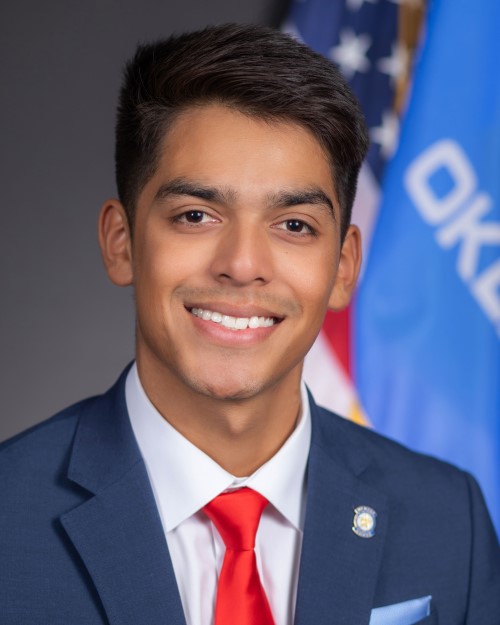
Rep. Arturo Alonso
Sponsored bills
Maddy summaryHB 4068, the Oklahoma Truth in Environmental Marketing Act, requires businesses selling products or packaging in Oklahoma to substantiate environmental claims like "compostable," "recyclable," or "carbon neutral" with reliable evidence (e.g., scientific studies or third-party certifications). It mandates that businesses maintain documentation for five years and disclose specifics like emission calculations and offset verification for "carbon neutral" claims. The Oklahoma Attorney General enforces the law, with penalties up to $2,500 per violation per day for false claims, and collected fines fund enforcement and consumer education. The law applies to all businesses making environmental marketing claims in Oklahoma and takes effect November 1, 2026.
Maddy summaryHB 4084, the Oklahoma Worker Heat Safety and Protection Act, requires employers to protect outdoor and heat-exposed workers when the heat index reaches 80°F or higher. The bill mandates paid rest breaks (15-20 minutes hourly based on heat levels), access to shaded areas, and cool drinking water (at least 32 ounces per hour at or below 77°F). Employers must provide heat safety training, post workplace notices, develop acclimatization plans for new workers, and establish emergency response procedures for heat illness. The law applies statewide to all non-emergency workplaces and takes effect November 1, 2026.
Maddy summaryHB 4085 is a procedural bill that names the "Oklahoma Contracts Reform Act of 2026" and sets its effective date for November 1, 2026. It creates a new, uncodified section of law that will not be included in Oklahoma Statutes. This bill does not change any substantive contract laws or affect specific groups; it solely establishes the act's name and implementation timeline. The bill is currently in early stages, having been introduced and referred to the Rules committee on February 2-3, 2026.
Maddy summaryHB 4088, titled the "State Powers Policy Act of 2026," is a procedural bill that names itself and sets an effective date of November 1, 2026. It does not create new policies or affect any specific groups, as it explicitly states it will not be codified in the Oklahoma Statutes. The bill serves only to formally establish its own title and implementation timeline. This is a routine legislative procedural step with no substantive policy changes.
Maddy summaryHB 4062, the Oklahoma Good Food Purchasing Act, requires state agencies buying food with public funds to prioritize Oklahoma-produced food when it meets quality/safety standards and costs no more than 10% more than comparable out-of-state options. It allows agencies to purchase directly from local farmers and food hubs, while mandating biennial reports tracking local food purchases and identifying barriers to implementation. The bill affects all state departments and institutions purchasing food, aiming to strengthen local agricultural markets through specific procurement preferences and reporting requirements, without restricting agencies' discretion on factors like freshness or delivery.
Maddy summaryHB 4055, the "Breeding Animals Responsibly and with Care (BARC) Act," establishes licensing fees for commercial pet breeders and animal shelters in Oklahoma. It requires breeders to pay fees based on the number of unspayed female animals they maintain (ranging from $225 to $750 annually) and sets separate fees for shelters ($200) and nonprofit rescues ($100). All fees fund a dedicated revolving account managed by the Oklahoma Department of Agriculture, which first covers program administration (inspections, staff) and then may support public education, spay/neuter programs, and discretionary grants to eligible nonprofits for animal care services. The bill does not guarantee grant funding but outlines specific uses for funds, including veterinary care and foster support.
Maddy summaryHB 4086 establishes the Energy Reform Act of 2026 as a new legal framework in Oklahoma, though the provided text does not detail specific energy policies or provisions. The bill is currently in its early stages, having been introduced and referred to the Rules Committee for further consideration. It will become effective on November 1, 2026, but the full scope of changes it would implement remains unspecified in the available information.
Maddy summaryHB 1910 establishes Oklahoma's Urban Agriculture Cost Share Program, administered by the Oklahoma Conservation Commission. It provides funding from the Conservation Commission's Infrastructure Revolving Fund to reimburse eligible individuals, tribes, or organizations for urban agriculture projects on land within five miles of urban areas defined by the U.S. Census. Eligible projects include community gardens, rooftop farming, greenhouses, soil health initiatives, and food waste composting, with priority given to areas with limited access to healthy food. Applicants must submit project plans and enter contracts with local conservation districts, and the Commission must annually report program data on projects, funding, and community impacts.
Maddy summaryHB 1910 would establish the Urban Agriculture Cost Share Program, overseen by the Oklahoma Conservation Commission. This program aims to promote sustainable urban agricultural practices, improve food security, and enhance green spaces in Oklahoma's urban areas. It would provide funding from the Oklahoma Conservation Commission Infrastructure Revolving Fund to eligible individuals, partnerships, corporations, or tribes for projects. These projects could include community gardens, rooftop farming, greenhouses, rainwater harvesting, and urban apiaries on land within five miles of an urban area. Applicants would develop project plans and contract with local conservation districts to receive cost-share funds.