

Maddy summaryThis bill establishes the Oklahoma Domestic Violence Act of 2025 as a standalone law not included in the state's official statutes. It creates a formal legal framework for addressing domestic violence cases in Oklahoma, though the text does not specify detailed provisions or enforcement mechanisms. The law will take effect on November 1, 2025, and applies to all domestic violence matters within the state.
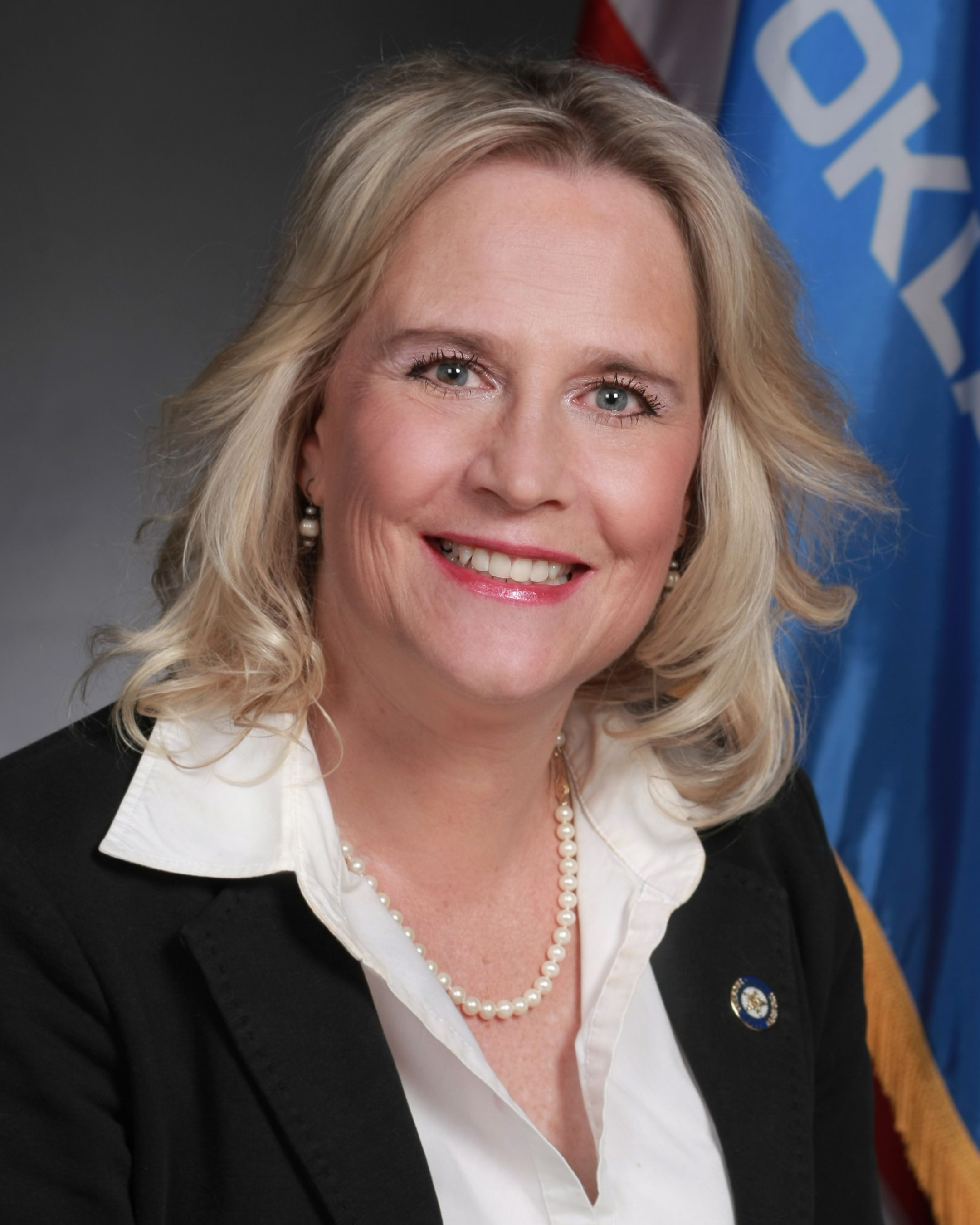
Rep. Nicole Miller
Sponsored bills
Maddy summarySB 767, the "Fair Chance Hiring Practices by Public Employers Act," prohibits Oklahoma state and local government employers (like schools, agencies, and municipalities) from asking about an applicant’s criminal history before making a conditional job offer. It allows employers to ask only about convictions that would disqualify someone under existing law and permits checking criminal history after a conditional offer is made. The law excludes sensitive roles - such as law enforcement, school staff, correctional officers, and positions involving vulnerable populations - from its requirements. The bill takes effect November 1, 2025, applying only to job applications submitted on or after that date.
Maddy summaryHB 2273 creates the Oklahoma Department of Transportation Educational Assistance Program, providing tuition assistance to eligible Oklahoma residents pursuing degrees in fields needed by the Department of Transportation (DOT). Students receive coverage for resident tuition, fees, and academic service fees (up to 18 credit hours per semester) for up to 120 credit hours toward an undergraduate degree or a master's degree, contingent on maintaining a 2.0 GPA and good academic standing. In exchange, participants must work for the DOT in an eligible profession for five years after graduation; failure to complete the degree or fulfill the work requirement triggers repayment of all assistance received. The program is funded through DOT resources and private/public donations, with repayments deposited into a dedicated revolving fund.
Maddy summarySB 708 allows contiguous fire protection districts in Oklahoma to consolidate into a single district if their boards determine it would better serve residents. The bill requires districts to create a consolidation plan (covering board structure, property tax rates, and asset transfers), seek county commissioner approval, hold a public hearing, and then obtain voter approval through a special election. Residents within the proposed consolidated district must vote, with approval requiring at least 60% "yes" votes. This process directly affects fire districts and their communities by changing administrative structures, not fire services. The bill takes effect November 1, 2025.
Maddy summaryHB 2279 is a procedural bill that establishes the official name "Elections Act of 2025" for future election-related legislation and sets its effective date as November 1, 2025. It contains no substantive policy changes or mechanisms affecting voters, election administration, or voting procedures. The bill solely serves as a naming convention and date specification for related future legislation. This is a routine administrative step with no direct impact on current election processes or stakeholders.
Maddy summaryHB 2270 requires Oklahoma health insurance plans (including the Oklahoma Employees Insurance Plan) to cover two specific services without deductibles or copays: 1) Genetic testing for inherited cancer mutations when ordered by a provider following evidence-based guidelines (like NCCN Category 2A+ recommendations), for individuals with personal or family cancer history; 2) Evidence-based cancer imaging for high-risk individuals, also based on current medical guidelines. This applies to all plans renewed or issued on or after November 1, 2025, directly affecting patients seeking these preventive cancer services and insurers offering coverage in Oklahoma.
Maddy summarySB 57 amends Oklahoma law to prohibit manually composing, sending, or reading text messages while driving a motor vehicle, and to ban holding hand-held cell phones. It reduces the fine for violations to $5 plus court costs (previously $100), with fines distributed to specific state programs like public safety, victim services, and courthouse security. The law allows hands-free or voice-operated technology use and permits exceptions for emergency calls to first responders, hospitals, or law enforcement. It directly affects drivers operating vehicles on Oklahoma roads and aligns municipal ordinances with state penalties. The bill also clarifies that traffic points won’t be added to licenses for these violations.
Maddy summaryHB 2267 creates the "Rebuilding Oklahoma Access and Driver Safety Fund" to finance transportation infrastructure projects. It increases annual funding to $575 million for fiscal year 2021 and $650 million starting July 1, 2025, with $80 million allocated annually first to cover transportation debt payments before funding roads, bridges, and highways. The bill specifies that funds cannot replace existing state transportation budgets and requires annual audits to ensure money enhances (rather than supplants) current state funding. It also allocates $2 million yearly for the Heartland Flyer rail project and $3 million for public transit.
Maddy summaryHB 2272 allocates $25 million for county bridge reconstruction and $25 million for county road reconstruction on major collector routes (as defined by Oklahoma law) using unappropriated state funds for the 2026 fiscal year. Counties must submit projects to the Oklahoma Department of Transportation, which evaluates them based on safety, structural condition, public use importance, traffic patterns, and detour impacts. County financial contributions also factor into project selection alongside objective funding distribution. The bill takes effect July 1, 2025, and applies specifically to county highway infrastructure on designated routes.
Maddy summaryHB 2280 is a procedural bill that names the "Counties and County Officers Act of 2025" and specifies it will not be included in Oklahoma's official law book (codified). It sets the effective date for this naming provision as November 1, 2025. The bill contains no substantive policy changes or new requirements for counties or county officers. This is purely a naming and procedural measure with no direct impact on existing laws or services.