

Maddy summaryHB 2747 modifies Oklahoma's utility rate regulations to allow electric utilities to recover specific costs through periodic rate adjustments. It presumes recoverability for transmission upgrades (including wind-related projects) and costs tied to federal environmental laws (like the Clean Air Act), unless proven otherwise. The bill also streamlines approval for new generation facilities, requiring the Corporation Commission to rule within 180-240 days after reviewing "reasonable alternatives," while allowing utilities to seek cost recovery for competitive bidding processes. Additionally, it permits the Commission to authorize cost assessments for staff/attorney reviews related to utility applications.
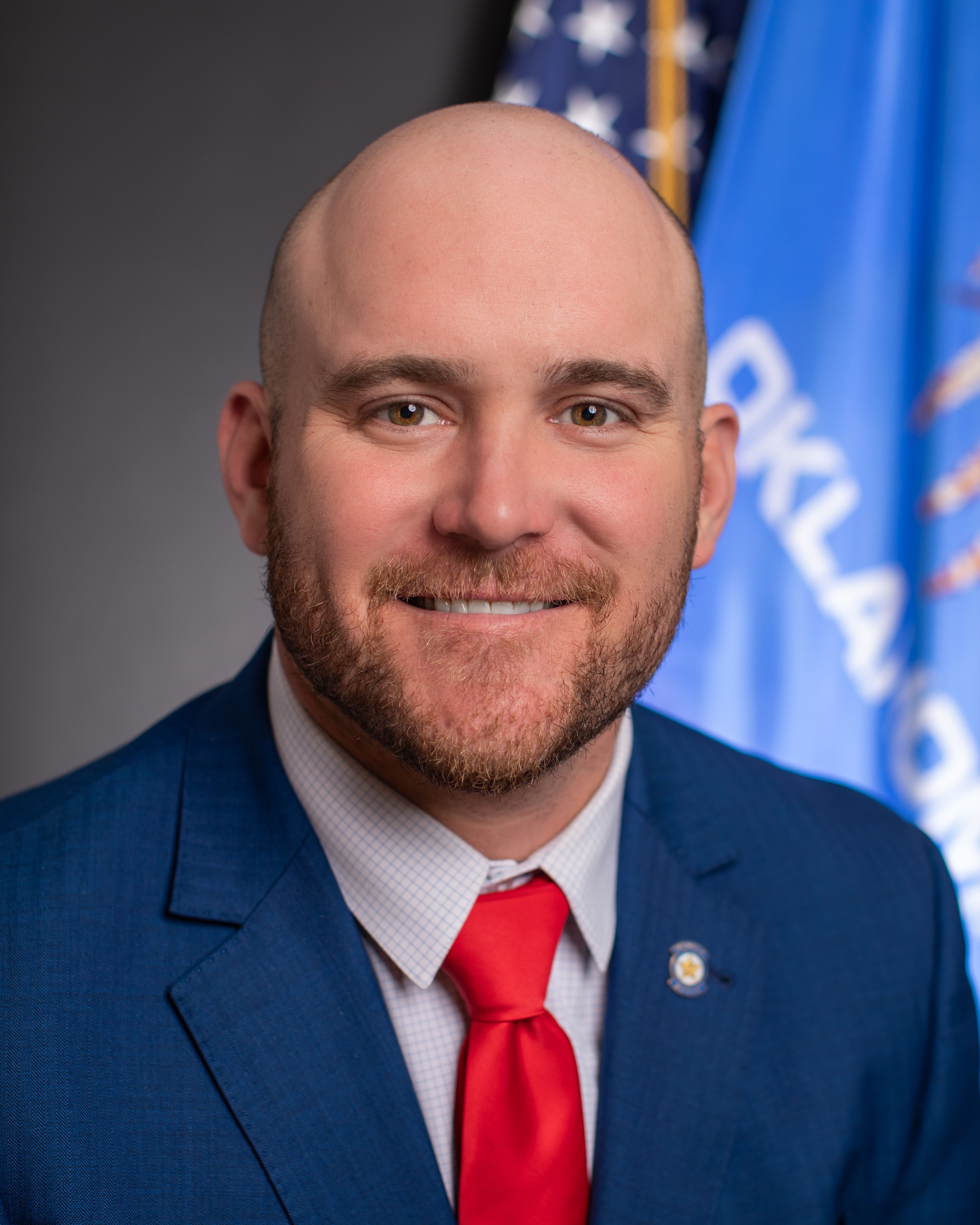
Rep. Trey Caldwell
Sponsored bills
Maddy summarySB 1122 requires Oklahoma's State Board of Equalization to assess property used for *new* wired broadband infrastructure in areas with less than 10% broadband coverage (per FCC maps) at a 15% tax rate for tax years 2026-2036. It directly affects broadband service providers building infrastructure in underserved areas, defined as offering wired internet exceeding 100 Mbps download/20 Mbps upload speeds. The bill specifies that only infrastructure exclusively used for qualifying broadband service - like fiber lines and network facilities - will be taxed, excluding other property. This applies to property "constructed or installed and placed in service" after the bill's effective date.
Maddy summaryHB 1627 modifies Oklahoma's process for resolving unfair labor practice disputes involving public employees in cities and towns. It requires written notice of alleged violations within six months and establishes a specific arbitration procedure: each party (employer and union) selects one arbitrator, who then jointly select a third; if they fail, the Federal Mediation Service provides a list for alternating strikes. The bill also changes fee rules, requiring the bargaining agent to cover their selected arbitrator's fees and the employer to cover theirs, while splitting the third arbitrator's fees equally. This applies to interest arbitration, unfair practice disputes, and union representation decisions, effective November 1, 2025.
Maddy summaryHB 1627 creates a new mandatory arbitration process for resolving unfair labor practice disputes between public employers (like cities and towns) and employee unions in Oklahoma. It requires both sides to notify each other in writing within six months of an alleged violation, then select their own arbitrators within 10 days, with a third arbitrator chosen by agreement or from a federal list if needed. The bill specifies that each side pays for their chosen arbitrator, while the third arbitrator's fees are split equally between the parties. This process applies to interest arbitration, unfair labor practice claims, and union representation decisions, and takes effect on November 1, 2025.
Maddy summarySB 241 appropriates $20 million from Oklahoma's General Revenue Fund to the Department of Commerce for rebates on capital investments in hydrogen-related manufacturing. It directly affects companies building facilities that refine, manufacture, or process hydrogen-based products within chemical manufacturing industries (NAICS codes 324 or 325). The key provision offers rebates for qualifying capital expenses, funded by the state's general revenue. The program becomes effective November 1, 2025.
Maddy summarySB 241 allocates $20 million from Oklahoma's General Revenue Fund to the Department of Commerce for rebates on capital investments by companies producing hydrogen-based products. It directly affects businesses in chemical manufacturing (NAICS 324) and petroleum refining (NAICS 325) that build or upgrade facilities for hydrogen production. The key mechanism provides refunds covering a portion of costs for new equipment, buildings, or infrastructure used in hydrogen manufacturing. This funding aims to support economic development in hydrogen production without creating new regulatory requirements. The bill becomes effective November 1, 2025.
Maddy summaryHB 2742 clarifies and updates definitions related to Oklahoma's cigarette and heated tobacco product excise tax system. It defines "cigarette" to explicitly include heated tobacco products and creates new rules for "delivery sales" (such as online or mail orders to consumers). The bill affects cigarette manufacturers, wholesalers, retailers, and online sellers by specifying tax obligations for these transactions. Key provisions include redefining terms like "wholesaler," "retailer," and "delivery sale," and clarifying tax exemptions for sales to veterans hospitals, the U.S. government, and other specific entities. This is a procedural tax administration bill, not a new tax rate change.
Maddy summaryHB 2742 amends Oklahoma's cigarette tax code by clarifying key definitions for tax purposes. It defines "cigarette" to include heated tobacco products intended to be heated or burned, and adds specific rules for "delivery sales" (like online or mail orders) and "distributing agents." The bill directly affects cigarette manufacturers, wholesalers, retailers, and the Oklahoma Tax Commission by updating how these entities are categorized under tax law. It does not change tax rates or create new taxes, but ensures consistent application of existing excise tax rules to new product types and sales methods. The bill focuses on administrative clarity for tax collection, not policy changes.
Maddy summaryHB 2741 modifies Oklahoma's hunting and fishing license rules to allow nonresident landowners with 160 or more acres of noncommercial property to use property tax records as proof of eligibility instead of standard residency requirements. This change applies specifically to certain license exemptions listed under existing law (Section 4-112). Landowners must provide proof of property ownership and last year's property taxes to qualify for these exemptions. The bill does not alter other license terms, such as expiration dates, revocation procedures, or wildlife check station requirements.
Maddy summarySB 221 doubles the annual state tax credit limit under Oklahoma's Rural Jobs Act, raising it from $15 million to $30 million for applications approved on or after July 1, 2025. It allows rural investment funds certified before this date to reapply for certification for subsequent projects, ensuring continuity for existing applicants. The bill requires rural funds to secure cash investments within 95 days of certification, with at least 10% coming from local sources like employees or affiliates, and mandates the Department to provide eligibility opinions within 15 business days. This directly affects rural investment funds and businesses in Oklahoma’s rural areas seeking tax credit-funded capital.