

Maddy summarySB 1169 amends Oklahoma law to update how state agencies process payroll and claims. It authorizes the Director of the Office of Management and Enterprise Services to establish electronic systems and forms for agencies to file claims against specific budget accounts, requiring detailed payroll records showing earnings, withholdings, and net pay. The bill directly affects all state agencies that process employee payrolls and claims. It also dissolves the Oklahoma Capital Assets Maintenance and Protection Act, though this is a secondary provision. The law became effective without the Governor's signature on May 29, 2025.
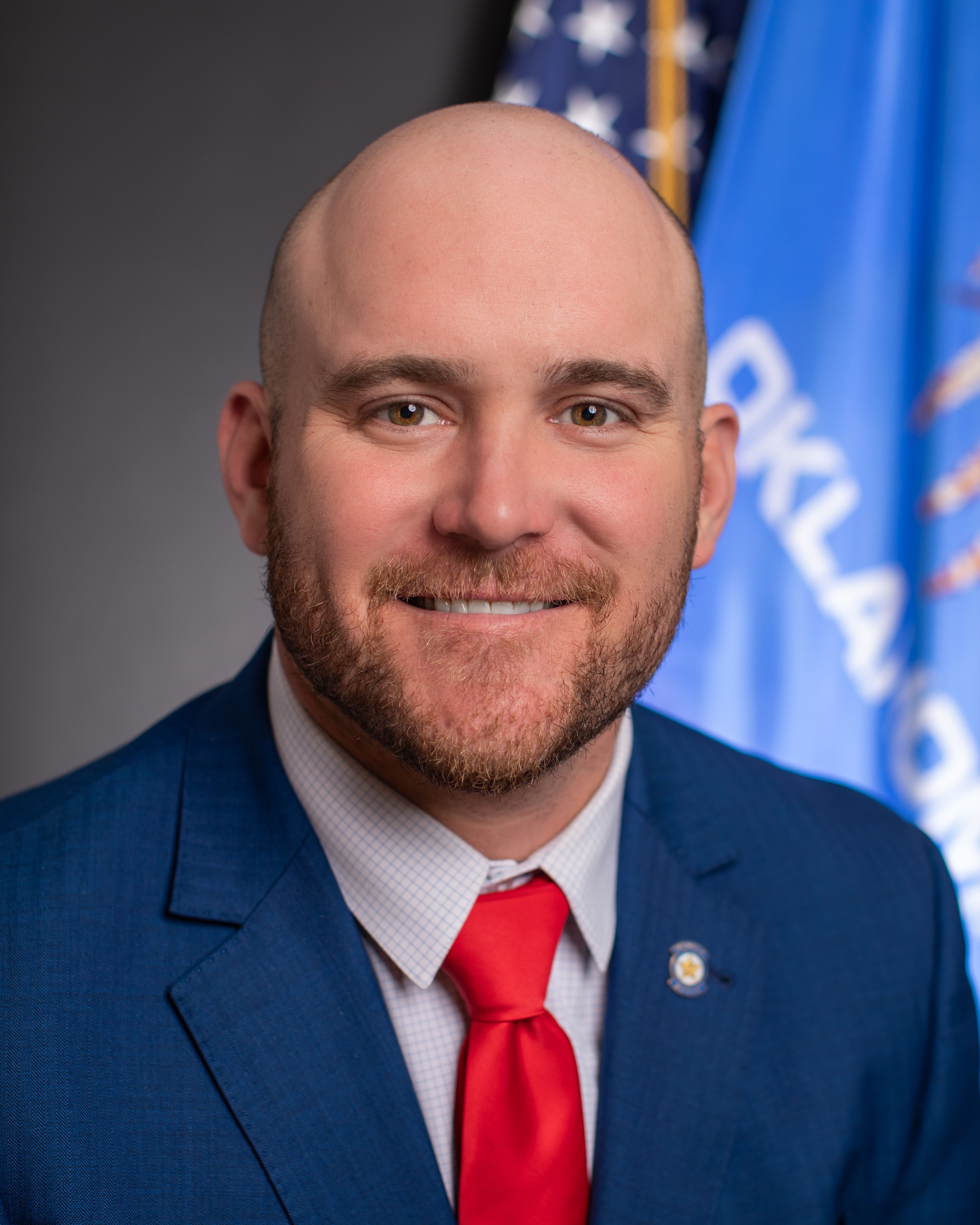
Rep. Trey Caldwell
Sponsored bills
Maddy summaryHB 2777 allocates $20 million from Oklahoma's Opioid Lawsuit Settlement Fund to the state's Opioid Abatement Revolving Fund for opioid-related programs, and $1.25 million to local governments that did not sue opioid manufacturers. The bill directs these funds to be used for opioid abatement efforts, such as treatment and prevention services, without requiring new taxes. It becomes effective July 1, 2025, and was signed into law on May 29, 2025. The legislation uses existing settlement funds rather than creating new spending.
Maddy summarySB 1160 appropriates $100,000 from Oklahoma's General Revenue Fund to the Department of Corrections for the fiscal year ending June 30, 2026. The funds are intended to support the department's existing legal duties, with no specific new programs or eligibility changes described. An emergency declaration ensures the bill takes immediate effect upon passage, bypassing standard implementation timelines. This is a straightforward funding measure for the state's corrections agency, not a policy change affecting residents or new regulations.
Maddy summaryHB 2791 allocates specific funds from Oklahoma's Statewide Recovery Fund to the Department of Human Services (DHS) for pandemic-related project costs originally funded under HB 2884. It provides $195,000, $328,000, and $5 million to cover increased expenses for three separate projects, requiring DHS to use these funds per recommendations from the Joint Committee on Pandemic Relief Funding. The bill creates special accounts for these funds with strict rules: DHS may retain no more than 2% for administration costs, must submit quarterly reports to the pandemic relief committee, and must appear before the committee within six months of the law's effective date. These provisions ensure transparency and accountability for how pandemic relief funds are budgeted, spent, and managed.
Maddy summaryThis bill appropriates $100,000 from the General Revenue Fund to the Oklahoma Department of Agriculture, Food, and Forestry for the 2025-2026 fiscal year. The funds are designated to support the department's statutory duties, with no specific program or project named. The bill declares an emergency to take immediate effect, bypassing the usual 90-day waiting period, and became law on May 29, 2025, without the Governor's signature. It directly affects the department's budget allocation but does not alter existing laws or create new programs.
Maddy summaryHB 2770 increases judicial salaries for Oklahoma judges across all courts, effective July 1, 2025. The bill amends statutes to set new annual salary ranges for positions including Supreme Court justices, Court of Civil Appeals judges, Court of Criminal Appeals judges, and district court judges. For example, the Chief Justice's salary rises to $198,212 annually, while associate district judges will earn up to $154,678. All increases must be funded from existing state resources and take effect immediately as an emergency measure.
Maddy summaryHB 2774 authorizes $200 million from Oklahoma's Legacy Capital Financing Fund to build, upgrade, or expand pediatric heart hospital facilities at University Hospitals Authority. This specifically targets specialized care for children with heart conditions, directly benefiting pediatric patients and the hospital system. Funds may be distributed in installments, with payments beginning in fiscal year 2026. The bill creates a dedicated allocation for this purpose without changing existing state obligations.
Maddy summaryHB 2789 allocates $3.3 million and $6.6 million from Oklahoma's Statewide Recovery Fund to the Oklahoma Water Resources Board for pandemic-related water projects that were previously unfunded under SB 13. The bill creates special accounts in the state treasury for these funds, which must be used exclusively for completing specific water infrastructure projects and cannot exceed 4% for administrative costs. It requires the Board to submit quarterly reports to the Joint Committee on Pandemic Relief Funding and to provide status updates at the committee's request. The funds, drawn from American Rescue Plan Act allocations, became law on May 29, 2025, without a governor's signature.
Maddy summaryHB 2768 increases the maximum investment cap for Oklahoma's Quality Jobs Incentive Program from $250 million to $700 million over five years for businesses filing a second irrevocable election. This change affects existing businesses that have already received program incentives and wish to access new funding from obligations issued after the bill's effective date. The key mechanism requires these businesses to file a second election with the Oklahoma Department of Commerce to qualify for the higher investment limit, with a one-year extension allowed if 80% of the investment is completed within five years. The bill does not alter minimum investment requirements but significantly raises the upper threshold for qualifying capital investments.
Maddy summaryHB 2783 amends Oklahoma law to clarify that members of the Tobacco Settlement Endowment Trust Fund Board of Directors serve "at the pleasure of their appointing authority," meaning they can be removed by their appointers at any time rather than serving fixed terms. This change affects the board members appointed by state officials (like the governor or legislature) and modifies Section 2308 of Oklahoma Statutes Title 62. The bill maintains that board members receive no salary but are reimbursed for travel expenses under state law, and it preserves existing rules about staggered terms and a two-year limit on serving as chair. The law took effect without the governor's signature on May 29, 2025.