

Maddy summaryHB 3977 amends Oklahoma's law for the State Veterinarian position, requiring the appointee to hold a current Oklahoma veterinary license, have food animal practice experience, and be appointed by the State Board of Agriculture. This bill directly affects the State Veterinarian role by setting specific qualifications for future appointees. The key provisions replace previous requirements with these new standards, effective November 1, 2026. The bill focuses solely on personnel qualifications, not on new veterinary regulations or public health policies.
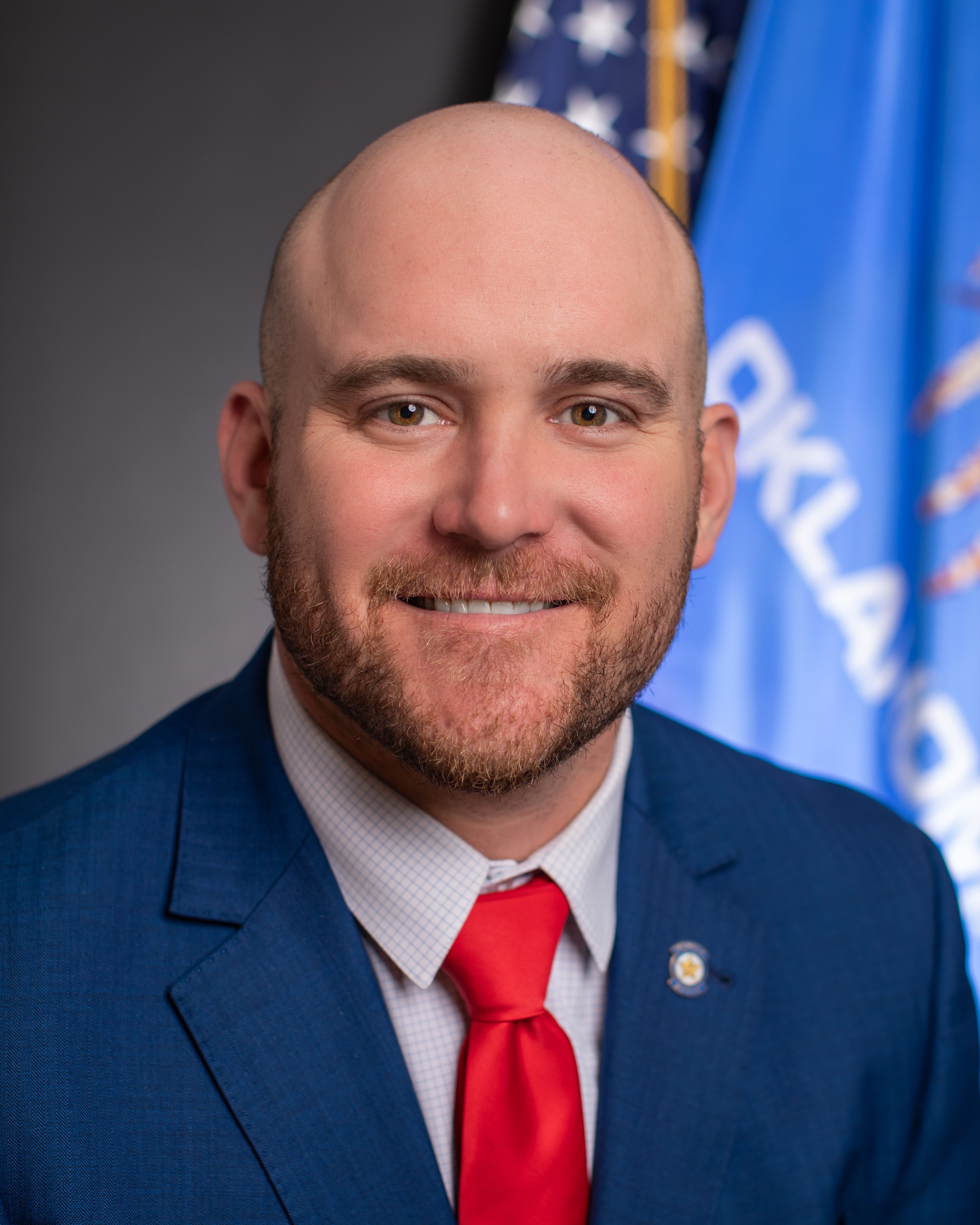
Rep. Trey Caldwell
Sponsored bills
Maddy summaryHB 3985, the Oklahoma Safe Neighborhoods Act of 2026, allows property owners in cities over 130,000 population (per the 2020 Census) to seek compensation when local governments fail to enforce laws against public nuisances like illegal camping, loitering, or public intoxication. Property owners may claim either documented costs spent to mitigate damage (e.g., security) or the reduced fair market value of their property, capped at their prior year’s primary property tax payment to the government. If a government rejects a claim within 30 days, the owner can sue in district court, where the government must prove its actions were lawful or the claim unreasonable, and a winning owner receives attorney fees. The law excludes claims related to case-by-case prosecutorial decisions or federal mandates and takes effect November 1, 2026.
Maddy summaryHB 4073 is a procedural bill that names the "Public Buildings and Lands Act of 2026" and sets its effective date as November 1, 2026. It does not create new policies or affect any individuals or entities, as it is explicitly stated to be "not to be codified" in Oklahoma Statutes. The bill serves only to formally identify and establish the implementation timeline for future public buildings and lands legislation. This is a standard naming and effective date provision with no substantive policy changes.
Maddy summaryHB 4074 is a procedural bill that names the "Public Buildings and Lands Act of 2026" and sets its effective date as November 1, 2026. It specifies that this act will not be codified into the Oklahoma Statutes, meaning it won’t become part of the state’s permanent legal code. The bill does not create new policies, alter existing laws, or affect any individuals or entities. It serves solely as administrative paperwork to establish the bill’s official title and implementation timeline.
Maddy summaryThis procedural bill names the "Public Buildings and Lands Act of 2026" and sets its effective date as November 1, 2026. It does not change any substantive laws or affect specific policies, programs, or individuals. The bill serves only to establish the official name and implementation timeline for future legislation related to public buildings and lands. It has no direct impact on constituents, agencies, or funding mechanisms. The bill was introduced on February 2, 2026, and referred to the Appropriations committee.
Maddy summaryHB 4077 is a procedural bill that names the "Public Buildings and Lands Act of 2026" and sets its effective date as November 1, 2026. It does not create new policies or affect any specific groups or public buildings; instead, it establishes the act's name and implementation timeline. The bill is uncodified (not added to Oklahoma's official statutes) and has only recently been introduced to committee for review. This is a routine legislative procedural step with no substantive policy changes.
Maddy summaryHB 4076 is a procedural bill that names itself the "Public Buildings and Lands Act of 2026" and sets its effective date as November 1, 2026. It contains no substantive policy changes or provisions affecting public buildings, lands, or any specific groups. The bill is explicitly designated as "not to be codified" in Oklahoma's official statutes, meaning it won't become part of the state's legal code. This type of bill typically serves administrative or naming purposes without altering existing laws or impacting residents or agencies.
Maddy summaryHB 4075 is a procedural bill that names the "Public Buildings and Lands Act of 2026" and sets its effective date as November 1, 2026. It does not create new policies or affect any individuals or entities, as it explicitly states the act "shall not be codified" in Oklahoma Statutes. The bill solely establishes the law's official name and implementation timeline. This is a standard administrative step to formalize the legislation's designation.
Maddy summaryThis bill establishes the State Budget Act of 2026 and sets its effective date as November 1, 2026. It does not create new spending rules or policy changes but serves as a procedural measure to formally name and date the upcoming state budget legislation. The bill affects state government operations by providing a clear legal framework for when the 2026 budget will take effect. It is a standard administrative step required to organize state financial planning for the fiscal year beginning in November.
Maddy summaryHB 4028 is a procedural bill that names the state's 2026 budget as the "State Budget Act of 2026" and sets its effective date for November 1, 2026. It contains no substantive policy changes or budget allocations - its sole purpose is to formally designate the budget document and establish its implementation date. This bill directly affects the state's fiscal management process by providing official nomenclature for the budget act, but it does not alter funding levels, programs, or services. The bill is currently in early stages (first reading) and will require legislative approval to become law.