

Maddy summaryHB 2768 increases the maximum investment cap for Oklahoma's Quality Jobs tax incentive program from $250 million to $700 million. It applies to existing manufacturing companies (SIC code 3011) already participating in the program that seek to expand facilities, requiring them to file a new application before certain tax payments are due. Companies must complete $700 million in facility modernization within five years (with a possible one-year extension if 80% is done by year five) to qualify for additional tax incentives. This change allows larger businesses to claim more tax benefits for qualifying investments under the program.
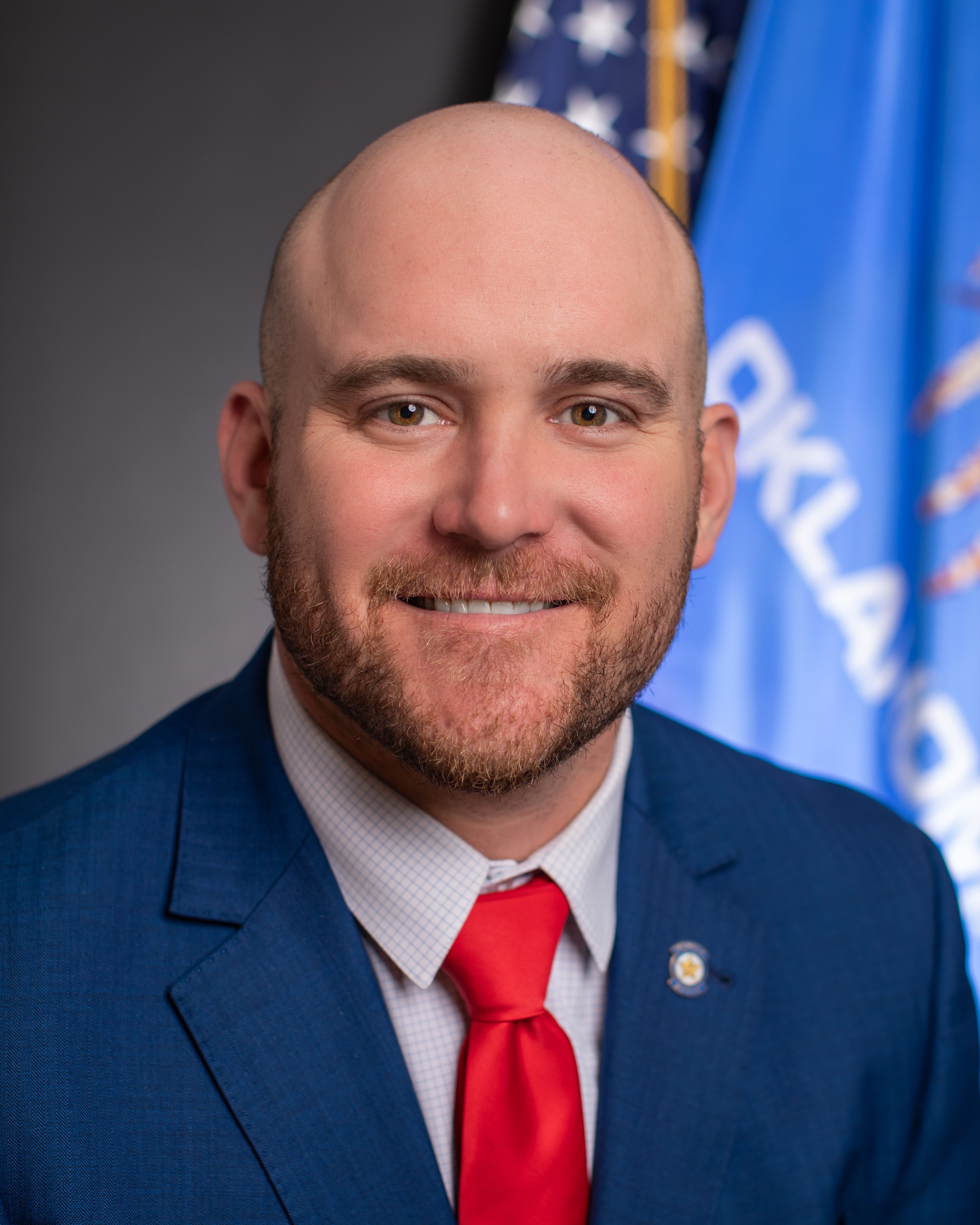
Rep. Trey Caldwell
Sponsored bills
Maddy summaryHB 2790 appropriates $10 million from Oklahoma's Statewide Recovery Fund to the Office of Juvenile Affairs for pandemic-related programs. It creates special accounts for these funds with no annual spending limits, requiring all use to align with recommendations from the Joint Committee on Pandemic Relief Funding and the American Rescue Plan Act of 2021. The bill limits administrative costs to 2% of funds and mandates quarterly reports to the Joint Committee on Pandemic Relief Funding detailing budgeting, spending, and third-party contracts. It directly affects the Office of Juvenile Affairs' management of these pandemic relief funds.
Maddy summaryHB 2788 transfers specific funds back into Oklahoma's Statewide Recovery Fund from several existing programs. It moves $1.56 million from domestic violence services, $162,668 from food assistance programs, $1.49 million from health workforce initiatives, $2.16 million from rural healthcare, $5 million from medical facilities, $20.5 million from mental health hospital construction, and $3.3 million from water resources projects. All transfers align with recommendations from the Joint Committee on Pandemic Relief Funding. The bill takes effect July 1, 2025, and was enacted without the governor's signature on May 29, 2025.
Maddy summaryThis bill allocates $10.8 million from Oklahoma's Progressing Rural Economic Prosperity Fund to three specific projects. It provides $5 million for a municipal park in a county exceeding 750,000 residents (per 2020 Census) north of I-344 and west of I-35, $4 million to relocate a naval submarine east of Highway 165 and north of Highway 62, and $1.8 million for infrastructure improvements at an industrial park south of Highway 62 and east of Highway 283. The funding is directed to these precise locations as defined in the bill. The bill became law without the Governor's signature on May 29, 2025.
Maddy summarySB 1136 allocates $100,000 from Oklahoma's General Revenue Fund to the Oklahoma Health Care Authority (OHCA) for unspecified duties required by law. The bill directly affects the OHCA, which administers state health care programs, by providing dedicated funding for its operations. It requires the agency to use these specific funds for purposes outlined in existing law, though the bill does not detail the exact programs or services. The funding is effective immediately upon the bill's passage, declared an emergency for public health and safety reasons. This is a routine appropriations measure with no new policy requirements or beneficiary changes.
Maddy summaryHB 2795 increases the cap on the Political Subdivisions Enforcement Fund from $150,000 to $450,000. The bill requires that any funds exceeding $450,000 be transferred to the state's General Revenue Fund annually by January 31. It also sets a minimum balance of $100,000 for the fund; if the fund falls below this amount, the Ethics Commission must halt enforcement activities until it is replenished. This is a procedural change to the fund's financial rules, directly affecting the Ethics Commission's Political Subdivisions Enforcement Division's ability to operate.
Maddy summaryHB 2782 creates a "Rate Preservation Fund" within Oklahoma's Health Care Authority to prevent cuts to Medicaid reimbursement rates for healthcare providers when the state's federal Medicaid funding percentage decreases. The bill allows the Authority to use fund monies to maintain these rates and permits temporary transfers of up to one-third of the fund's balance to other Medicaid program accounts for cash flow needs - provided the funds are fully repaid to the preservation fund by year-end. This directly affects hospitals, clinics, and other Medicaid providers who rely on stable reimbursement rates. The law also declares an emergency to take immediate effect.
Maddy summarySB 1150 appropriates $100,000 from the General Revenue Fund to the Oklahoma Department of Transportation for fiscal year 2026 to cover existing legal duties of the department. The bill directly affects the Department of Transportation by providing funding for its ongoing operations. It declares an emergency to take effect immediately upon enactment, bypassing the normal legislative timeline. The bill became law on May 29, 2025, without the Governor's signature.
Maddy summarySB 1141 allocates $100,000 from unallocated state general revenue funds to Oklahoma's Department of Mental Health and Substance Abuse Services for its existing statutory duties. The bill requires these specific funds to be used for mental health services without creating new programs or altering current service requirements. An emergency clause makes the law effective immediately upon passage, bypassing the typical governor's signature requirement. The bill became law on May 29, 2025, after being passed without gubernatorial action.
Maddy summaryHB 2779 redirects $750,000 in state funds from the Department of Public Safety's budget to the School Secure Program. It transfers management of this program from the State Board of Education to the Department of Public Safety. The change takes effect July 1, 2025, and applies to school security funding previously administered by the State Board. This is a procedural budget reallocation, not a new policy.