

Maddy summarySB 237 requires the Commissioners of the Land Office to make payments to certain counties instead of collecting ad valorem taxes from them. This change directly affects counties that currently receive tax revenue from state-owned lands and the state agency responsible for managing those lands. The bill establishes a new payment mechanism to replace the existing tax collection process, ensuring counties receive their share of land-related revenue. The legislation is currently in the early stages of review by the Appropriations and Budget committee.

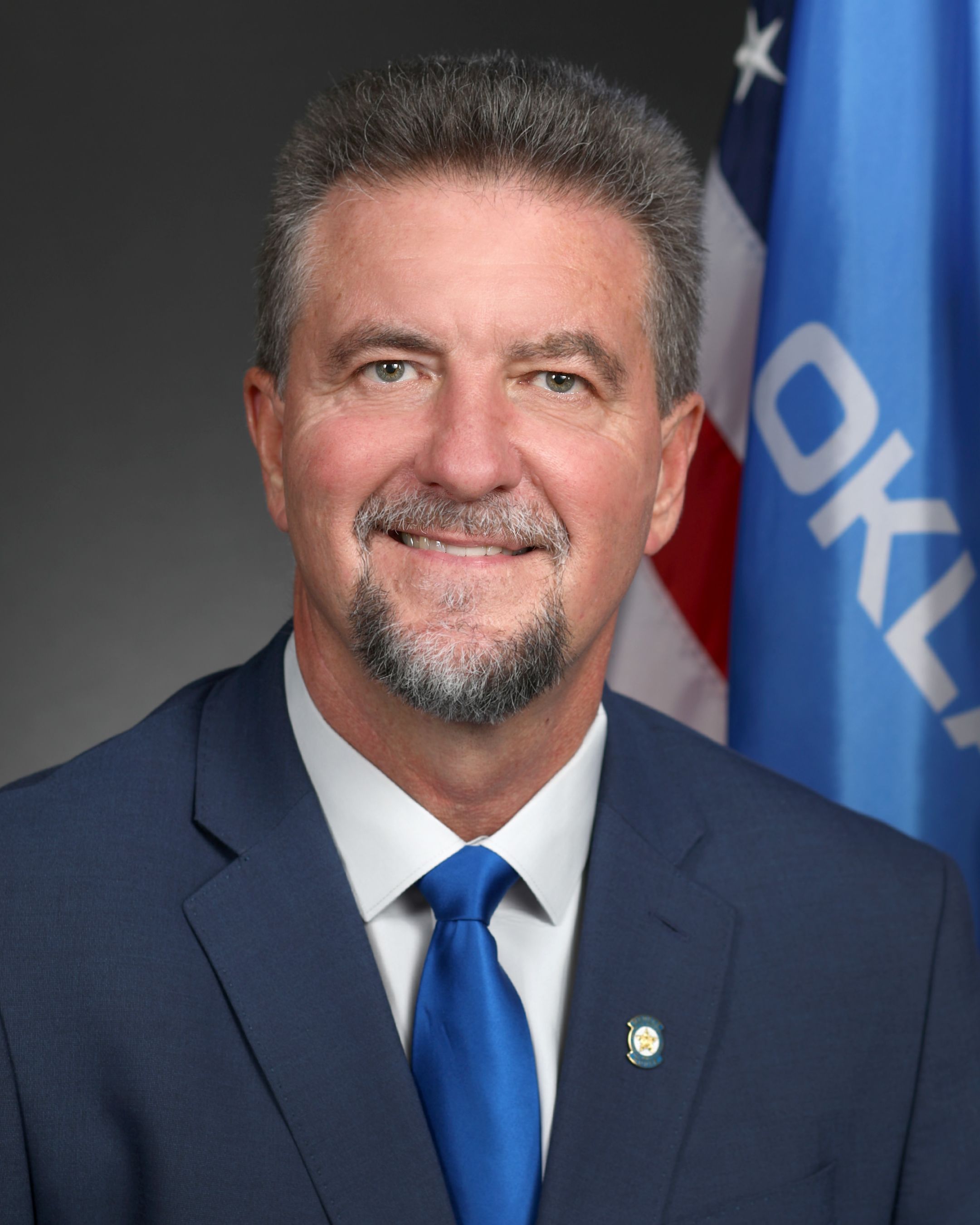
Rep. Mike Dobrinski
Sponsored bills
Maddy summarySB 604 amends Oklahoma's definitions for motor vehicle dealers and related terms in Section 562 of Title 47. It clarifies that "new motor vehicle dealer" excludes powersports vehicle dealers and revises definitions for key terms like "manufacturer," "distributor," and "powersports vehicle." The bill removes an exception allowing powersports dealers to operate without a specific license and updates terminology to align with current industry practices. It does not impose new data security requirements or create direct policy changes, as the title's mention of "data security standards" appears inconsistent with the actual definitional focus of the bill text.
Maddy summaryHB 2988 creates an income tax credit for Oklahoma landowners who implement specific conservation practices, including removing harmful woody species, improving soil health, or enhancing water efficiency on agricultural land. It directly affects farmers and ranchers who actively practice these conservation methods on their property, allowing them to claim credits of $5-$500 per acre (up to $150,000-$200,000 annually) based on the number of qualifying practices used. The Oklahoma Conservation Commission issues tax credit certificates verifying eligibility, while the program limits annual credits to $3 million total and requires applicants to not have received full cost coverage from other sources. The credit applies to income tax returns for 2027-2030, with certificates processed in order of submission until the $3 million cap is reached.
Maddy summaryHB 3016 requires Oklahoma schools to provide binocular vision screenings for students in kindergarten, first, and third grades to identify convergence insufficiency (a vision disorder affecting near focus). Screenings, conducted within 30 days of the school year start by trained school nurses or vision professionals, must be performed in addition to existing vision screenings. The bill establishes a Binocular Screening Revolving Fund in the state treasury to cover program costs using state appropriations, which must supplement - rather than replace - current school vision funding. The program begins in the 2026-2027 school year.
Maddy summaryHB 1728 creates the Salt Cedar Eradication Act to manage invasive salt cedar (Tamarix species) in Oklahoma's Upper Red River Basin, directly affecting private, tribal, and public landowners in that region. The Oklahoma Conservation Commission will lead a program that maps infestations, implements eradication methods (like mechanical removal and chemical treatments), and provides financial and technical assistance to landowners. It establishes a revolving fund using state, federal, and private funds designated for salt cedar removal, and requires annual reports to state officials on progress, spending, and recommendations. The program aims to protect water resources, restore native ecosystems, and support agricultural productivity.
Maddy summaryThis bill updates Oklahoma's rules about school board members having family relationships with district employees. It raises the student enrollment threshold for small districts from 400 to 550 average daily students, allowing those districts to adopt policies permitting such relationships. Previously, only districts with fewer than 400 students could do this. The bill also clarifies that board members with family ties to staff must recuse themselves from related personnel decisions. These changes primarily affect small school districts statewide.
Maddy summarySB 1932 allows motor carriers organized as corporations, LLCs, LLPs, or partnerships to be represented by their own officers, members, managers, or partners - not attorneys - at Oklahoma Motor Carrier Safety and Hazardous Materials Transportation Act administrative hearings. This change directly affects businesses in the commercial transportation sector that choose not to hire legal counsel for these proceedings. The bill modifies the existing hearing process to provide this representation option, effective November 1, 2026.
Maddy summaryThis bill is a concurrent resolution that designates April 21, 2026, as National Lineman Appreciation Day in Oklahoma. It directly affects electric utility workers by formally recognizing their role in maintaining the state's power grid and responding to emergencies. The resolution expresses gratitude to various providers, including Public Service Company of Oklahoma and Oklahoma Gas and Electric, for their service. It serves as a symbolic gesture to honor linemen rather than establishing new laws or funding.
Maddy summaryThis legislative bill is a concurrent resolution that formally recognizes April 21, 2026, as National Lineman Appreciation Day in Oklahoma. It directly affects electric utility workers across the state, specifically naming providers like Public Service Company of Oklahoma and Oklahoma Gas and Electric Company. The resolution expresses gratitude for their work maintaining power grids and responding to emergencies, while also highlighting their role in supporting the state's economy. This document serves as an official acknowledgment of their contributions rather than establishing new laws or regulations.
Maddy summaryThis bill amends Oklahoma's Renewable Energy Facility Act to clarify which infrastructure projects are covered under the legislation. The key change excludes transmission and distribution lines that serve renewable energy facilities from the bill's scope, narrowing the definition of eligible projects. This amendment directly affects utility companies and developers by specifying that only the renewable energy generation facilities themselves are included, not the power lines connecting them to the grid. The change aims to provide clearer boundaries for what types of infrastructure fall under the act's regulations and incentives.