

Maddy summaryHB 1818 amends Oklahoma's Social Worker's Licensing Act by updating definitions for key terms related to social work practice. It clarifies distinctions between "clinical social work" (including diagnosis and treatment) and "nonclinical social work" (such as case management and advocacy), and defines roles like "licensed clinical social worker" (LCSW) and "licensed masters social worker" (LMSW). The bill directly affects licensed social workers, the Oklahoma State Board of Licensed Social Workers, and social work education programs by standardizing terminology used in licensing and practice. This is a procedural clarification of existing definitions, not a change to licensing requirements or practice standards.
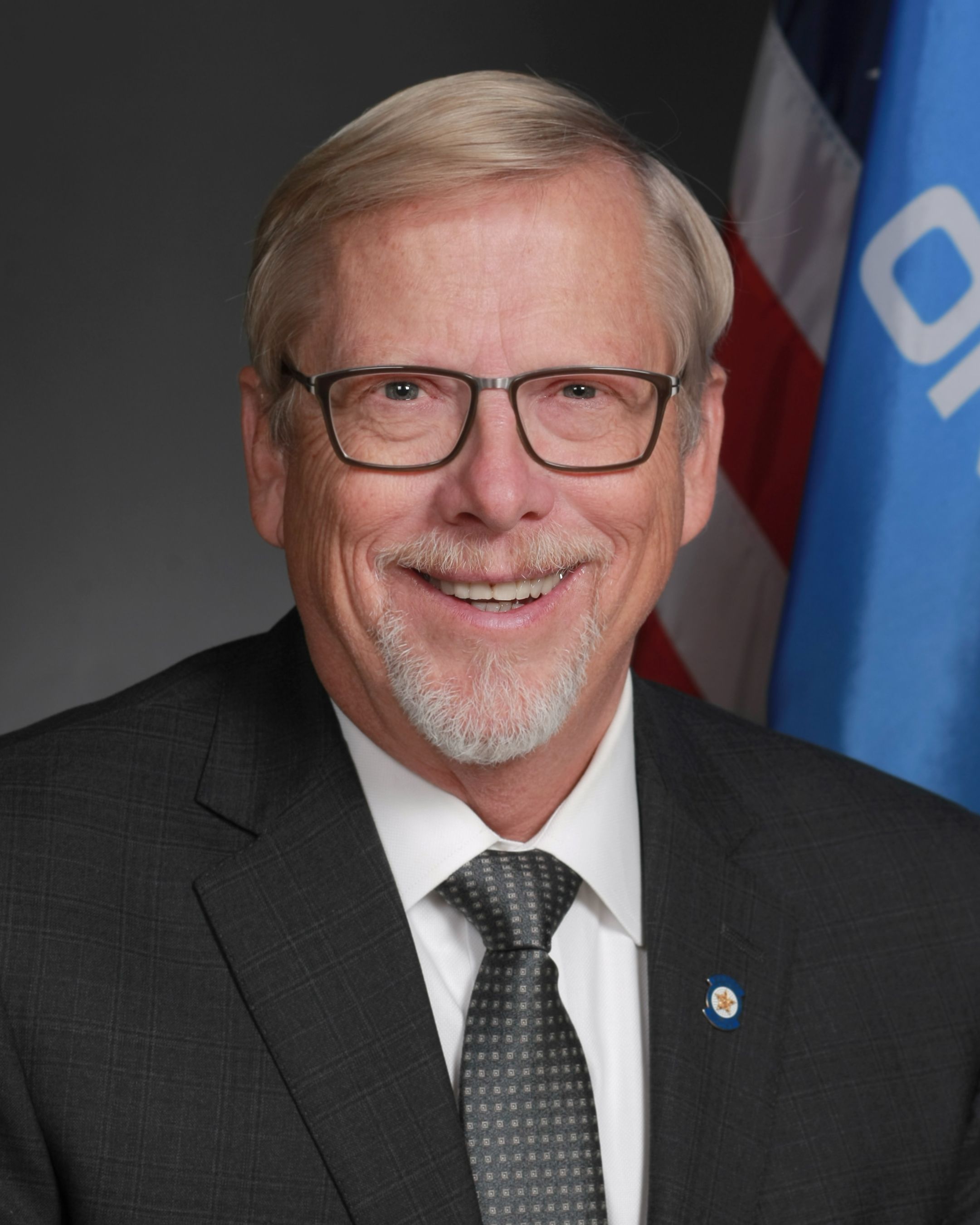
Rep. Carl Newton
Sponsored bills
Maddy summaryThis resolution acknowledges the Oklahoma Youth Expo and congratulates student participants in the 2026 event. It recognizes the contributions of 4-H and FFA students who compete in agricultural exhibitions and specifically honors the Ag Mechanics and Engineering Contest champions for their projects. The bill serves as a formal commendation without changing any laws or policies, simply celebrating the achievements of youth involved in Oklahoma's agricultural education programs.
Maddy summaryThe provided context does not include the bill text or specific provisions of SB 1047. Without details on which health care services require reimbursement, the reimbursement mechanisms, or the affected entities (e.g., insurers, providers, patients), a factual summary cannot be created. The bill's title mentions "reimbursement for certain health care services" but lacks concrete policy details in the available information. For an accurate summary, the full bill text or a detailed legislative summary would be required.
Maddy summarySB 2130 modifies Oklahoma's municipal audit requirements, allowing cities and towns with $50,000+ total revenue and populations under 2,500 to conduct biennial financial reviews instead of annual audits. It also exempts qualifying small municipalities from needing audits solely to receive federal, state, or local grants. The bill establishes specific financial procedures for these biennial reviews, including documentation checks and fund balance compliance. This change takes effect November 1, 2026, directly affecting small Oklahoma municipalities and related public trusts meeting the criteria.
Maddy summarySB 1923 prohibits inmates in Oklahoma prisons and reformatories from accessing social media platforms on any electronic devices provided by the Department of Corrections (like phones, tablets, or computers). The bill defines "social media platform" as websites enabling user-generated content and interaction, such as Facebook or Instagram. The Department of Corrections must create specific rules to implement this ban, which takes effect November 1, 2026. This policy directly affects all inmates in state correctional facilities by restricting their use of social media during incarceration.
Maddy summarySB 2014 designates ivermectin (for human use) as an over-the-counter medication in Oklahoma, allowing it to be sold without a prescription or pharmacist consultation. This bill directly affects pharmacies, pharmacists, and consumers who purchase this drug. The key provision removes the current requirement for a prescription or healthcare professional consultation for ivermectin, changing its legal status under state pharmacy law. The law takes effect on November 1, 2026.
Maddy summarySB 1387 allows Oklahoma residents who sell a vehicle within six months before or after purchasing a new one to deduct the sold vehicle's value from the sales tax calculation on their new purchase. Specifically, if a buyer paid tax on the full price of a new vehicle but sold a vehicle within that six-month window, they can receive a refund equal to 1.25% of the sold vehicle's value (up to the total tax paid). This change directly affects individuals trading in used cars when buying new ones, simplifying tax refunds for this common scenario. The bill amends Oklahoma's tax code to clarify this deduction mechanism in Sections 1355 and 1404 of Title 68.
Maddy summarySB 1926 allows victims of domestic abuse in Oklahoma to file protective order petitions in any county, removing previous restrictions that required filing in the victim's county, the abuser's county, or the location of the abuse. This change makes it easier for victims to seek protection without being limited by geographic location. The bill also requires victims to file a police report first if they are not family members or in a dating relationship before filing a petition. It becomes effective November 1, 2026.
Maddy summaryHB 4453 creates the Oklahoma Health Care Cost Transparency Board to oversee a statewide health care data database (APCD) and measure spending trends. It requires commercial health insurers to report primary care spending data annually and meet a minimum 11% spending target on primary care by 2030, using a standardized methodology from the Oklahoma Health Care Authority. The bill mandates the Insurance Department to collect and analyze cost data from insurers, Medicaid, and Medicare, then publish annual transparency reports. Insurers failing to meet benchmarks face potential penalties up to $5,000 per day for noncompliance. This directly affects commercial health insurers operating in Oklahoma.
Maddy summarySB 1430 amends Oklahoma Statute 43A O.S. 2021, Section 2-101, to change the removal process for the Commissioner of Mental Health and Substance Abuse Services. The bill specifies that the Commissioner may now be removed by a two-thirds vote of each legislative chamber (House and Senate), rather than by the Governor alone or through other mechanisms. It also updates all references in state law to reflect the department's full name, "Department of Mental Health and Substance Abuse Services." This change directly affects the Commissioner and the governance structure of the department, effective November 1, 2026. The bill does not alter the Commissioner’s appointment authority (still by the Governor with Senate consent).