

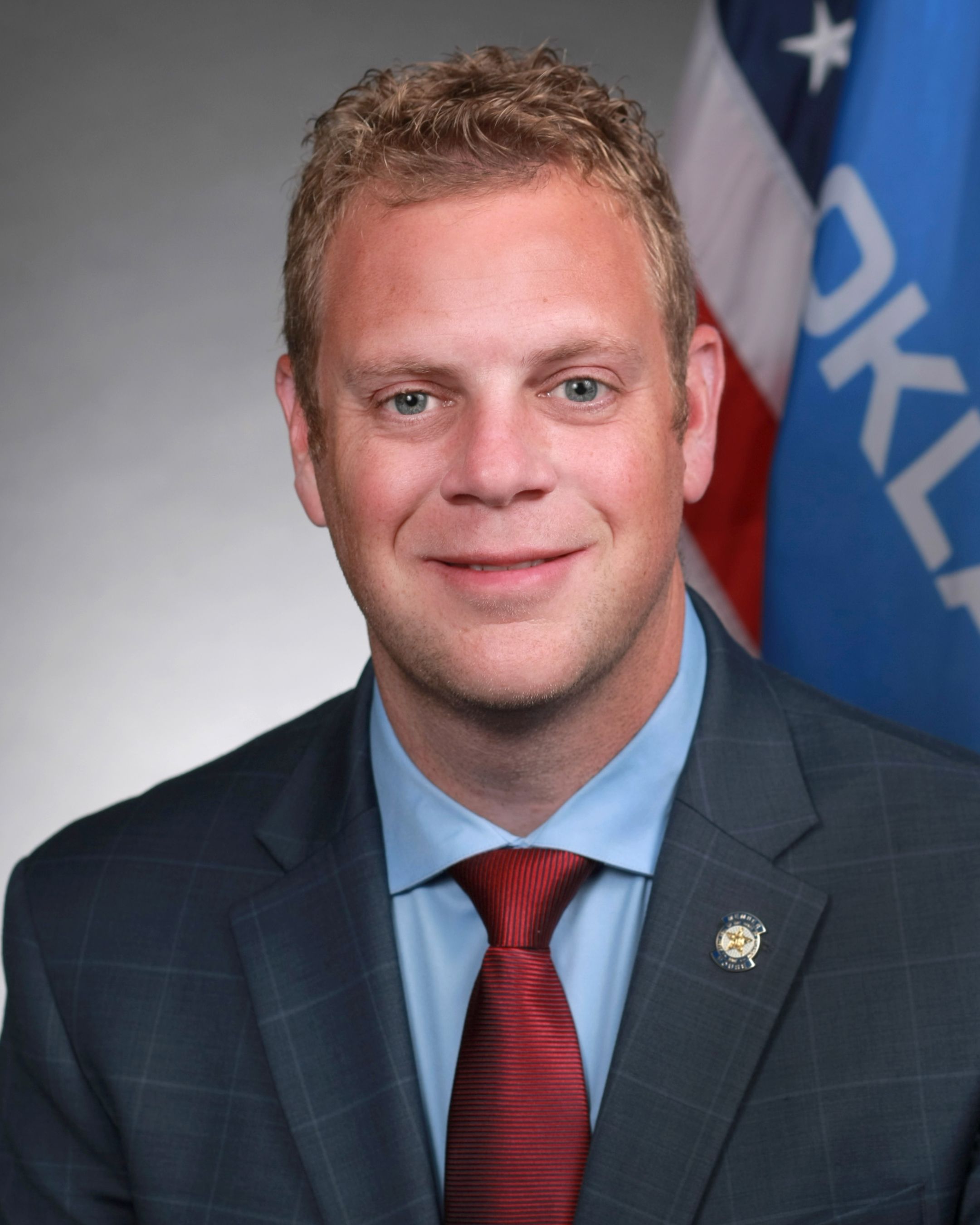
Maddy summaryHouse Bill 1376 modifies the structure and governance of the Oklahoma Alliance for Manufacturing Excellence (OAME), a private non-profit corporation that assists small and medium-sized manufacturing firms in Oklahoma, with a special emphasis on minority businesses. The bill increases the number of elected representatives on OAME's Board of Directors from member firms. It also adjusts the state governmental ex officio members, adding representation from the Oklahoma Department of Commerce and the Oklahoma Department of Career and Technology Education, while removing the Chancellor of Higher Education. Additionally, the bill reduces the maximum number of associate members or unaffiliated persons who can serve on the Board.
Sponsored bills
Maddy summarySB 752 authorizes Oklahoma county purchasing agents to establish online bidding processes for procurement with vendors already approved under state contracts. It directly affects county governments and their purchasing agents by allowing electronic solicitations, bid submissions, and award notifications while requiring bidders to register, meet prequalification standards, and comply with existing bid notice rules. Key provisions mandate that online bids follow the same public meeting procedures as traditional bids and include specific requirements for bidder eligibility and submission timing. The bill became law on May 12, 2025, without gubernatorial action, effective July 1, 2025.
Maddy summarySenate Bill 752 authorizes Oklahoma county purchasing agents and boards of county commissioners to establish and use online bidding processes for procuring materials and equipment. It specifically allows counties to set up online bidding with vendors authorized by state contract, modernizing their procurement options. The bill requires compliance with existing bid notice requirements, designates opening and closing dates for online bids, and permits counties to require bidders to register and prequalify. This expands the methods counties can use for solicitations, bid submissions, and other acquisition functions.
Maddy summaryHB 1372 temporarily lowers the gross production tax rate for oil and gas from existing wells (spudded before the law's effective date) to 5% for 36 months, instead of the standard 7%. It also creates two new tax exemptions: 1) 5 years of tax-free production for secondary/tertiary recovery projects approved after July 2022, and 2) a 24-month tax exemption for wells using recycled water (proportional to recycled water usage). For orphaned wells, producers must post a $25,000 surety bond per well to qualify for a 50% tax reduction for 36 months. The bill sets annual refund limits of $15 million for recovery projects and $10 million for recycled water exemptions, requiring producers to apply for refunds through the Tax Commission.
Maddy summaryHB 1372 modifies Oklahoma's gross production tax laws, primarily affecting oil and gas producers. It establishes a temporary discounted tax rate of 5% for the first 36 months of production for new oil and gas wells spudded after the bill's effective date, reverting to 7% thereafter. The bill also provides exemptions for production from secondary and tertiary recovery projects and for wells completed using recycled water. Additionally, it offers a 50% tax reduction for projects recovering from orphaned wells, requiring a $25,000 surety bond per well. These exemptions are managed through a refund process, subject to annual fiscal year caps.
Maddy summaryHouse Bill 1374 directs the Corporation Commission to establish minimum fire safety standards for electric vehicle (EV) charging stations located in multistory buildings. It requires operators of these stations to annually attest their compliance with specific safety measures. Key provisions include mandating that charging stations be on the ground floor, within 25 feet of an entry, and equipped with emergency call boxes, fire extinguishers, sufficient lighting, and continuous video surveillance. The bill allows the Commission to set rules for annual reporting, third-party inspections, and fees, with penalties for non-compliance. This legislation directly affects charging station operators who provide EV charging in multistory structures.
Maddy summaryHB 1369 changes Oklahoma's requirements for oil and gas operators to prove financial responsibility for plugging wells and closing sites. Starting November 1, 2025, new operators must provide Category B financial guarantees (like cash or bonds) instead of Category A (net worth proof), with amounts tiered based on the number of wells operated (e.g., $25,000 for 1-10 wells, $150,000 for over 100 wells). Existing operators with clean compliance records and no fines may keep Category A guarantees, while those with fines or new operators must use Category B. The bill also allows operators to request lower Category B amounts based on verified plugging cost estimates.
Maddy summaryHB 1373, now law in Oklahoma, requires solar farm operators (called "grantees") to fully remove all equipment and restore land to its original condition when a commercial solar facility stops operating. It directly affects landowners leasing property for solar farms and the operators who build and run them. Key provisions mandate operators to provide financial assurance (like bonds or letters of credit) covering cleanup costs and to remove solar panels, foundations, buried cables, and roads, then refill excavations and restore soil and vegetation to pre-construction conditions within 180 days of decommissioning. The law also voids any agreement clauses that exempt operators from these cleanup responsibilities.
Maddy summaryHB 1373, known as the Commercial Solar Facility Decommissioning Act, establishes new requirements for the removal and cleanup of commercial solar power facilities in Oklahoma. It mandates that companies operating these facilities are responsible for decommissioning, including clearing solar devices, transformers, and cables to a depth of at least three feet, and filling any holes created. Landowners can also request the removal of roads and restoration of the land to a tillable state, including reseeding. The bill requires operating companies to provide financial assurance, such as a bond or letter of credit, to cover the costs of these decommissioning activities.
Maddy summaryHB 1369 updates the financial requirements for individuals and companies operating oil and gas wells in Oklahoma. Starting November 1, 2025, new operators will no longer be able to use a financial statement (Category A surety) to demonstrate financial ability, though existing operators can retain it. The bill establishes a tiered system for Category B surety, such as bonds or letters of credit, with amounts ranging from $25,000 to $150,000 based on the number of wells an operator manages. These changes aim to ensure operators have sufficient funds to cover the costs of well plugging, surface impoundment closure, and equipment removal. The Corporation Commission can also require higher surety amounts based on an operator's past compliance.