

Maddy summaryHB 2126 requires doctors and patients to report medical conditions that cause sudden loss of consciousness or impaired driving ability to Oklahoma's Service Oklahoma. Specifically, physicians must submit written reports for patients diagnosed with such conditions, and patients themselves must report their diagnosis. The bill protects reporters from civil liability and restricts these reports from being public records, allowing them only in license revocation proceedings. This law directly affects drivers with qualifying medical conditions and healthcare providers treating them, effective November 1, 2025.
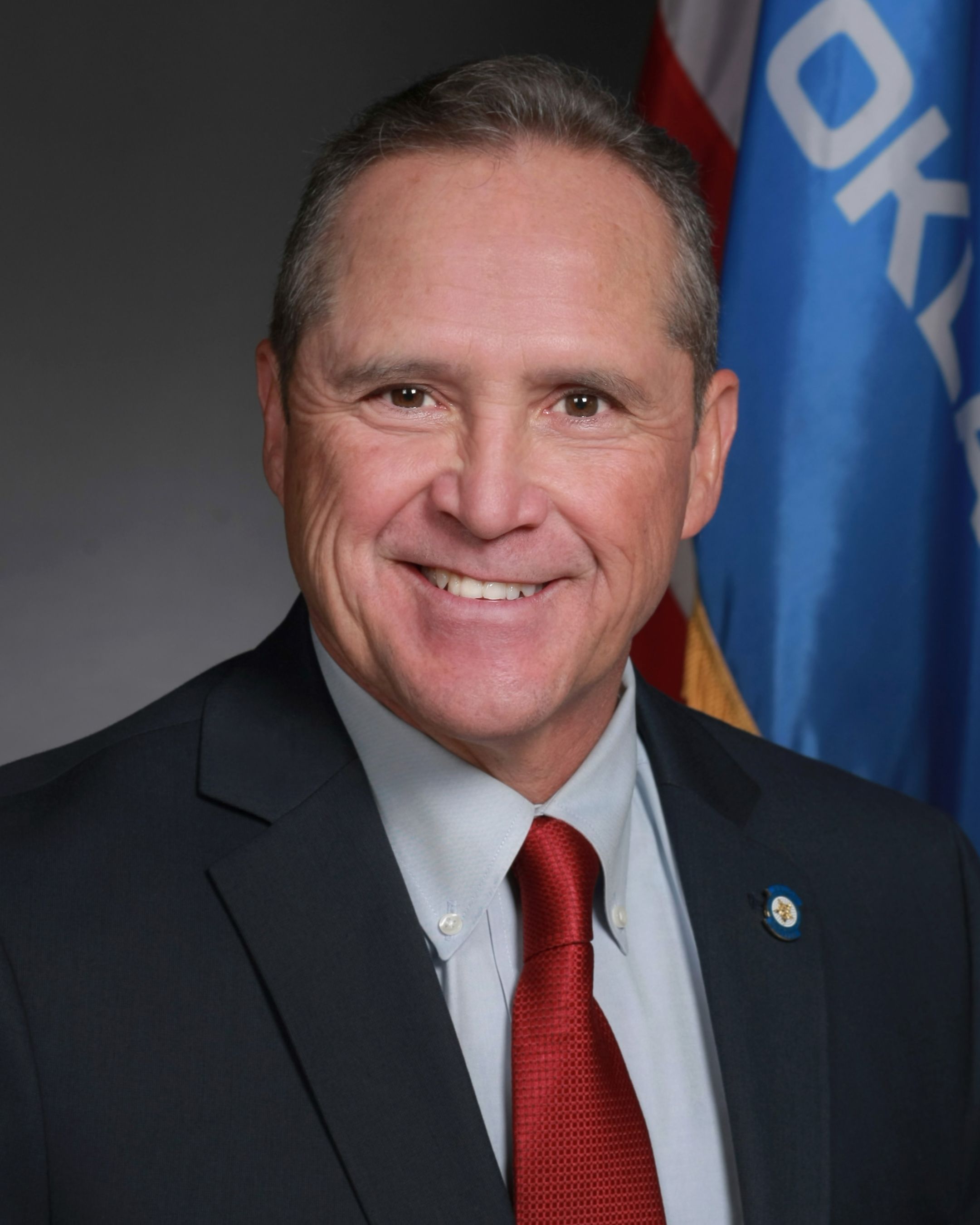
Rep. Danny Sterling
Sponsored bills
Maddy summaryHB 1939 modifies the Oklahoma Turnpike Authority's powers by restricting its ability to construct new toll turnpikes to 25 specific, pre-approved locations listed in the bill. It requires the Authority to use data-driven transportation planning and public consultation before any new projects, removing prior flexibility to build elsewhere without legislative approval. The bill directly affects the Oklahoma Turnpike Authority and future infrastructure planning, ensuring new toll roads must align with existing designated routes. Key provisions include codifying current turnpike locations (like the Turner Turnpike and Muskogee Turnpike extensions) and mandating compliance with studies before construction.
Maddy summaryHB 1936 increases Oklahoma's State Board of Education membership from seven to eleven members and modifies appointment rules. It requires six members appointed by the Governor (one per congressional district and one statewide), two by the House Speaker (a rural resident and a former small-district superintendent), and two by the Senate President (a rural resident and a former large-district superintendent). The bill also adds eligibility requirements: members must have a high school diploma or equivalent, cannot serve on a local school board, and must complete mandatory training without fees. The changes take effect January 25, 2027, terminating current terms and requiring new appointments within 30 days.
Maddy summaryHB 1936 increases the Oklahoma State Board of Education from seven to eleven members. It changes the appointment process: the Governor appoints six members (one from each congressional district and one from the state at large), the House Speaker appoints two (one rural resident and one former superintendent from a district under 10,000 students), and the Senate President appoints two (one rural resident and one former superintendent from a district over 10,000 students). The bill also requires all members to have a high school diploma or equivalent and prohibits serving on a local school board overseen by the State Board. Current board members' terms end on January 25, 2027, with new appointments required within 30 days of that date.
Maddy summaryHB 1937 requires Oklahoma public and charter school staff (including teachers, coaches, and administrators) to include parents or legal guardians in digital communications with students, such as emails or texts, unless the communication occurs on a school-approved academic platform or involves an emergency. Exceptions for emergencies require school boards to determine the situation and notify parents afterward. Schools must provide state-developed training for staff on these rules, and violations could trigger administrative leave during investigations, with potential discipline or reporting to law enforcement if misconduct is found. The bill directly affects current K-12 students and their families in Oklahoma public and charter schools.
Maddy summaryHB 2121 is a procedural bill that formally names the "Education Reform Act of 2025" and sets its effective date. It does not establish new policies, funding, or requirements for schools or students. The bill simply provides the official title for future education-related legislation and specifies that it takes effect on November 1, 2025. No substantive changes to education law are described in the provided text. This is a naming and timing measure, not a policy reform.
Maddy summaryHB 2128 is a procedural bill that names the "Judicial Reform Act of 2025" and sets its effective date as November 1, 2025. It contains no substantive policy changes or mechanisms affecting judges, courts, or the public. The bill serves only to establish the act's name and effective date without altering existing judicial procedures or requirements. This is a standard naming and timing measure, not a policy reform.
Maddy summaryHB 2130 is a procedural bill that formally names the "Counties and County Officers Act of 2025" and sets its effective date. It does not create new policies or affect any individuals or entities, as it establishes only the act's title and a November 1, 2025, implementation date. The bill is uncodified, meaning it will not be added to Oklahoma's official statutes. This type of naming resolution has no substantive policy impact.
Maddy summaryHB 2121 establishes the "Education Reform Act of 2025" as the official name for the legislation. It specifies that the act takes effect on November 1, 2025. The bill contains no substantive policy provisions or mechanisms; it is purely procedural, naming the legislation and setting its effective date. This bill directly affects Oklahoma's legislative record-keeping but does not alter education policy or impact any specific groups.
Maddy summaryHB 2128, titled the "Judicial Reform Act of 2025," is a procedural bill that formally names the legislation and sets its effective date. It becomes effective on November 1, 2025, but does not include substantive policy changes or specific provisions for judicial reform. The bill has been introduced in the Oklahoma House of Representatives and referred to the Rules Committee for further consideration. No concrete policy changes or affected parties are described in the provided text.