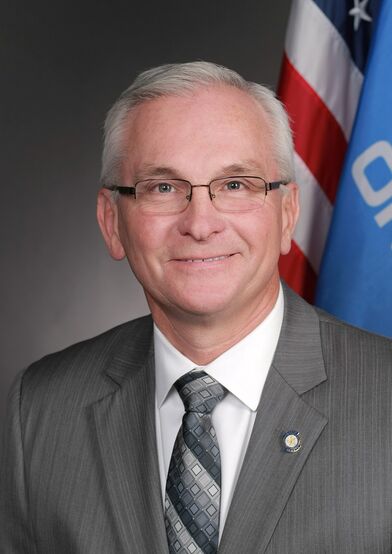
HB 4428 requires Oklahoma's pension benefit plans (like state retirement funds) to vote on shareholder proposals solely based on financial impact, banning consideration of environmental, social, or political goals. It mandates that pension boards base all voting decisions on "pecuniary factors" (financial risk/return) to maximize shareholder value, and prohibits proxy advisors from providing recommendations that include non-financial considerations. Boards must annually report all votes, including their decision, management's stance, and any proxy advisor's recommendation, publishing the report online by March 1 each year. The law applies to all state pension systems and takes effect November 1, 2026.
This bill changes Oklahoma's requirements for oil and gas operators to provide financial guarantees (surety) for well plugging and environmental compliance. It phases out "Category A" surety (based on $50,000 net worth) for new operators starting November 2025, while current operators may keep it but can voluntarily switch to "Category B" surety (like letters of credit or bonds). Category B amounts scale with the number of wells operated, starting at $25,000 for 1-10 wells (rising to $50,000 by 2028) and higher for larger operations, with a maximum of $150,000. Operators with fines or poor compliance records must use Category B, and the Commission can require higher amounts based on performance.
SB 1439 blocks lawsuits against fossil fuel companies (including producers, sellers, and trade associations) that claim climate change or greenhouse gas emissions caused harm when their products functioned as designed. The bill prohibits any civil action seeking relief related to climate change, alleged climate effects, or emissions - covering common claims like fraud or failure to warn - but excludes cases involving violations of environmental or worker protection laws. It applies to all fossil fuels (oil, natural gas, coal, etc.) and requires courts to dismiss ongoing climate-related lawsuits immediately upon the bill's effective date. This law creates a new legal barrier for climate change litigation while preserving access to courts for environmental law enforcement.
SB 1928 modifies Oklahoma's water rights law by removing mandatory metering requirements for most wells while introducing a new five-year flexible groundwater allocation system. It applies to existing and new groundwater permit holders in designated basins, requiring annual usage reports and fees to maintain their allocation. The bill allows permit holders to temporarily exceed their annual usage limit by up to 200% in any single year, as long as their total usage over five years stays within the basin's overall limit. Domestic wells are explicitly excluded from these provisions. The changes take effect January 1, 2027.
SB 269, now law after Governor approval on May 20, 2025, gives Oklahoma's Corporation Commission exclusive authority over CO2 sequestration facilities and storage units, including Class VI injection wells. It updates rules for facility authorization, requires specific notice procedures for owners, and creates a revolving fund for carbon sequestration projects funded by fees. The bill directly affects companies building CO2 storage facilities and the Corporation Commission, which now manages permits, inspections, and fee collection for these operations. Key changes include defining CO2 storage unit ownership requirements, establishing a process for facility modifications, and allowing appeals of Commission decisions to the Supreme Court.
HB 1205 repeals Oklahoma's tax credit for small wind turbine installations by removing Section 2357.32B from the state's tax code. This change directly affects small wind turbine owners and installers who previously qualified for the credit. The repeal takes effect on November 1, 2025, eliminating the tax incentive for new installations after that date. The bill is procedural and does not create new policy, only removing an existing tax provision.
HB 2037 removes specific energy conservation rules from Oklahoma law by repealing Sections 456, 457, and 458 of Title 19 O.S. 2021 and Section 5-131.2 of Title 70 O.S. 2021. This bill eliminates existing statutory requirements related to energy conservation without creating new provisions. It takes effect on November 1, 2025, after being approved by the governor on May 9, 2025. The repeal directly affects the legal framework governing energy conservation in Oklahoma, removing these specific sections from the state code.
SB 777 modifies Oklahoma's regulations for harvesting fish and aquatic species by giving the Oklahoma Department of Agriculture, Food, and Forestry (ODAFF) discretion to create rules governing these activities. It allows certain harvesting but requires it to follow Department-set restrictions, replacing mandatory language ("shall") with discretionary terms ("may"). The bill removes a prior requirement for the state to assess fees and transfers this authority to ODAFF. This change directly affects commercial and recreational fishers by shifting regulatory oversight to the Department, which will determine specific harvesting rules. The bill became law on May 12, 2025, without a gubernatorial signature.
HB 2043 requires Oklahoma state agencies to verify that companies receiving contracts worth $100,000+ (with 10+ full-time employees) do not boycott energy companies. It mandates written verification from contractors that they will not boycott energy providers during the contract term. The law excludes contracts related to debt management or if alternative services aren't available from non-boycotting companies. This policy directly affects state agencies and qualifying businesses entering major public contracts.
SB 460 establishes natural gas as the preferred fuel source for new fossil fuel electricity generation facilities in Oklahoma, requiring all new plants built after July 1, 2025, to use natural gas unless a generator can demonstrate to regulators that another fossil fuel better serves consumers. The bill amends Oklahoma law to create a "natural gas energy standard" that supplements renewable energy goals, specifically targeting new construction and added capacity at existing fossil fuel plants. This policy directly affects electricity generators planning new facilities or expansions, shifting the default fuel choice from other fossil fuels to natural gas. The law takes effect July 1, 2025, and was enacted as an emergency measure.