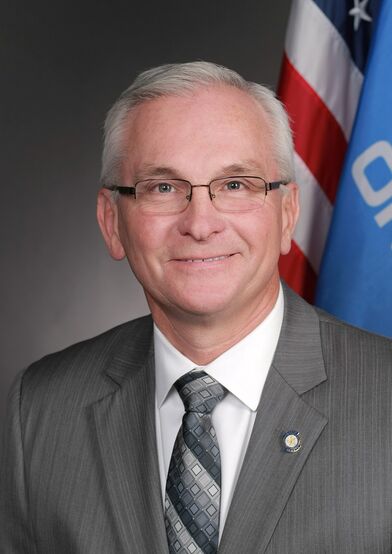
SB 2 establishes new setback requirements for wind energy facilities in Oklahoma, effective November 1, 2025. It requires wind turbines to be at least one-quarter nautical mile from homes and neighboring property (previously 1.5 miles from schools/hospitals), and mandates that projects near military installations must obtain a Federal Aviation Administration "Determination of No Hazard" and resolve Department of Defense impacts before construction. Developers who fail to comply face daily penalties of up to $1,500 per violation. The bill directly affects wind energy developers, landowners, and communities near proposed sites, with specific rules for military compatibility and dispute resolution.
HB 4428 requires Oklahoma's pension benefit plans (like state retirement funds) to vote on shareholder proposals solely based on financial impact, banning consideration of environmental, social, or political goals. It mandates that pension boards base all voting decisions on "pecuniary factors" (financial risk/return) to maximize shareholder value, and prohibits proxy advisors from providing recommendations that include non-financial considerations. Boards must annually report all votes, including their decision, management's stance, and any proxy advisor's recommendation, publishing the report online by March 1 each year. The law applies to all state pension systems and takes effect November 1, 2026.
HB 2115 transfers administration of Oklahoma's Energy Conservation Assistance Fund from the Department of Commerce to the Department of Human Services. It provides grants of up to $3,000 for weatherization work (like insulation, storm windows, and structural repairs) to low-income elderly and handicapped homeowners who meet income guidelines (125% of federal poverty level). The bill requires an energy audit before grants are issued, prioritizes applicants with greatest need, and establishes a revolving fund for ongoing program funding. This directly affects qualifying homeowners seeking energy efficiency improvements to their primary residences.
SB 1405 reauthorizes a voluntary tax checkoff on Oklahoma state income tax returns, allowing taxpayers to donate a portion of their refund to the Wildlife Diversity Fund. The fund, managed by the Oklahoma Wildlife Conservation Commission, supports conservation efforts for nongame wildlife (species not classified as game or furbearer). Taxpayers who donate by mistake can request a refund within three years, and the reauthorized checkoff takes effect January 1, 2027. This bill updates statutory language to maintain the existing donation mechanism without altering its core purpose.
SB 1439 blocks lawsuits against fossil fuel companies (including producers, sellers, and trade associations) that claim climate change or greenhouse gas emissions caused harm when their products functioned as designed. The bill prohibits any civil action seeking relief related to climate change, alleged climate effects, or emissions - covering common claims like fraud or failure to warn - but excludes cases involving violations of environmental or worker protection laws. It applies to all fossil fuels (oil, natural gas, coal, etc.) and requires courts to dismiss ongoing climate-related lawsuits immediately upon the bill's effective date. This law creates a new legal barrier for climate change litigation while preserving access to courts for environmental law enforcement.
SB 1928 modifies Oklahoma's water rights law by removing mandatory metering requirements for most wells while introducing a new five-year flexible groundwater allocation system. It applies to existing and new groundwater permit holders in designated basins, requiring annual usage reports and fees to maintain their allocation. The bill allows permit holders to temporarily exceed their annual usage limit by up to 200% in any single year, as long as their total usage over five years stays within the basin's overall limit. Domestic wells are explicitly excluded from these provisions. The changes take effect January 1, 2027.
HB 1543 expands the Oklahoma Conservation Commission's authority to coordinate conservation efforts, specifically adding requirements to include tribal governments in its work and removing restrictions on the Conservation District Consolidation Fund. The bill allows the Commission to enter contracts with tribes, federal agencies, counties, and other entities to administer statewide conservation programs and secure funding. It directly affects Oklahoma's 157 conservation districts, tribal governments, and state agencies collaborating on resource conservation. The key change requires the Commission to actively coordinate with tribes and manage funds for district programs, while maintaining its existing role in supporting local conservation planning and reporting.
HB 1807 requires all Oklahoma groundwater permit holders to install approved metering systems (like telemetry devices) to track water usage, starting November 1, 2025. It creates a "five-year flex allocation" system beginning January 1, 2026, allowing permit holders to adjust annual usage within a basin's total limit - without needing new permits - but capping yearly excess at 200% of their annual allocation over the five-year period. The bill directly affects agricultural and commercial water users with groundwater permits, excluding domestic wells. It aims to standardize usage reporting and encourage conservation through structured, measurable water allocation.
SB 269, now law after Governor approval on May 20, 2025, gives Oklahoma's Corporation Commission exclusive authority over CO2 sequestration facilities and storage units, including Class VI injection wells. It updates rules for facility authorization, requires specific notice procedures for owners, and creates a revolving fund for carbon sequestration projects funded by fees. The bill directly affects companies building CO2 storage facilities and the Corporation Commission, which now manages permits, inspections, and fee collection for these operations. Key changes include defining CO2 storage unit ownership requirements, establishing a process for facility modifications, and allowing appeals of Commission decisions to the Supreme Court.
HB 1205 repeals Oklahoma's tax credit for small wind turbine installations by removing Section 2357.32B from the state's tax code. This change directly affects small wind turbine owners and installers who previously qualified for the credit. The repeal takes effect on November 1, 2025, eliminating the tax incentive for new installations after that date. The bill is procedural and does not create new policy, only removing an existing tax provision.