Issue · Education

Education (Testing & Assessment)

Every education bill, vote, and legislator stance in Oklahoma, automatically classified by Maddy, our AI policy reader.

Total bills
23
2026 Regular Session
Top supporter
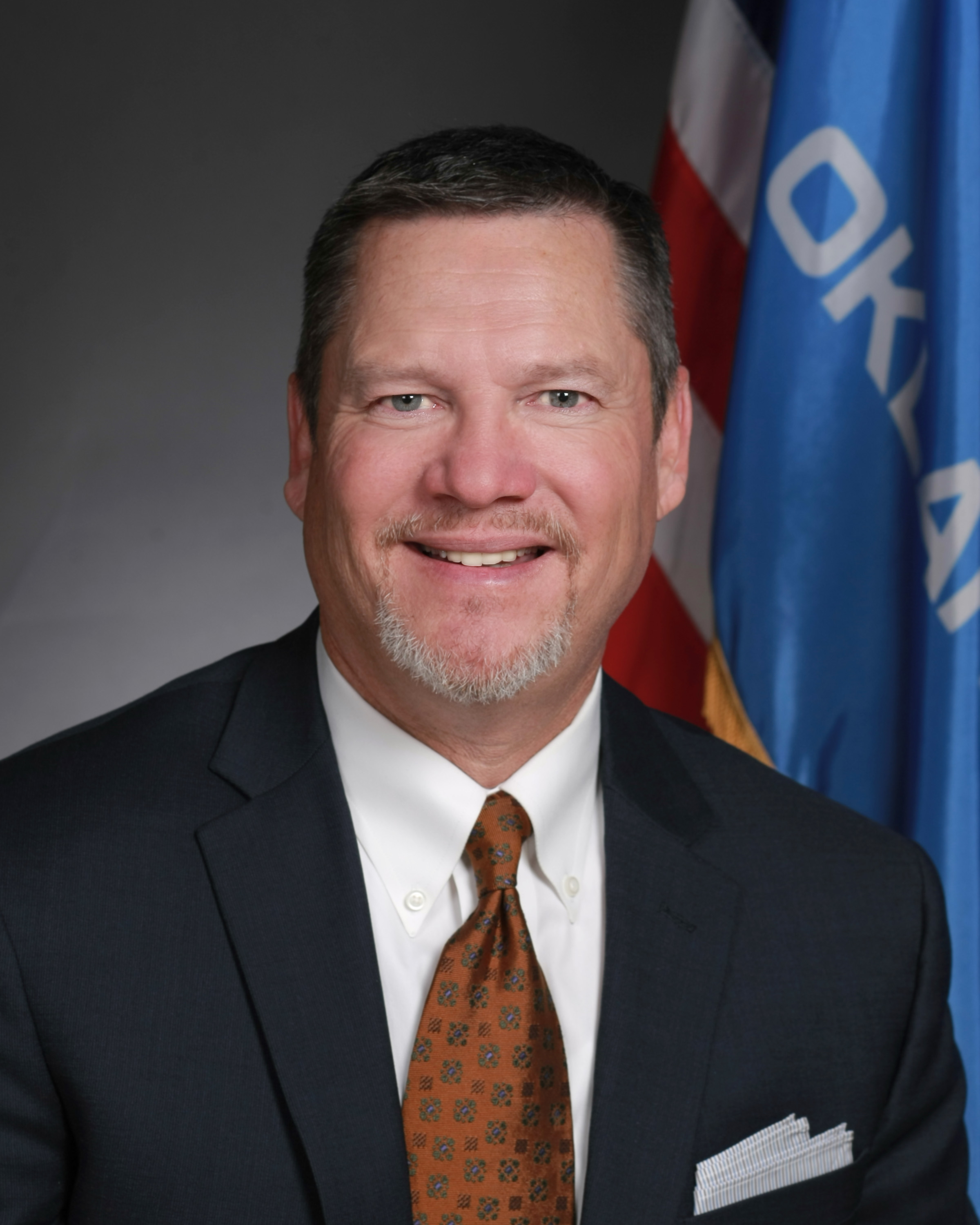
Chuck Hall
100% support rate
Top opponent
Nikki Nice
0% support rate
Ranked legislators
10
5 support · 5 oppose
Key legislators

Who's moving testing & assessment in Oklahoma

Legislators moving testing & assessment in Oklahoma
Legislator Party Stance Support rate Votes
Chuck Hall
Chuck Hall Senate · District 20
R
Strong +
100% 9
Dave Rader
Dave Rader Senate · District 39
R
Strong +
100% 9
Rob Hall
Rob Hall House · District 67
R
Strong +
100% 9
Lonnie Paxton
Lonnie Paxton Senate · District 23
R
Strong +
100% 8
Aaron Reinhardt
Aaron Reinhardt Senate · District 37
R
Strong +
100% 7
Nikki Nice
Nikki Nice Senate · District 48
D
Strong −
0% 6
Regina Goodwin
Regina Goodwin Senate · District 11
D
Strong −
0% 6
Mary Boren
Mary Boren Senate · District 16
D
Strong −
17% 6
Michelle McCane
Michelle McCane House · District 72
D
Strong −
20% 5
Melissa Provenzano
Melissa Provenzano House · District 79
D
Oppose
25% 4
Showing 1–10 of 23 bills

All education bills

signed · Oklahoma · House May 14, 2026

HB 3021: Schools; curriculum requirements for graduation; diploma pathway; State Department of Education; notice; seminar; English requirements financial literacy; alternate diploma; course availability; waiver; coursework; repealers; effective date; emergency.

HB 3021 establishes new curriculum standards for Oklahoma public schools, requiring all students to complete a 23-unit graduation curriculum starting in the 2025-2026 school year. It mandates specific content in subjects like requiring equal focus on classic literature and nonfiction in English, studying key historical documents (including the U.S. Constitution), and mastering standard math algorithms and Euclidean geometry. The bill creates a process for schools to request "nonstandard course waivers" for alternative courses, while ensuring technology center courses meet state standards and can count toward graduation. This directly affects Oklahoma public high school students and districts by standardizing graduation requirements and expanding options for course approval.
signed · Oklahoma · Senate May 6, 2026

SB 1975: Schools; requiring public school districts to make certain examinations available to students who live in the district. Effective date. Emergency.

SB 1975 requires Oklahoma public school districts to make Advanced Placement (AP) exams available to any student residing in the district and to post exam dates, registration details, and procedures on their websites by August 31 each year. It also mandates the Statewide Charter School Board to maintain an online learning platform offering AP courses, STEM subjects, foreign languages, and other high-quality courses for all Oklahoma students. The State Department of Education must provide information to students and parents about AP courses and their benefits for college readiness, scholarships, and financial aid opportunities. The bill takes effect July 1, 2026.
signed · Oklahoma · Senate May 29, 2026

SB 1632: Schools; directing career-readiness assessments and assessment-based credentials to be made available to certain students beginning in certain school year. Effective date. Emergency.

SB 1632 requires Oklahoma public schools to provide free career-readiness assessments to students in grades 10-12 starting in the 2026-2027 school year. The assessments measure foundational workplace skills like applied math, workplace documents, and critical thinking, and lead to nationally recognized credentials upon meeting proficiency standards. It shifts approval authority for these assessments from the Oklahoma Department of Commerce to the State Department of Education, while directing the Oklahoma State Regents for Higher Education to establish rules for awarding college credit based on assessment results. The bill affects all Oklahoma public high school students in targeted grades and mandates school districts to administer the assessments at no cost to students who choose to participate.
in committee · Oklahoma · House Feb 9, 2026

HB 2963: Higher education; Oklahoma Higher Learning Access Program; removing ACT test requirement; effective date; emergency.

HB 2963 removes the requirement for a minimum 22 ACT score (or equivalent SAT/CLT score) for Oklahoma students who graduated from a high school not accredited by the State Board of Education to qualify for the Oklahoma Higher Learning Access Program. This change directly affects students who attended non-accredited high schools and previously needed to meet the standardized test threshold to receive tuition assistance. The bill amends Section 2603 of the Oklahoma Statutes to eliminate this specific test requirement while maintaining other eligibility criteria like residency, citizenship, GPA, and financial need.
in committee · Oklahoma · House Feb 3, 2026

HB 3009: Schools; Oklahoma Parental Choice Tax Credit Program; credit amount; notice; effective date; emergency.

HB 3009 amends Oklahoma's Parental Choice Tax Credit Program to increase and adjust tax credits for families using private schools or alternative education. It sets income-based credit limits: up to $7,500 annually for households earning under $75,000, decreasing to $5,000 for those earning over $250,000. The credit covers qualified expenses like private school tuition, tutoring, textbooks, and standardized test fees for eligible students (Oklahoma residents in accredited private schools or alternative education programs). Taxpayers must submit receipts to claim the credit, which applies to tax years 2024 and beyond. The bill directly affects Oklahoma parents, guardians, and students enrolled in qualifying educational settings.
signed · Oklahoma · Senate May 13, 2026

SB 1734: Schools; creating the Oklahoma Responsible Technology in Schools Act; requiring development of guidance for use of artificial intelligence and emerging technologies. Effective date. Emergency.

SB 1734, the Oklahoma Responsible Technology in Schools Act, restricts AI tool use in public schools to educator-supervised settings, requiring all classroom AI applications to operate under teacher oversight ("human-in-the-loop") with educators reviewing outputs before use in instruction or assessment. It prohibits AI from determining high-stakes outcomes like grading, discipline, or student placement, and mandates school districts to adopt policies by the 2027-2028 school year covering data privacy, appropriate use, and transparency for families. The State Department of Education must develop guidance to help districts comply, while ensuring AI tools meet federal privacy laws (like FERPA) and minimize student data sharing. The bill takes effect July 1, 2026, and does not compel schools to adopt AI but sets guardrails for its responsible use.
in committee · Oklahoma · Senate Feb 4, 2025

SB 867: Schools; annual reports for the Oklahoma School Testing Program; requiring certain reports. Effective date. Emergency.

SB 867 requires Oklahoma public schools to include specific new metrics in annual school report cards provided to parents. The bill mandates that report cards list at least five enrichment and support indicators (such as STEM courses, mental health support, and extracurricular activities) and at least three staffing experience and retention indicators (like teacher certification rates). These requirements apply to all schools with tested students, directly affecting parents receiving the reports and school districts responsible for publishing them. The bill updates existing reporting under Oklahoma's school testing program without changing the overall grading system or assessment methods.
in committee · Oklahoma · House Feb 4, 2025

HB 1011: School employees; Education Employee Assistant Program; Department of Mental Health and Substance Abuse Services; effective date; emergency.

HB 1011 creates a voluntary Education Employee Assistance Program within Oklahoma's Department of Mental Health and Substance Abuse Services to help school employees manage personal issues like mental health challenges, substance abuse, or financial difficulties that affect job performance. The program provides assessment, referral, and counseling services to employees and their families, with all participation records kept confidential and separate from regular personnel files. School districts may maintain their own employee assistance programs as long as they follow the same confidentiality rules and record-keeping standards established by the Department. Participation or nonparticipation does not impact an employee's discipline or employment status.
signed · Oklahoma · Senate May 29, 2026

SB 1360: Mathematics instruction; Oklahoma Math Achievement and Proficiency Act; teacher training; creating the Office of Mathematics Improvement; Director; screening instrument; funding. Effective date. Emergency.

SB 1360 creates a three-year pilot program (2026-2027 to 2028-2029) where Oklahoma's State Department of Education assigns math instruction teams to public school districts with the lowest student math assessment scores (starting with the bottom 10% in year one, expanding to 20% and 30% in later years). These teams provide targeted support to students struggling with math, including those with dyscalculia, and help teachers improve instruction through specialized training in evidence-based math teaching methods. The bill also requires the Department to establish an Office of Mathematics Improvement to oversee the program and submit a final report evaluating its impact on student math proficiency by December 2029. The program directly affects school districts identified by assessment data and teachers seeking updated instructional resources.
in committee · Oklahoma · House Feb 24, 2025

HB 1394: Teacher certification; competency examination; exception; effective date; emergency.

HB 1394 amends Oklahoma's teacher certification rules to exempt graduates of Oklahoma Commission-approved teacher preparation programs from passing the competency exam for standard certification. It also allows non-native English speakers employed in foreign language immersion programs to take the exam in their native language, with restrictions limiting such teachers to those specific programs. Additionally, the bill creates an exception for teachers with advanced degrees in substantially comparable fields, allowing them to bypass certain subject-area exams. These changes directly affect teacher candidates, school districts hiring educators, and the Oklahoma Commission for Educational Quality and Accountability.
Showing 1 to 10 of 23 bills
1 2 3 Next