Issue · Criminal Justice

Criminal Justice (Law Enforcement)

Every criminal justice bill, vote, and legislator stance in Oklahoma, automatically classified by Maddy, our AI policy reader.

Total bills
19
2026 Regular Session
Top supporter
Trey Caldwell
100% support rate
Top opponent
Brian Guthrie
17% support rate
Ranked legislators
10
5 support · 5 oppose
Key legislators

Who's moving law enforcement in Oklahoma

Legislators moving law enforcement in Oklahoma
Legislator Party Stance Support rate Decisive votes
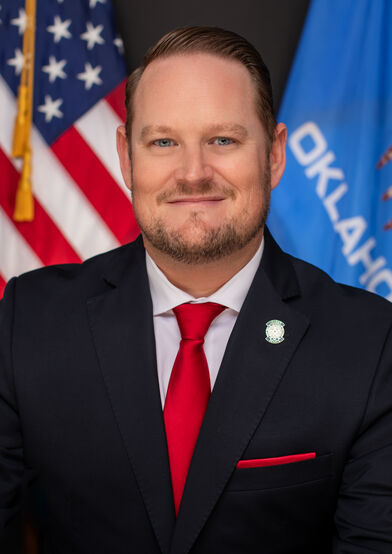
Trey Caldwell
Trey Caldwell House · District 63
R
Strong +
100% 5
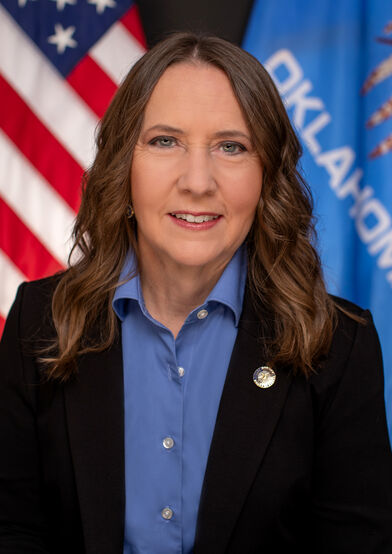
Nicole Miller
Nicole Miller House · District 82
R
Strong +
100% 4
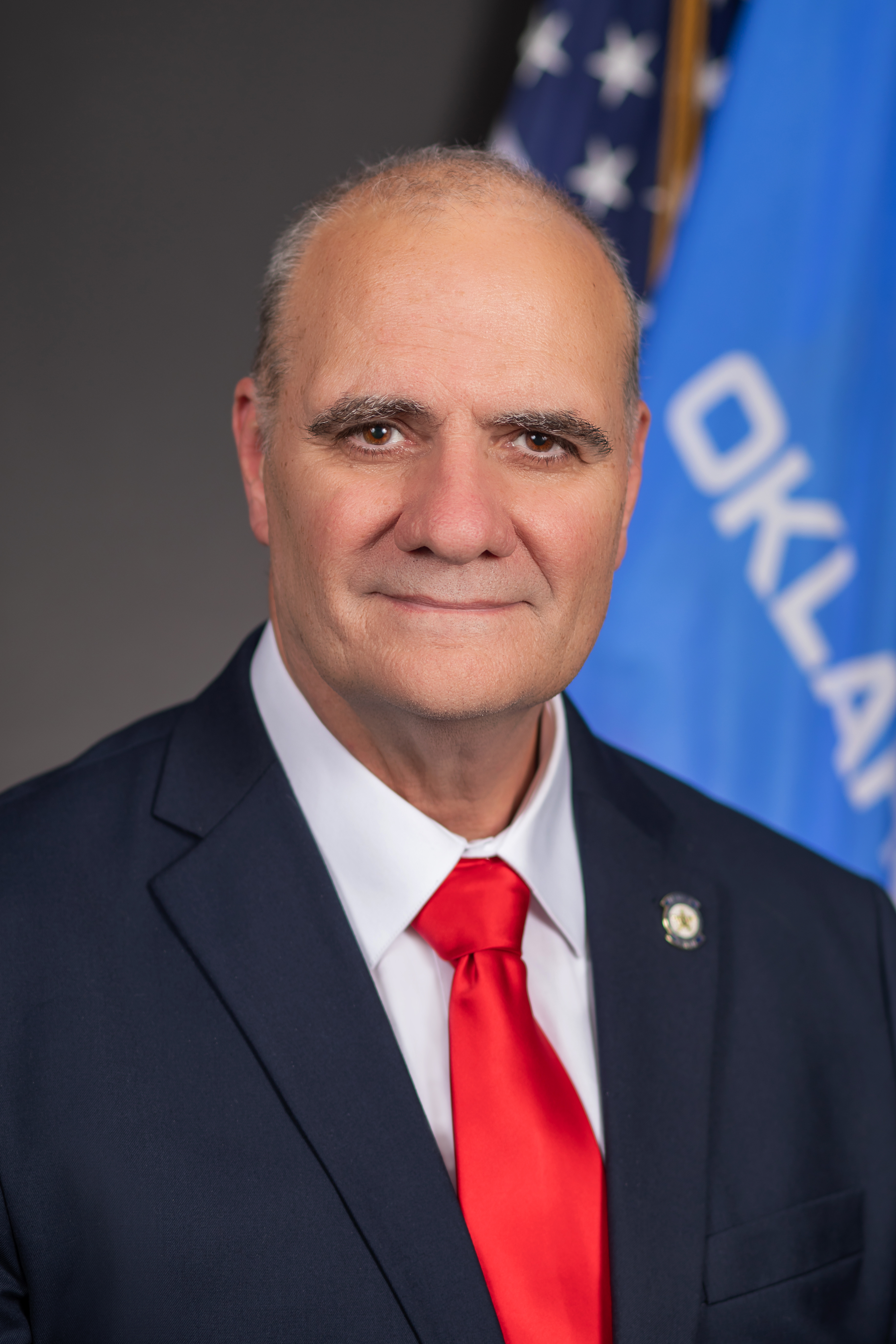
Bryan Logan
Bryan Logan Senate · District 8
R
Strong +
100% 3
Nick Archer
Nick Archer House · District 55
R
Strong +
100% 3
Eddy Dempsey
Eddy Dempsey House · District 1
R
Strong +
88% 8
Brian Guthrie
Brian Guthrie Senate · District 25
R
Strong −
17% 6
Julie McIntosh
Julie McIntosh Senate · District 3
R
Strong −
17% 6
Lisa Standridge
Lisa Standridge Senate · District 15
R
Strong −
17% 6
Dana Prieto
Dana Prieto Senate · District 34
R
Oppose
25% 8
George Burns
George Burns Senate · District 5
R
Oppose
25% 8
Showing 11–19 of 19 bills

All criminal justice bills

died · Oklahoma · House Feb 17, 2025

HB 2715: Crimes and punishments; Laser Safety Act; increasing penalties; effective date.

HB 2715, the Laser Safety Act, increases penalties for intentionally pointing lasers at law enforcement officers or aircraft. It raises fines for first-time offenses against officers to $500 (up from $100) and for aircraft to $1,000 (up from $100), with steeper penalties for repeat violations. Second offenses against officers carry up to $1,000 fines or 2 years in jail, while second aircraft offenses can result in $5,000 fines or 5 years in prison. The law excludes authorized uses like FAA research, military operations, or emergency signaling devices. It takes effect November 1, 2025.
passed · Oklahoma · House Apr 1, 2025

HB 1362: Crimes and punishments; unlawful immigration; making certain acts unlawful; penalties; emergency.

HB 1362 makes it a crime for non-U.S. citizens (defined as "aliens") to enter or remain in Oklahoma without legal authorization to be in the United States. First offenses are misdemeanors punishable by up to one year in jail or a $500 fine; second offenses or offenses committed during other crimes are felonies punishable by up to two years in prison or a $1,000 fine. The law requires convicted individuals to leave Oklahoma within 72 hours and mandates law enforcement to collect biometric data and check federal databases. It also preempts local governments from enacting conflicting immigration policies and creates an alternative to prison: if conditions are met (no prior violent crime, not charged with another felony), courts can order deportation instead of incarceration.
in committee · Oklahoma · House Feb 4, 2025

HB 1625: Crimes and punishments; modifying scope of crime to include strangulation; effective date.

HB 1625 amends Oklahoma's law defining aggravated assault on law enforcement officers to explicitly include strangulation as a criminal act. The bill expands the felony assault definition to cover any act causing asphyxia through neck pressure or closing air passages (e.g., choking), directly affecting police officers, sheriffs, deputies, highway patrol officers, corrections personnel, and state peace officers. This change makes strangulation during an assault on these officers a separate felony offense with penalties of 5 years to life in prison or fines up to $5,000. The bill takes effect November 1, 2025, and does not alter existing penalties for other assault types.
in committee · Oklahoma · Senate Feb 25, 2025

SB 734: Fees; increasing sheriff's fee for certain service. Effective date. Emergency.

SB 734 increases court fees for defendants convicted in Oklahoma criminal cases, directly affecting individuals sentenced for offenses like traffic violations, misdemeanors, and felonies. The bill adds new mandatory fees: $3 for the Child Abuse Multidisciplinary Account, $10 for courthouse security, $15 for impaired driving cases, and additional amounts for the Law Library Fund, Court Information System, Victim Services, and other state accounts. It maintains the existing sheriff’s service fee range ($50-$150 for within-county service) but clarifies how these fees are allocated. These changes apply to all criminal cases, with fees collected at sentencing and deposited into specified state funds.
in committee · Oklahoma · House Feb 4, 2025

HB 2723: Law enforcement officers; citizen review board; procedures; exemptions; legislative findings; effective date.

HB 2723 requires that when a government entity establishes a citizen review board to investigate law enforcement misconduct, at least two-thirds of the board members must be certified law enforcement officers. It also mandates that any findings, investigations, or disciplinary recommendations require a majority vote. The bill exempts certain entities, including boards that only review cases without setting discipline, the Council on Law Enforcement Education and Training (CLEET), and multijurisdictional task forces with two-thirds law enforcement members. This law takes effect November 1, 2025, and applies to all state-level law enforcement misconduct review processes.
in committee · Oklahoma · Senate Feb 4, 2025

SB 899: Protection from Domestic Abuse Act; modifying provisions related to protective orders. Effective date.

SB 899 modifies Oklahoma's Protection from Domestic Abuse Act by requiring non-family victims (e.g., neighbors or coworkers) to file a police report with law enforcement before submitting a protective order petition to court. It also allows electronic service of orders across county lines and mandates courts to consider a defendant's criminal history when issuing orders. The bill changes penalty rules for violating protective orders but maintains existing provisions allowing courts to waive fees for victims who cannot afford them. These changes directly affect individuals seeking protection from domestic abuse who are not family members or in dating relationships with the abuser.
in committee · Oklahoma · Senate Feb 4, 2025

SB 156: Crimes and punishments; modifying punishments for false reporting. Effective date.

SB 156 modifies Oklahoma's false reporting laws to adjust penalties based on the severity of the crime falsely reported. It classifies making a false report about a misdemeanor as a misdemeanor (penalties up to 90 days in jail or $500 fine), while falsely reporting a felony becomes a felony with penalties matching the actual crime. Additionally, falsely reporting a missing child to trigger an AMBER alert is now a felony punishable by up to one year in jail or a $1,000 fine. The bill directly affects individuals who make false reports to law enforcement, increasing consequences for serious false claims. It takes effect on November 1, 2025.
in committee · Oklahoma · Senate Feb 24, 2025

SB 537: Cities and towns; requiring removal of vagrant within certain distance of business upon certain determination. Effective date.

SB 537 amends Oklahoma's vagrancy law to allow business owners to request police removal of individuals deemed "vagrants" (defined as those in public/private space for illegal purposes) who are within 12 feet of their business doorway. If police confirm the person meets this definition, they must relocate the individual at least one-half mile away from the business, ensuring the new location is not within one-quarter mile of any other business. This bill directly affects businesses seeking to address perceived disruptions, individuals potentially relocated under the policy, and law enforcement officers carrying out the procedure. The law takes effect November 1, 2025.
in committee · Oklahoma · Senate Feb 4, 2025

SB 637: Appeal of criminal prosecutions; clarifying immunity provision for persons asserting certain claim; authorizing defendant to file motion to dismiss charges under certain circumstances. Effective date.

SB 637 amends Oklahoma law to clarify immunity for officers using deadly force and streamline related legal processes. It allows officers charged with unlawful deadly force to file a motion to dismiss charges before trial, and if denied, appeal directly to a county or district chief judge. The bill also updates appeal procedures so the state can challenge court rulings that find officers "not subject to criminal prosecution" under Section 732 of Title 21. This directly affects law enforcement officers facing criminal charges after using deadly force and the state’s ability to appeal pretrial dismissals.
Showing 11 to 19 of 19 bills