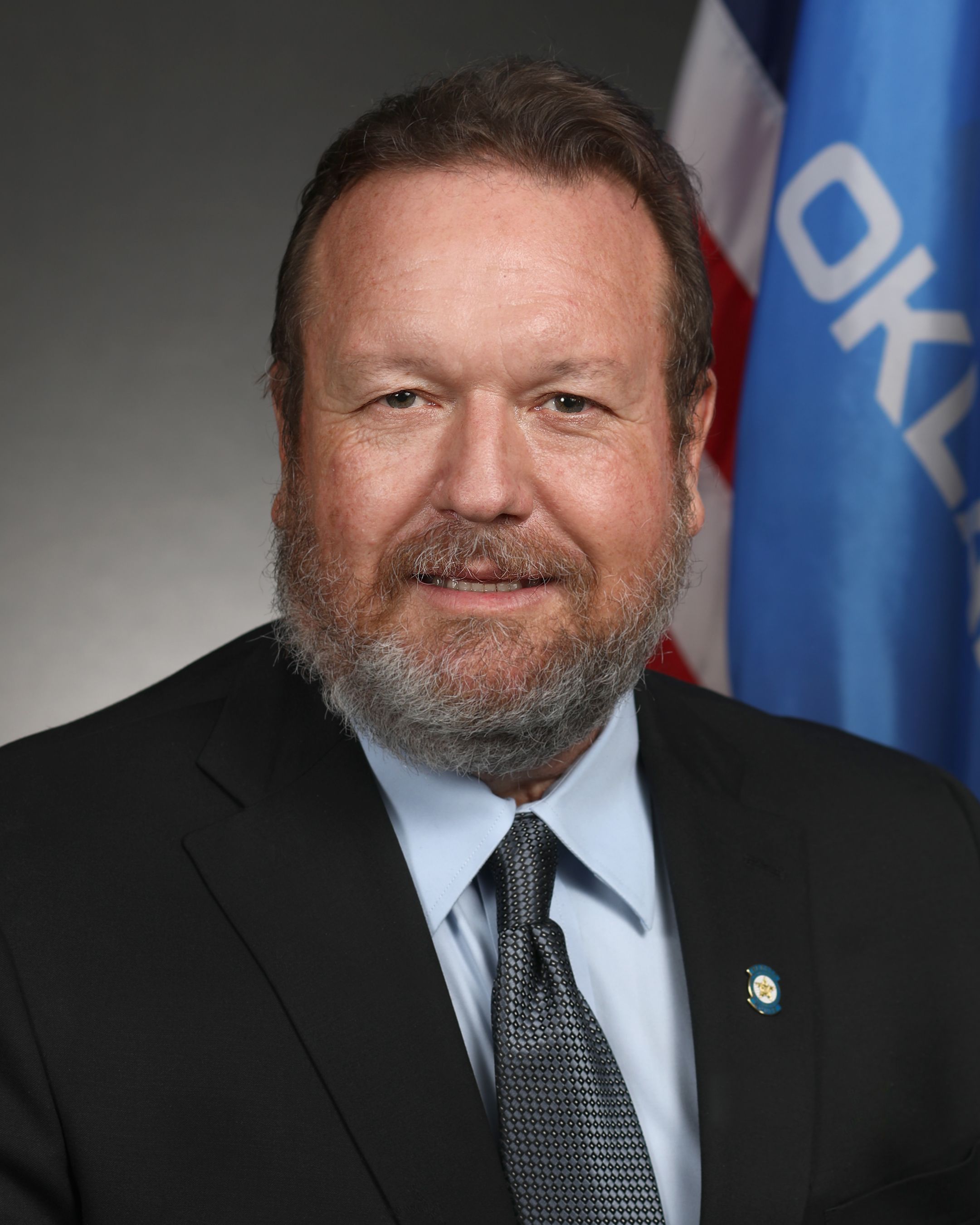
SB 237 requires the Commissioners of the Land Office to make payments to certain counties instead of collecting ad valorem taxes from them. This change directly affects counties that currently receive tax revenue from state-owned lands and the state agency responsible for managing those lands. The bill establishes a new payment mechanism to replace the existing tax collection process, ensuring counties receive their share of land-related revenue. The legislation is currently in the early stages of review by the Appropriations and Budget committee.
SB 1859 creates a Cyber Crime and Fraud Unit within Oklahoma's State Bureau of Investigation (OSBI) to enhance investigations into cyber-enabled crimes (like ransomware and digital extortion), financial fraud (including identity theft), and digital evidence handling. The bill establishes a revolving fund with a $3 million appropriation from the General Revenue Fund for fiscal 2026, allowing the unit to operate without annual budget constraints. The unit can only investigate upon requests from local law enforcement, Governor direction, or under existing statutes - explicitly stating it does not expand OSBI's jurisdiction. It will provide technical support, training to law enforcement, and coordinate with federal and tribal partners on cybercrime cases.
SB 1319 creates a dedicated "Corporation Commission Plugging Fund" to address environmental and safety issues from oil and gas operations. The fund must maintain $5 million, with additional taxes collected if it falls below this level until replenished (effective until July 2031). It establishes a new program allowing homeowners contaminated by brine or oil from *abandoned wells* (as defined by law) to apply for financial assistance from the fund without needing prior insurance claims. The Corporation Commission will determine assistance amounts and create rules to manage applications and verify contamination sources.
HB 4191 modifies Oklahoma's Small Employer Quality Jobs Act to adjust tax incentives for qualifying businesses. It establishes a "net benefit rate" (capped at 5%) calculated by subtracting state costs (like education and public services) from projected tax revenue generated by new jobs, then pays eligible small employers (under 500 employees) quarterly over seven years based on this rate. To qualify, businesses must commit to creating new jobs - ranging from 5 to 15 jobs or a percentage of current staff - within 12-36 months, depending on their city's population size. The bill requires applications through the Oklahoma Department of Commerce and ties incentives directly to verified new-hire wages.
HB 2894 amends Oklahoma's Tourism Development Act to adjust sales tax credit rules for tourism projects. It provides up to 10% tax credits for projects costing $500,000-$1 million and up to 25% for projects over $1 million, but credits cannot exceed the state's potential sales tax revenue from the project. The bill allows tourism developers in Entertainment Districts to pass credits to tenants or receive incentive payments based on tenant sales tax collections, subject to a $30 million annual cap on all inducements. Developers must verify expenditures with independent audits, and credits cannot be transferred except as specified for Entertainment District tenants.
HB 3413 requires Oklahoma state agencies to submit detailed annual budget requests by October 1 each year, including specific data on program needs, contractor details, and consultant reports. Agencies must publicly post final consultant reports on the state purchasing website and provide information on shared financial services costs to identify potential savings. The bill mandates standardized reporting formats covering program outcomes, staffing, revenue estimates, and capital lease debt for the current and next two fiscal years. It directly affects all state agencies (excluding higher education institutions) by increasing transparency in budget planning and spending oversight. The law takes effect November 1, 2026.
HB 3661 expands Oklahoma's sales tax exemptions for agricultural products and inputs. It specifically exempts sales of farm-produced goods (like produce and dairy from owner-operated farms), livestock, feed, agricultural fertilizer, machinery, and supplies directly used in farming or ranching operations. The bill requires purchasers to provide written certification confirming items will be used in agricultural production, with false certifications subject to penalties. These exemptions apply only to items used for commercial farming or ranching, not personal gardens or pet-related activities. The changes aim to reduce tax burdens for Oklahoma agricultural producers and their supply chain.
HB 3986 modernizes Oklahoma's gross production tax for oil, gas, and mineral production. It sets a 7% tax rate on most oil and gas production (increasing from previous rates), with a temporary 5% rate for wells spudded before the law's effective date for 36 months. The bill creates tax exemptions for 5 years for secondary/tertiary recovery projects (approved after July 2022) and offers a 50% tax reduction for 36 months on production from orphaned wells (requiring a $25,000 bond per well). Producers of oil/gas using recycled water for well completion also get a 24-month exemption proportional to recycled water use. Refunds for exempt production are capped annually at $15 million for recovery projects and $10 million for recycled water projects.
HB 4408 requires the Oklahoma Department of Corrections and the Administrator of the Courts to submit annual data by July 31st on offenders convicted only of crimes reclassified under State Question 780 (which reduced penalties for certain low-level offenses). This data includes unique offenders, days served, and sentence lengths for offenses now classified as misdemeanors or with adjusted dollar thresholds. The Legislative Office of Fiscal Transparency must then calculate the state's annual savings from reduced incarceration costs within 30 days, using actual data or best estimates if needed. The final calculation is binding and cannot be revised later, with the bill taking effect November 1, 2026.
HB 2988 creates an income tax credit for Oklahoma landowners who implement specific conservation practices, including removing harmful woody species, improving soil health, or enhancing water efficiency on agricultural land. It directly affects farmers and ranchers who actively practice these conservation methods on their property, allowing them to claim credits of $5-$500 per acre (up to $150,000-$200,000 annually) based on the number of qualifying practices used. The Oklahoma Conservation Commission issues tax credit certificates verifying eligibility, while the program limits annual credits to $3 million total and requires applicants to not have received full cost coverage from other sources. The credit applies to income tax returns for 2027-2030, with certificates processed in order of submission until the $3 million cap is reached.