

Maddy summaryThis bill renames "Apostle Islands National Lakeshore" as "Apostle Islands National Park and Preserve," creating two distinct areas within the same unit. The Park (with stricter rules) prohibits hunting/trapping except under tribal agreements, while the Preserve maintains existing hunting, fishing, and trapping rules from before the bill. Boundaries are defined by a specific map, and the National Park Service must add interpretive signage about regional history and tribal connections at visitor centers. Tribal treaty rights to hunt, fish, and gather remain fully protected under this law.
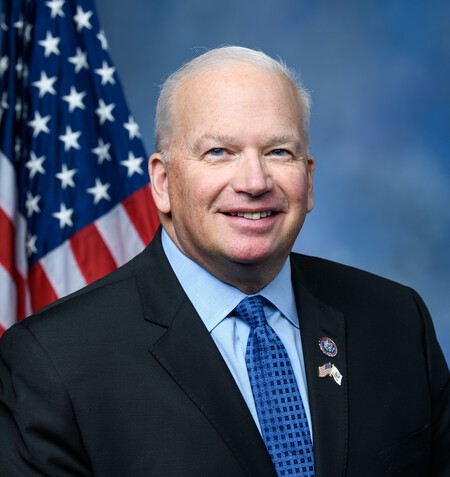
Rep. Scott Fitzgerald
Sponsored bills
Maddy summaryThis bill directs the Secretary of Transportation to update the federal definition of "motorcycle" in transportation regulations within 120 days of enactment. The new definition specifies that a motorcycle must be a three-wheeled vehicle designed to be ridden while sitting astride, steered by handlebars, and capable of exceeding 30 mph. It directly affects motorcycle manufacturers, regulators, and riders by aligning federal safety standards with this updated definition in the Code of Federal Regulations. The change ensures regulatory consistency for vehicles meeting these specific design and performance criteria.
Maddy summaryThis bill prevents state or local governments from banning or restricting energy connections (like installation, modification, or access) based on the type or source of energy, such as electricity, natural gas, or renewable fuels. It directly affects consumers choosing energy providers and energy companies seeking to offer services. The key provision prohibits local laws, regulations, or policies that limit energy services sold in interstate commerce, covering all energy types listed in the bill’s definitions. It does not create new programs but limits regulatory authority at the state or local level. The law aims to ensure open access to diverse energy sources without source-based restrictions.
Maddy summaryThis bill creates a tax exclusion for certain disaster mitigation payments received by property owners. It allows individuals to exclude from gross income funds paid by state programs (or approved entities) to make improvements that reduce damage from windstorms, earthquakes, or wildfires. The exclusion applies to payments made for specific property upgrades like storm shutters or fire-resistant roofing. The change takes effect for 2021+ tax years and includes a retroactive option for taxpayers to amend prior returns. It directly affects homeowners participating in qualifying state disaster resilience programs.
Maddy summaryThe Make Elections Great Again Act (HR 7300) would require voters to present photo identification to cast ballots in person or by mail for federal elections, with limited exceptions for religious objections or military voters. It would establish new requirements for proving U.S. citizenship during voter registration, including documentary proof of citizenship and proof of state residency. The bill would change mail-in ballot procedures by requiring voters to request mail-in ballots (rather than universal mail-in voting), implementing barcode tracking for mail-in ballots, and setting strict deadlines for ballot receipt. These provisions would apply to all states for federal elections held in 2027 or later, affecting how voters register, vote in person, and submit mail-in ballots for federal office elections.
Maddy summaryThis bill exempts certain less-than-lethal projectile devices from federal sales taxes and National Firearms Act restrictions. It directly affects manufacturers, importers, and producers of these devices, which are defined as non-lethal tools (like rubber bullets or beanbag rounds) designed not to cause serious injury and unable to be easily converted to use standard firearm ammunition. Key mechanisms include a 90-day classification process for manufacturers seeking exemption, an annual public list of approved devices, and annual congressional reports on devices excluded from the exemption. The policy change applies to devices meeting specific safety criteria, such as projectile velocity limits and design features preventing misuse as conventional weapons.
Maddy summaryThis bill removes the current $250,000 (single filers) and $500,000 (married couples) limit on tax-free profit when selling a primary residence. It directly affects homeowners who sell their homes by eliminating these dollar caps under Internal Revenue Code Section 121. The key provision amends the tax code to allow full exclusion of capital gains from principal residence sales without the previous monetary limits. The change would apply to home sales occurring after the bill's enactment date.
Maddy summaryThe McCarran-Ferguson Restoration Act eliminates the Federal Insurance Office and creates a "United States Insurance Representative" within the Treasury Department to coordinate federal insurance policy and represent the U.S. internationally. This position would determine when state insurance regulations might be preempted by international agreements, while maintaining state authority over most insurance matters including health, long-term care, and crop insurance. The bill requires the Representative to consult with states, publish notices, and allow a 30-day period before any preemption takes effect. This legislation aims to streamline international insurance regulatory coordination while preserving state-level oversight of insurance regulation.
Maddy summaryHR 7015, the "Protecting TPLF From Abuse Act," requires transparency in civil lawsuits involving third-party litigation funders (TPLFs). It mandates that parties disclose to the court and other parties the identity of any third party funding a case (e.g., investors who fund lawsuits in exchange for a share of winnings), along with their funding agreements, within 10 days of signing the agreement or by the deadline for standard case disclosures. Exceptions apply to simple loans, reasonable interest rates, attorney fee reimbursements, or grants. The bill aims to prevent hidden financial interests from influencing litigation by ensuring courts and opposing parties can review funding arrangements, while protecting certain sensitive information like donor lists unless directly tied to the funding agreement. It applies to all civil cases filed or pending after enactment.
Maddy summaryHR 4837, the Written Informed Consent Act, requires the Veterans Health Administration (VHA) to update its existing directive on informed consent to include additional medication classes. Specifically, it mandates that written informed consent must be obtained before prescribing antipsychotics, stimulants, antidepressants, anti-anxiety medications (anxiolytics), and narcotics (opioids) to veterans. This expansion directly affects veterans receiving these medications through the VA system, ensuring they are informed about specific treatment risks and alternatives. The key mechanism is amending VHA Directive 1005 to broaden its application beyond long-term opioid therapy to cover the newly listed medication types.