

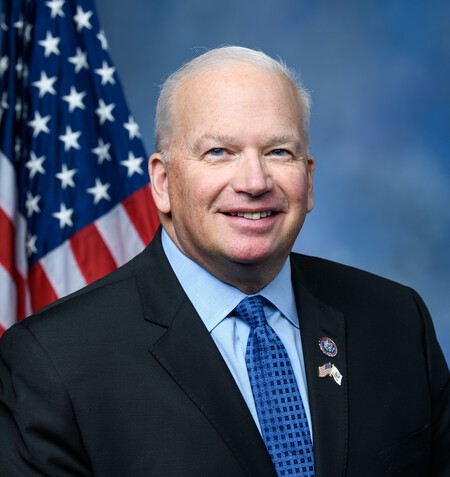
Photo of Scott Fitzgerald
R United States House · District 5 · Wisconsin On the 2026 ballot

Rep. Scott Fitzgerald

Compare
Total votes
2,818
all sessions
Attendance
99%
29 missed
Near the chamber average
With party
95%
of cast votes
Near the chamber average
Bipartisan score
3%
crosses aisle rarely
Near the chamber average
Sponsored
622
bills & resolutions
Near the chamber average
Committees
6
assignments
622 bills and resolutions

Sponsored bills

Total
622
Primary
73
Co-sponsor
549
This page
622
matching current filters
Co-sponsor HR 556
Passed · Ohio House · Co-sponsor
Protecting Access for Hunters and Anglers Act

Maddy summaryHR 556, the Protecting Access for Hunters and Anglers Act, prevents federal agencies from banning lead ammunition or tackle on public lands and waters managed for hunting or fishing. It directly affects hunters and anglers using federal lands (like national wildlife refuges, public forests, and BLM lands) by blocking nationwide restrictions on lead products. The bill allows limited exceptions only for specific locations where wildlife decline is directly linked to lead use, and the restriction must align with state law or get approval from the state wildlife agency. This changes how federal land managers can regulate lead, requiring state coordination for any local restrictions.

Passed Mar 19, 2026 1 co-sponsor
Co-sponsor HR 5688
In committee · Ohio House · Co-sponsor
Non-Domiciled CDL Integrity Act

Maddy summaryHR 5688, the Non-Domiciled CDL Integrity Act, changes rules for issuing commercial driver's licenses (CDLs) to people who don't live in the state where the license is issued. It allows states to issue CDLs to foreign nationals with lawful U.S. immigration status and work-related visas (valid for up to one year or until their stay ends), requiring states to verify status before issuing and keep records for two years. For residents of U.S. territories like Puerto Rico, it requires proof of U.S. citizenship or permanent residency before issuing CDLs, with similar verification and record-keeping rules. The bill directly affects commercial drivers from foreign countries and U.S. territories seeking CDLs in states where they are not residents.

In committee Mar 18, 2026 1 co-sponsor
Co-sponsor HR 1422
Passed · Ohio House · Co-sponsor
Enhanced Iran Sanctions Act of 2025

Enhanced Iran Sanctions Act of 2025 This bill imposes sanctions on certain foreign persons (individuals and entities) that are involved in Iran's petroleum sector as well as certain associated persons. The bill also requires or authorizes actions to facilitate the enforcement of sanctions on Iran. Specifically, the bill requires the President to impose visa- and property-blocking sanctions on any foreign person that, after the bill's enactment, knowingly engages in any transaction related to the processing, export, or sale of oil, condensates, gas, liquefied natural gas, or other petrochemical products in whole or in part from Iran. The President must also impose sanctions on certain foreign persons associated with a sanctioned individual or entity. For example, the President must sanction the subsidiaries and corporate officers of a sanctioned business. The bill provides certain exceptions to these sanctions, including specifying that sanctions do not apply to the importation of goods or to conducting or facilitating transactions for humanitarian assistance. The Department of State must establish an interagency working group that shall seek to establish a multilateral contact group to coordinate international efforts to enforce sanctions on Iran. The bill expands the State Department rewards program to authorize a reward payment to any individual who furnishes information leading to the identification of a person (1) subject to sanctions under this bill, or (2) that has attempted or is attempting to evade sanctions under this bill.

Passed Mar 17, 2026 1 co-sponsor
Co-sponsor HR 7866
In committee · Ohio House · Co-sponsor
American Lending Fairness Act of 2026

Maddy summaryThis bill, the "American Lending Fairness Act of 2026," makes changes to federal laws governing interest rates charged by financial institutions, primarily impacting how state-chartered banks and credit unions operate across state lines. It repeals a current federal law (Section 525 of the Depository Institutions Deregulation and Monetary Control Act of 1980) that has allowed states

In committee Mar 9, 2026 1 co-sponsor
Primary HR 7732
In committee · Ohio House · Lead sponsor
Promoting Innovation in Blockchain Development Act

Maddy summaryThis bill, known as the Promoting Innovation in Blockchain Development Act, modifies federal law to include digital assets like cryptocurrencies within the existing legal framework for money laundering. It directly affects individuals and organizations involved in blockchain technology by expanding the definition of what constitutes currency under the Racketeer Influenced and Corrupt Organizations Act. The key provision adds language recognizing that digital value substitutes for traditional currency, ensuring these assets are covered by current anti-money laundering regulations. This change aims to clarify legal protections and compliance requirements for the growing blockchain industry without altering other parts of the law.

In committee Feb 26, 2026 0 co-sponsors
Co-sponsor HR 7681
In committee · Ohio House · Co-sponsor
HSA’s For All Act

Maddy summaryHR 7681, the "HSA’s For All Act," would expand eligibility for Health Savings Accounts (HSAs) by allowing individuals enrolled in any qualified health plan - not just high-deductible plans - to contribute to an HSA. It directly affects people covered by Affordable Care Act marketplace plans or employer group health plans, removing the current requirement for a high-deductible health plan (HDHP) to qualify. The bill amends tax code definitions to replace "high-deductible health plan" with "covered health plan" throughout relevant sections, simplifying eligibility rules. This change would take effect for tax years beginning after December 31, 2026.

In committee Feb 25, 2026 1 co-sponsor
Co-sponsor HR 7678
In committee · Ohio House · Co-sponsor
Gun Owner Registration Information Protection Act

Maddy summaryHR 7678, the Gun Owner Registration Information Protection Act, prohibits federal funding for state or local databases that track lawfully owned firearms or their owners. The bill allows federal funding for databases recording lost or stolen firearms but bans it for databases listing legal gun ownership. This means states cannot use federal money to create or maintain systems that compile information about legally owned guns. The bill directly affects state and local governments that rely on federal funds for firearm ownership databases.

In committee Feb 25, 2026 1 co-sponsor
Primary HR 6570
In committee · Ohio House · Lead sponsor
Merger Agreement Approvals Clarity and Predictability Act

Maddy summaryThis bill requires the Government Accountability Office (GAO) to study how federal banking regulators (like the Federal Reserve and FDIC) use conditions and commitments in approving bank mergers. The study will examine specific metrics and whether these conditions align with legal requirements, avoiding external influences. It mandates a report to Congress within six months of the bill's enactment. The bill directly affects bank merger applications and the regulatory process for financial institutions.

In committee Feb 25, 2026 0 co-sponsors
Primary HR 2189
Passed · Ohio House · Lead sponsor
To modernize Federal firearms laws to account for advancements in technology and less-than-lethal weapons, and for other purposes.

Law-Enforcement Innovate to De-Escalate Act This bill removes less-than-lethal projectile devices (e.g., certain TASERs) from regulation under the Gun Control Act. The term less-than-lethal projectile device means a device that (1) is not designed or intended to expel (and may not be readily converted to discharge) commonly used ammunition or projectiles exceeding a velocity of 500 feet per second; (2) is designed and intended to be used in a manner not likely to cause death or serious bodily injury; and (3) does not accept (and cannot be readily modified to accept) an ammunition feeding device. The bill also requires the Bureau of Alcohol, Tobacco, Firearms and Explosives to determine whether a device satisfies the definition of a less-than-lethal projectile device within 90 days of a request.

Passed Feb 24, 2026 0 co-sponsors
Showing 51 to 60 of 622 bills
Previous 1 5 6 7 63 Next