

Maddy summaryThis bill prohibits the use of federal funds for military force in or against Cuba from its enactment until December 31, 2026, unless Congress declares war or passes specific statutory authorization. The restriction applies to all government funds and prevents military actions without congressional approval under the War Powers Resolution. An exception allows military force consistent with the War Powers Resolution's provisions for urgent situations requiring immediate action. The legislation directly affects the U.S. Department of Defense and federal budget processes by limiting how funds can be used for military operations targeting Cuba.
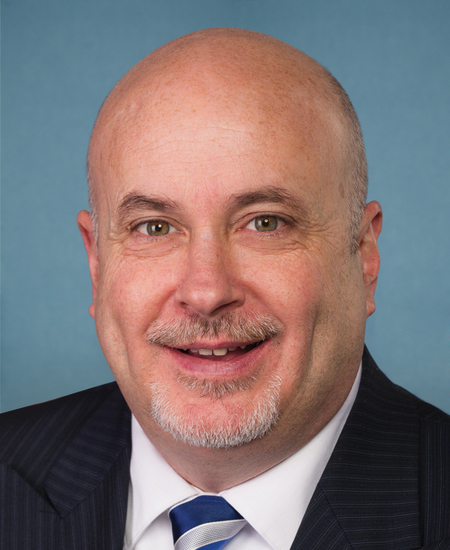
Rep. Mark Pocan
Sponsored bills
Maddy summaryHR 3420, the Words Matter Act of 2025, updates federal law to replace the terms "mentally retarded" and "mental retardation" with "intellectual disability" across numerous statutes. It amends over 20 provisions in laws governing healthcare (like the Social Security Act and Indian Health Care Improvement Act), disability services, criminal justice, and federal programs to use more respectful and current terminology. The bill specifically targets definitions in areas such as medical care for families, nursing home regulations, legal sentencing, and grant programs, ensuring consistent language for individuals with intellectual disabilities. The legislation explicitly states this terminology change is purely linguistic and does not alter eligibility, coverage, or rights for affected individuals.
Love Lives On Act of 2025 This bill extends entitlement for various benefit programs and services for surviving spouses of deceased members of the Armed Forces or veterans. The bill provides that the remarriage of a surviving spouse must not bar the furnishing of dependency and indemnity compensation or special pension benefits to such spouse. Additionally, the Department of Defense may not terminate the payment of an annuity for a surviving spouse under the Survivor Benefit Plan solely because the surviving spouse remarries. The bill also expands the definition of a dependent under TRICARE to include a remarried widow or widower whose subsequent marriage has ended due to death, divorce, or annulment.
Maddy summaryHR 7251, the "Prohibit Partisan Park Passes Act," amends federal law to prevent the use of living political figures on National Park Service and federal recreational lands passes. The bill specifically prohibits including images of current or former elected officials or other living political figures on these passes. This change directly affects the National Park Service, which issues the passes, and ensures the design remains neutral. The law modifies existing regulations under the Federal Lands Recreation Enhancement Act to remove partisan imagery from these commonly used visitor passes.
Maddy summaryThis bill expands federal labor protections to incarcerated workers by explicitly including them under the Fair Labor Standards Act, regardless of whether they work in publicly or privately operated correctional facilities. It defines these workers as individuals performing labor within prison programs, work release initiatives, or facility operations, and clarifies that they are employed by either the public agency or the private contractor running the facility. A key provision allows employers to deduct the cost of board, lodging, and certain court-imposed fees from an incarcerated worker's wages without counting these deductions against minimum wage requirements. The legislation also specifies which fees qualify for deduction, such as court surcharges and filing costs, while explicitly excluding payments for child support, victim compensation, civil judgments, and criminal fines.
Maddy summaryThe Energy Bills Relief Act aims to lower household energy costs and accelerate the development of low-cost, clean energy by modifying federal tax credits, expanding weatherization programs, and streamlining permitting processes. Key provisions include restoring tax incentives for renewable energy projects, increasing funding for low-income heating assistance, and requiring federal agencies to treat wind, solar, and storage projects with the same procedural fairness as oil and gas projects. The bill also establishes new incentives for upgrading the electricity grid, such as tax credits for transmission lines and grants for wildfire prevention measures, while creating mechanisms to ensure utilities serve public interests and protect consumers from price volatility.
Maddy summaryThis bill requires the Department of Veterans Affairs (VA) to cover abortion care, counseling, and related medication as part of standard hospital and medical services for eligible veterans and certain dependents. It amends VA healthcare law to explicitly include these services under existing coverage for veterans qualifying under section 1703 and dependents eligible under section 1781(a). The policy directly affects veterans and their dependents enrolled in VA healthcare programs by expanding covered benefits to include abortion-related care. This is a concrete policy change to VA healthcare benefits, not a broader abortion law.
Governing Unaccredited Representatives Defrauding VA Benefits Act or the GUARD VA Benefits Act This bill imposes fines on individuals for soliciting, contracting for, charging, or receiving any unauthorized fee or compensation with respect to the preparation, presentation, or prosecution of any claim for Department of Veterans Affairs benefits. The attempted commission of such offenses is also punishable by fine.
Maddy summaryThis bill establishes a new excise tax on crude oil extracted or imported by large oil companies and uses the revenue to provide rebates to eligible consumers. The tax would be imposed on companies that extract or import over 300,000 barrels of crude oil per day, at a rate of 50% of the difference between the current Brent crude oil price and a 2025 baseline price, adjusted for inflation. All revenue from this tax would be deposited into a new "Protect Consumers from Gas Hikes Fund." This fund would then be used to provide refundable tax credits, or rebates, to eligible individuals, with the rebate amount determined by the Secretary based on fund revenues and the number of eligible individuals. These rebates would be phased out for individuals with adjusted gross incomes exceeding certain thresholds, such as $150,000 for joint filers.
Maddy summaryThis bill, known as the SAFE Pathways Act, requires federal agencies to consider invasive species when designing fishways for dams and other water structures. It directly affects the Secretaries of Commerce and the Interior, who would need to consult with state officials to address potential invasive species threats during fishway planning. The law mandates that these federal officials evaluate how invasive species could impact aquatic ecosystems before approving fishway designs. This change aims to integrate invasive species prevention into existing water management infrastructure projects.