

Maddy summaryHR 3868, the Enhanced Background Checks Act of 2025, modifies federal firearm background check procedures to address delays. It requires federal firearms licensees to wait 10 business days after a background check query if the system doesn’t immediately flag a transfer, unless the buyer submits an electronic petition confirming they aren’t prohibited from owning firearms. The petition process includes a 10-day response deadline from the Attorney General, with licensees allowed to proceed if the system remains silent after 10 days. The bill also mandates detailed annual reports from the FBI on petition delays and GAO reports on implementation, focusing on how these changes affect firearm transfers to prohibited individuals.
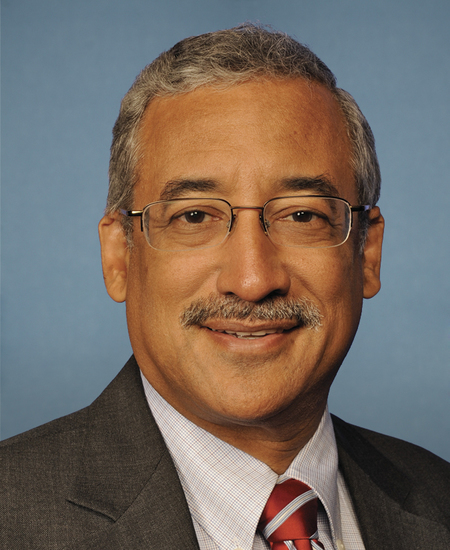
Rep. Robert C. "Bobby" Scott
Sponsored bills
Maddy summaryHR 3758, the Workers’ Disability Benefits Parity Act of 2025, requires disability benefit plans (like those provided by employers or insurers) to provide equal treatment for claims related to mental health conditions or substance use disorders as they do for physical health conditions. It prohibits plans from imposing stricter limitations - such as shorter benefit durations - on mental health/substance use disorder claims compared to physical health claims. The bill also mandates that any physical health condition resulting from a mental health or substance use disorder must be considered part of the original disability. Enforcement includes civil penalties for noncompliance, with the law taking effect 18 months after enactment for most plans.
Maddy summaryThis resolution (HRES 457) is a symbolic measure expressing congressional support for designating June 6, 2025, as "National Gun Violence Awareness Day" and June 2025 as "National Gun Violence Awareness Month." It does not create new laws or policies but encourages public awareness through specific actions: wearing orange on June 6, focusing on gun safety during summer months, and holding community discussions. The resolution references statistics on gun violence deaths and honors Hadiya Pendleton, a teen victim killed in 2013. It directly affects the public by calling for voluntary observance and community engagement, not government mandates.
Maddy summaryThis non-binding resolution (HRES 456) expresses congressional support for designating May 2025 as "Progressive Supranuclear Palsy Awareness Month." It directly affects individuals living with progressive supranuclear palsy (PSP), a rare neurodegenerative brain disorder impacting movement, cognition, and daily functioning, along with their families and caregivers. The resolution aims to raise public awareness, encourage research funding, and support organizations working to improve care and find treatments for PSP. It does not create new laws or funding but formally recognizes the need for greater attention to this condition.
Maddy summaryThis bill reorganizes collective bargaining rules for Veterans Health Administration (VHA) employees by removing existing subsections (b), (c), and (d) from Section 7422 of Title 38 and redesignating the current subsection (e) as (b). It directly affects VA health care employees by altering the structure of their collective bargaining framework. The bill explicitly states it does not change the Secretary of Veterans Affairs' existing authorities over incentive pay or expedited hiring under Section 706 of Title 38. The change is purely procedural, focusing on the internal organization of bargaining rules without introducing new employee benefits or obligations.
Maddy summaryHR 3606, the Equity and Inclusion Enforcement Act of 2025, restores private lawsuits to challenge policies causing unintentional discrimination in federally funded education programs. It allows individuals to sue when schools or programs violate existing Title VI regulations (which prohibit discrimination based on race, color, or national origin) as if the violation were intentional. The bill requires education programs receiving federal funds to name a staff member to handle compliance and notify students/employees of this contact. It also creates a new Department of Education position, the Special Assistant for Equity and Inclusion, to coordinate compliance with Title VI and inform the public about their rights under the law. This directly affects schools and educational institutions receiving federal funding.
Maddy summaryThe Strength in Diversity Act of 2025 provides federal grants to schools and districts with racial or socioeconomic isolation to develop and implement strategies increasing diversity. It authorizes planning grants (up to 2 years) for assessments and community engagement, and implementation grants (up to 3 years) for activities like transportation plans, teacher recruitment, innovative school assignments, and equitable enrollment systems. Recipients must track measurable progress on academic outcomes (e.g., graduation rates, achievement gaps) and diversity metrics, including reducing isolation in covered schools (public K-12 schools and publicly-funded early childhood programs). The bill requires robust community input, data-driven evaluation, and plans for sustainability beyond the grant period, with funding authorized for fiscal years 2025-2029.
Maddy summaryThis resolution (HRES 435) expresses the House of Representatives' sorrow over the death of former Virginia Representative Gerald E. Connolly. It directs the Clerk to notify the Senate and Connolly's family of the House's condolences and calls for the House to adjourn immediately as a mark of respect. The resolution has no policy provisions or direct impact on constituents, laws, or programs - it is a ceremonial tribute to honor a deceased member. (HRES 435, 119th Congress, 2025)
Maddy summaryThis bill extends existing federal reentry programs under the Second Chance Act through 2030, continuing funding for services supporting people returning to communities after incarceration. It specifically maintains grants for state/local reentry projects (including substance use treatment, housing, and peer recovery services), family-based substance abuse treatment, prison/jail educational programs, career training, and community mentoring by nonprofits. The bill updates program timelines from their previous 2019-2023 authorization period to 2026-2030 without altering the core services provided. It directly affects state/local agencies, prisons, and nonprofit organizations administering these reentry programs. The legislation focuses solely on extending current funding mechanisms, not changing program requirements or creating new initiatives.
Maddy summaryThis bill changes the legal standard for proving discrimination in employment cases. It amends the Age Discrimination in Employment Act (ADEA), Title VII of the Civil Rights Act, and the Americans with Disabilities Act to require that a plaintiff only show age, race, color, religion, sex, national origin, or disability was a "motivating factor" for an employment decision - not that it was the sole cause - to establish a violation. This applies to all workers filing discrimination claims under these laws, including federal employees. The bill also limits remedies: if an employer proves they would have taken the same action regardless of the protected factor, courts can only grant limited relief like attorney fees, not damages or reinstatement.