

Maddy summaryThis resolution honors the late Senator Lindsey Graham and condemns Omar Suleiman for publicly celebrating Graham's death. It also acknowledges that House Democrats invited Suleiman to serve as a guest chaplain in 2019 and highlights his past statements and affiliations. The measure expresses support for the House Republicans' Sharia-Free America Caucus, which aims to protect constitutional principles from what it describes as an ideology incompatible with American life.
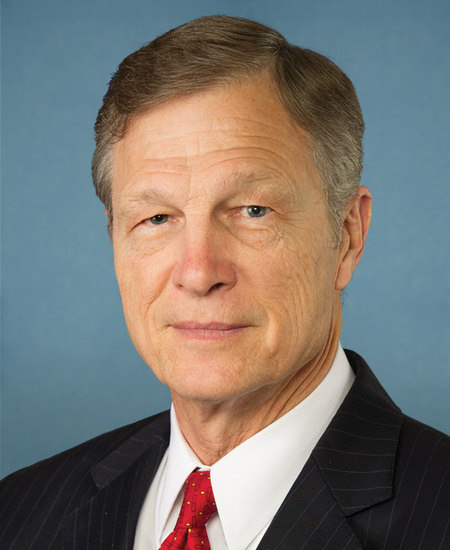
Rep. Brian Babin
Sponsored bills
Maddy summaryThe Patients First Act of 2026 modifies how Medicare reimburses physicians and primary care providers to improve access and stabilize payments. It establishes a new hybrid payment model for primary care services from 2027 to 2031, which pays a monthly fee per patient to eligible independent practices while covering specific services like care management and telehealth without cost-sharing for patients. The bill also updates the formula for calculating reimbursement rates to account for high inflation years and requires more frequent updates to the costs used in calculating payments. Additionally, the legislation reforms the performance-based payment system by adding care efficiency measures, creating a task force to recommend new quality metrics, and adjusting penalties for providers who fail to report on certain data.
Maddy summaryHR 7651, the Chloe Cole Act of 2026, prohibits healthcare providers from performing certain medical interventions on minors under 18 aimed at altering physical development to align with gender identity. These "covered interventions" include puberty blockers, hormone treatments, and specific surgeries, but exclude medically necessary care for conditions like disorders of sexual development or traumatic injuries. The bill creates a federal civil lawsuit right for affected minors or their parents against providers who perform such interventions, allowing claims for damages including emotional distress and punitive awards, with strict liability for providers after the law's enactment. It explicitly allows exceptions for legitimate medical treatments and requires providers to prove such exceptions apply if challenged.
Maddy summaryThis bill requires Medicare Advantage plans to implement electronic pre-approval systems for medical services by 2028 and meet transparency reporting standards starting in 2027. Plans must publicly report data on approval/denial rates, appeal outcomes, response times, and technology use for pre-approval requests, including details on how denials relate to clinical criteria. It establishes a 24-hour response timeframe for certain requests and mandates annual reviews of pre-approval requirements based on data and input from seniors and providers. The law directly affects Medicare Advantage plans, seniors enrolled in these plans, and healthcare providers who submit pre-approval requests. These changes aim to make the pre-approval process faster, more transparent, and more accountable for seniors seeking covered medical services.
Protecting Privacy in Purchases Act This bill prohibits payment card networks from using merchant codes that distinguish firearms retailers from general-merchandise retailers or sporting-goods retailers. The Department of Justice must enforce this bill and report annually on the resulting investigations and cases.
Maddy summaryThe Jewish American Security Act aims to combat antisemitism by strengthening protections for Jewish students, securing Jewish communities, and increasing transparency regarding online hate speech. For educational institutions receiving federal funds, the bill mandates the creation of specific coordinators to handle discrimination complaints, requires annual training on handling antisemitism, and establishes a new federal clearinghouse to share best practices for campus safety. To support physical security, the legislation expands grant funding for nonprofit organizations and directs the Attorney General to provide resources for law enforcement agencies protecting houses of worship. Additionally, the act requires major online platforms with over 50 million monthly users to submit detailed reports to the Federal Trade Commission on how they detect, remove, and moderate antisemitic content.
Maddy summaryThis bill authorizes the posthumous presentation of a Congressional Gold Medal to Bonnie Eloise Rush Milam, a music educator who founded the Melody Maids, an all-girls singing group that supported U.S. military morale during World War II and subsequent conflicts. The legislation directs the Speaker of the House and the President pro tempore of the Senate to arrange for the medal's presentation on behalf of Congress, while the Secretary of the Treasury is tasked with striking the gold medal with appropriate designs. Following the ceremony, the original medal will be given to the Tyrrell Historical Library in Beaumont, Texas, for display and research, and the Secretary may also produce and sell duplicate bronze medals to cover production costs.
Maddy summaryThis bill authorizes Congress to award a Congressional Gold Medal to individuals who fought for or with the United States in the Pacific theater during World War II and subsequently became prisoners of war. The legislation specifically recognizes the service and sacrifice of those who defended locations such as Bataan and Corregidor, including Filipino soldiers and civilians who served alongside U.S. forces. To implement this award, the Speaker of the House and the President pro tempore of the Senate will arrange for the creation of a gold medal by the Secretary of the Treasury, which will be presented to the Smithsonian Institution for display. The act also allows for the production of duplicate bronze medals to cover the costs of the original gold medals, with any proceeds from these sales deposited into the United States Mint Public Enterprise Fund.
Maddy summaryThe AI Security and Innovation Act establishes a new Center for AI Security and Innovation within the National Institute of Standards and Technology to assess risks and improve the security of artificial intelligence systems. This center will evaluate threats such as data leaks and model tampering, develop voluntary safety standards, and conduct research on advanced AI capabilities developed by both U.S. and foreign entities. The bill defines key terms like "artificial intelligence model" and "covered frontier system," and authorizes $20 million annually from 2027 to 2032 to fund the center's activities. While the center director will consult with various federal agencies and AI developers, the legislation explicitly prohibits the center from having regulatory or enforcement powers. The center is authorized to operate for five years before its provisions expire.
Maddy summaryThe AI-Ready Federal Data Guidelines Act directs the National Institute of Standards and Technology to create voluntary guidelines helping federal agencies prepare data for training artificial intelligence models. These guidelines will cover data formatting, labeling, quality checks, documentation, and maintenance to ensure datasets are usable by AI systems. The bill also allows for short-term pilot programs in specific sectors like biotechnology to test these guidelines and assess their effectiveness. Additionally, the NIST Director must provide regular briefings to Congress on the progress of implementing these standards.