

Maddy summaryThis resolution designates November 29, 2025, as "Small Business Saturday" to symbolically recognize the importance of locally owned small businesses. It supports public awareness campaigns encouraging consumers to shop locally and highlights small businesses' economic contributions, such as employing nearly half of private-sector workers and generating significant exports. The resolution has no legal effect but aims to promote community support for small businesses through public recognition. It directly affects public awareness efforts, not specific businesses or policies.
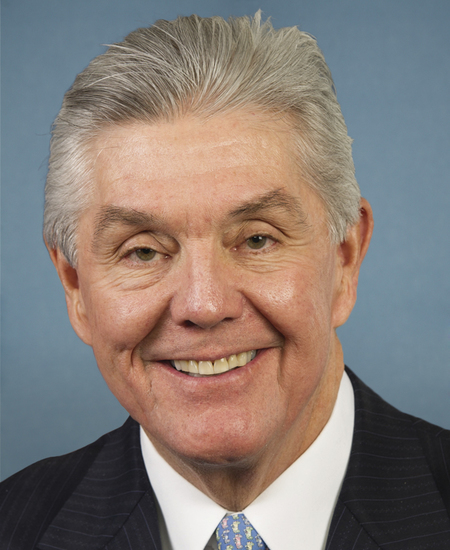
Rep. Roger Williams
Sponsored bills
Maddy summaryThis bill amends Section 2119 of Title 18 (carjacking statute) to clarify the legal definition of the offense. It removes the phrase "with the intent to cause death or serious bodily harm" from the main definition, replacing it with "knowingly," and refines the death penalty provision to specify that death must result from a carjacking taken with the intent to cause death or serious bodily harm. The change streamlines the statute by focusing on the act of taking a vehicle "knowingly" rather than requiring proof of intent to cause harm as a core element. This technical amendment affects how federal prosecutors define and prosecute carjacking cases under existing law.
Maddy summaryHRES 782 is a non-binding House resolution expressing condolences to victims of the July 4, 2025, catastrophic floods in Texas, which caused at least 135 deaths (including 37 children) and widespread destruction. It honors first responders who rescued over 850 people and community heroes like camp staff who saved children, while committing the House to stand with affected Texans. The resolution does not create new laws or allocate funds - it formally mourns the loss of life, recognizes acts of courage, and urges prioritization of rebuilding infrastructure and support for vulnerable residents. This symbolic gesture was introduced by multiple Texas representatives and referred to the Transportation Committee.
Maddy summaryThis bill requires all new passenger vehicles manufactured for sale in the U.S. to include AM radio as standard equipment (not an optional add-on) by 2027-2028, depending on manufacturer size. It mandates that AM radio receivers must be easily accessible to drivers and allows compliance through digital AM broadcast technology. During a transition period, manufacturers must clearly label vehicles without AM radio but cannot charge extra for this feature. The bill also mandates a GAO study on AM radio's role in emergency alerts and includes a 10-year sunset provision for the rule. It preempts state laws regarding AM radio access in vehicles.
Maddy summaryHRES 864 is a ceremonial resolution honoring U.S. veterans on Veterans Day 2025. It does not create new laws or policies but formally recognizes veterans' service and sacrifice, calling on all Americans to observe Veterans Day. The resolution references historical context about Veterans Day's origins (from Armistice Day to honoring all veterans) but contains no concrete policy changes. It directly addresses the general public, urging them to participate in the observance. As a non-binding resolution, it affects no specific individuals or groups through legislative action.
Maddy summaryThe Merchant Banking Modernization Act (HR 5291) requires bank holding companies to maintain merchant banking investments for a minimum of 15 years. This applies to all new investments and retroactively to existing investments held on the bill's enactment date. The bill modifies the Bank Holding Company Act to establish this 15-year holding period as a regulatory standard, directly affecting financial institutions engaged in merchant banking activities. It sets a clear, minimum timeframe for holding such investments without altering other regulatory requirements.
Maddy summaryHR 3484, the Business Owners Protection Act of 2025, terminates unused regulatory powers held by the Securities and Exchange Commission (SEC) under the Dodd-Frank Act. Specifically, it ends SEC authorities that grant discretion to create new requirements for businesses but were not actively used - meaning no proposed rules or guidance was issued by January 1, 2025. The bill requires the SEC to publish a list of all terminated authorities within 180 days of enactment. This directly affects business owners by preventing potential future regulatory burdens that were never implemented. The law focuses on eliminating dormant SEC powers, not creating new rules.
Maddy summaryHR 5888, the UNtaxed Act, prohibits the United Nations or its affiliated bodies from imposing taxes, tariffs, or fees on U.S. citizens or companies without a Senate-approved agreement. It also blocks U.S. funding for any United Nations activities related to implementing or enforcing a global carbon tax, which is defined as a tax on vessel emissions under a worldwide fuel system. The bill directly affects U.S. businesses and citizens who might face UN levies, and it restricts federal resources from supporting international carbon tax initiatives. This legislation aims to prevent unilateral UN taxation and funding of carbon-related policies without congressional oversight.
Maddy summaryThis bill streamlines approval for natural gas exports by creating an expedited process under the Natural Gas Act. It removes the requirement for formal approval orders when exporting to Canada or Mexico. Exports to nations under U.S. sanctions or designated by the President/Congress for national security reasons are excluded from the expedited process. The bill directly affects natural gas exporters seeking to expand international sales, primarily changing the application and approval procedures for foreign markets.
Maddy summaryThe REAL Meats Act (HR 5832) requires specific labeling for lab-grown meat products and plant-based alternatives that mimic meat. It mandates that cell-cultured products (lab-grown) must include terms like "cell-cultured" or "lab-grown" before their name, and plant-based products using terms like "beef" or "chicken" must include "analogue" or "plant-based" upfront. This directly affects food manufacturers selling these products, ensuring consumers clearly see whether a product is lab-made or plant-based. The bill defines "cell-cultured" as tissue grown from animal cells in a lab and "analogue" as plant/other ingredient products mimicking meat's appearance or taste without actual meat.